
Electricity is dangerous and can be hazardous. In doubt? Call a qualified electrician.
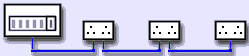
There are two types of radial circuit; 20amp circuits wired with 2.5mm2 cable and 30amp circuits wired with 4mm2. The principle of the radial circuit, is that the mains cable leaves the consumer unit and passes through each socket until it reaches and ends at the last socket. Alternatively, on a ring circuit the mains cable leaves the consumer unit passes through every socket and then returns to the consumer unit. The advantage of the ring circuit is that electricity can reach the sockets from two directions and so reduces the load on the cable. For other advantages see Types of electrical circuit.
The two diagrams show the difference between the radial and ring circuits. The top diagram shows the existing radial circuit, the bottom diagram shows the original radial circuit converted into a ring circuit. (The new part of the circuit is shown in orange).
Radial circuit
Radial circuit converted to ring circuit
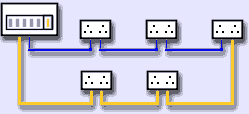
Ring circuits are wired with 2.5mm2 cable and always have a 30amp fuse/ 32 amp MCB. If your existing radial circuit is a 30amp circuit with 4mm2 cable you can simply complete the new part of the circuit using 2.5mm2 cable returning from the last socket to the consumer unit. If however your existing radial circuit is a 20amp circuit using 2.5mm2 cable, then you can complete the loop back to the consumer unit with 2.5mm2 cable but the fuse will have to be upgraded from a 20amp to a 30amp fuse.
The usual reason to convert a radial to a ring circuit is because the return stretch of cable can be used to add more sockets to the house.
Initially, plan the route of the return cable noting the locations of any extra sockets you require. To locate the position of the last socket on a radial circuit, first switch off the power by the main switch on the consumer unit.
SWITCH OFF ELECTRICITY AT THE MAINS
All of the sockets on the radial circuit will have two cables going into them, however the last position on the radial circuit will only have a single cable. Once this has been located the cable for the new part of the ring circuit should be connected to it.
Ensuring that the power supply is off, remove the conductors from the last point on the radial circuit. Twist together the conductors from the old cable with the new cable i.e. red to red, black to black and green/yellow to green/yellow, (if the earth wire is bare then it should have a green/yellow sleeve placed over the its bare part). Insert the twisted conductors back in their appropriate screw terminals on the back of the socket i.e. red to Live (L), black to Neutral (N) and green/yellow to Earth (E or  ), and replace the socket.
Use the remaining length of new cable to return to the consumer unit. If you desire more sockets, leave a generous loop of cable at the new socket points. These points can be installed at a later time (See Installing a power socket).
At this point the power should still be OFF. The cover of the consumer unit should now be removed.DANGER: despite the fact that the electricity is switched off, the cables from the meter are still live, so be very careful.
Locate the fuseway/MCB with the single cable going out for the radial circuit you are dealing with.
For the older consumer unit with fuses, remove the fuse for the circuit you are working on. This exposes the plastic mounting which holds the fuse. This mounting is held in place with a small screw in its centre, by removing this mounting you can gain access to the screw terminal that hold the radials’ circuit cable in place - remove this wire. Once you have access, twist the old wire with the new live (red) wire and place back in the screw terminal. Tighten the screws and replace the fuse mounting and fuse.
If the fuse is 20amp it will need change it to a 30amp fuse. Now find the existing neutral (black) cable from the existing radial circuit and remove it. Twist it together with the new neutral cable and replace. Tighten the screw terminal back up. Finally find the existing earth cable and repeat the process, twisting the old with the new and then replacing in the screw terminal and tightening.
For the consumer unit with MCBs (Miniature Circuit Breakers), the red conductor of the existing radial circuit is held in place by a visible screw terminal on the top of the relevant MCB. Undo the screw terminal and remove the wire.
The MCB for the new ring circuit must be rated 30/32amp, if it is not then it must be changed before proceeding. Twist the old red wire with the new live (red) wire and secure it back into the screw terminal. Now remove the existing neutral (black) conductor for the radial circuit yuo are working on. Twist it together with the new neutral cable and replace. Tighten the screw terminal back up. Finally find the earth cable and repeat the process, twisting the old wire with the new and then replacing.
Replace the cover of the fuse box. Switch the power on and test sockets on the old and new part of your new ring circuit.
Our forum is the perfect place to ask questions and get help. Join us, post your question/comment now!