Follow along with the video below to see how to install our site as a web app on your home screen.
Note: This feature may not be available in some browsers.
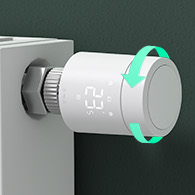
Looking for a smarter way to manage your heating this winter? We’ve been testing the new Aqara Radiator Thermostat W600 to see how quiet, accurate and easy it is to use around the home. Click here read our review.
well whenever ive done this I use a masonry disc in a small angle grinder and just cut two parrallel lines a bit wider than the 2.5mm cable where i want the spur led to. a new disc (fairly cheap) will give enough depth and the grinder will not shock any existing plaster, saving the need for plastering.
the remaining sliver can be simply chased out with even a blunt coldchisel - an electricians bolster is delicate and a good choice.
check that there arent any wires or pipes of course.
route the spur and hold with gripfill or use pvc conduit - i think metal covers are no longer required by ieee.
simply use something like tetrion or polyfilla to refill the groove, finishing plaster is better but a whole bag for one spur... forget it
to sink a box for the sockets use crossing cuts and fill the overhanging cuts later. again gripfill or hard as nails will hold it in - but be careful to get it horizontal (i use wedges and tape till the gripfill is set) gripfill doesnt make getting one out easy.
of course you know that a spur is wired red to red, black to black, etc. and should be fused if appliance is directly wired into it.
prepare for dust and be careful that ventilation isnt taking it all through the house. oh yes and goggles are a must, a mask isnt needed if you can hold your breath for twentyfive minutes though.
Needed to cut a chase in a wall, got aforementioned grinder, the disc touched the plaster for a micro-second and I couldn't see for 10 minutes !! Gave up with that and used a sharp wide bolster (and hammer)
I think sharp is the keyword there! I had to route a pipe in a block wall, I bought a couple of different bolsters (see which would work best!) and certainly with my wall it wasn't so much a cutting action as a smashing action... so I ended up buying a small angle grinder. Lots of dust, but not as much as I was expecting (nice surprise!)
anybody used those drill attachments that effectively route out the channel? A friend offered to lend me his but warned me the dust is as bad as a grinder so I didn't take the offer up. From what he said it's a drill bit with wheels on to run along the wall cutting the channel.
I don't like the idea of any drill attachment that works at an angle other than straight out of the chuck. A drill is not designed to have sideways pressure applied to it, I reckon that using a chaser or rotary drillsaw or anything similar would wear the bearings in the motor out more quickly and possibly knacker the chuck.
I don't think you need to worry about the bolster being sharp. You're going to have to fill the channel afterwards anyhow. Personally I find if a bit of finish around the channel comes away during the chasing, it makes it easier to blend in the filling afterwards.
When the bolster goes into the plaster it is inclined to compress the surrounding plaster anyhow. This gives rise to a slightly raised edge. Once you fill the channel you can end up with this as a tell tale pair of tramlines running up the wall.
If, on the otherhand a small area of finish comes off either side, it not only breaks up the outline but the edge of the old plaster remaining is not raised. When you fill it you will find that it looks a bit messier untill you paint it (or whatever) and then you find that it dissapears completely.
Needed to cut a chase in a wall, got aforementioned grinder, the disc touched the plaster for a micro-second and I couldn't see for 10 minutes !! Gave up with that and used a sharp wide bolster (and hammer)
If you can get someone to hold a vacuum nozzle close it makes a big difference. Also I use diamond discs now, a bit dearer but having used them you'll not use the old type again. Blinkin brilliant they are.
If you need to find a tradesperson to get your job done, please try our local search below,
or if you are doing it yourself you can find suppliers local to you.
Select the supplier or trade you require, enter your location to begin your search.
Please select a service and enter a location to continue...
Are you a trade or supplier? You can create your listing free at DIYnot Local

 Looking for a smarter way to manage your heating this winter? We’ve been testing the new Aqara Radiator Thermostat W600 to see how quiet, accurate and easy it is to use around the home. Click here read our review.


