Question for Static

Joined
21 Jan 2007
Messages
27,713
Reaction score
4,791
Location
Devon
Country
United Kingdom
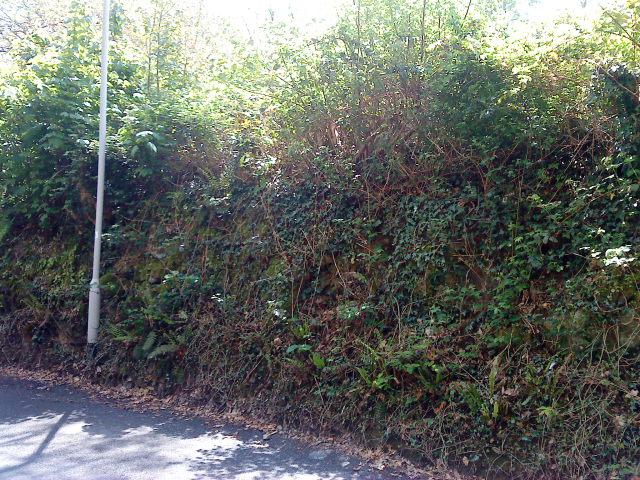
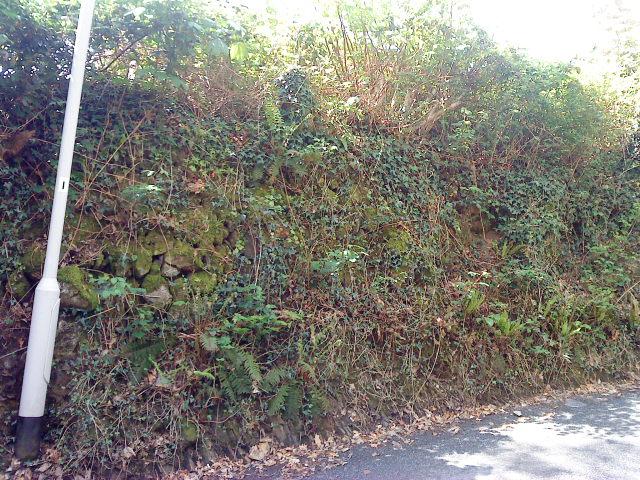
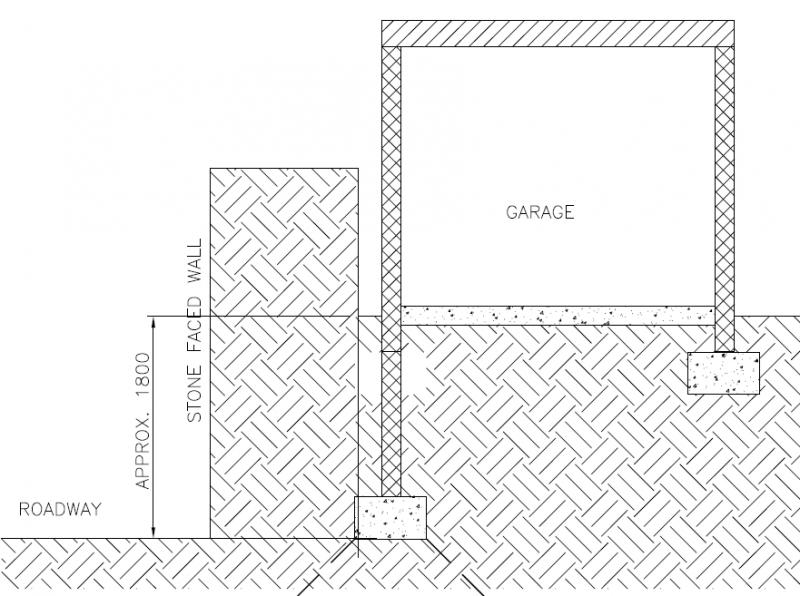
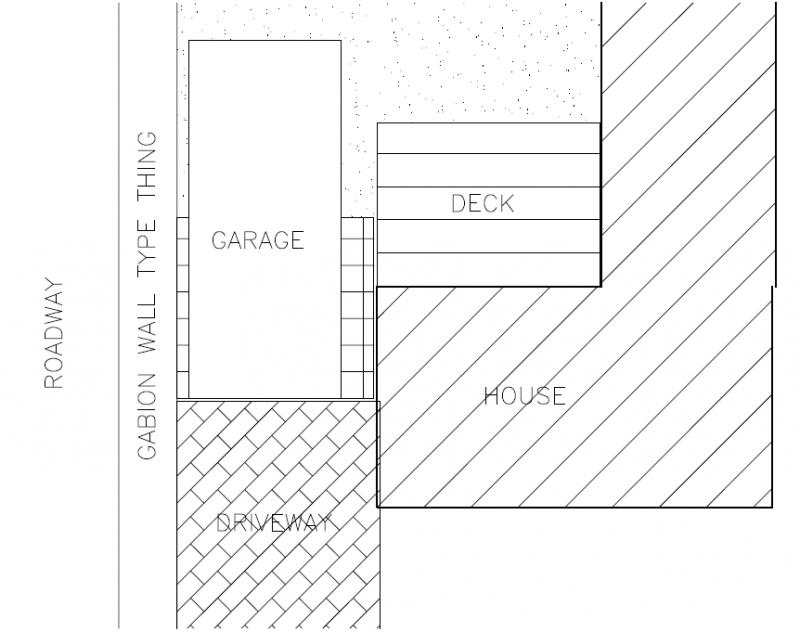
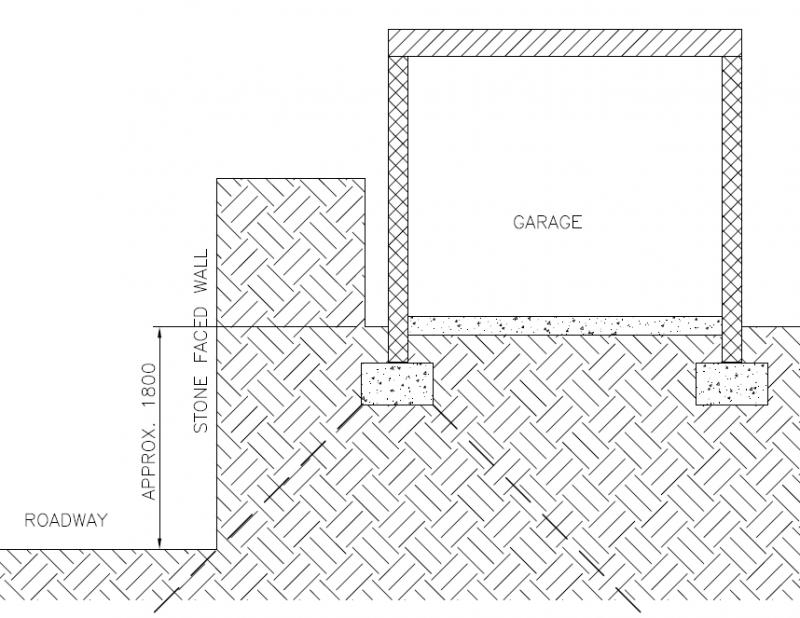
I've just seen a job where the client wants a new garage, immediately next to the space where he'd like his new garage there is a man-made stone wall around 1200 high and around 1200 wide that forms his boundary. In the middle I believe is earth as there's allsorts of shrubbery and trees etc growing there. The other side of the wall is a drop of around 1800 to a road. This is a man-made wall and is showing evidence of collapse. I would conventional construction with strip foundations block walls & timber flat roof. My understanding of foundations is that the forces are dissipated into the earth at a 45deg splay downwards as indicated by the angled lines shown beneath the strip found on the left. Assuming I am correct I presume I just need to make sure the 45deg angle hits a level beneath the road?
 
Fun, you really dont want to be adding any additional loading to the highways retaining wall/embankment.. so like youve assuming you need to be below the wall.. but you also need to be below the foundations of that wall as well..

At 1200mm wide its more like a gabion wall/mass wall.. so youll need to be 45deg back from the back end of the footing.. if it even has a footing..
Which from your sketch would put your footings around 1.8m below the existing higher level.. minimum..
This can be reduced as you move the garage further away..

Only other real option is seek HA acceptance that the retaining lump of stone can support the additional loading from the garage.. not easy.. cos it may well be just a loose assortment of stones and vegitation..
 
Is that wall drawn to scale? It looks about a metre wide?!

I'd personally want to ensure that the 45 degree splay hasn't reached the back of the wall before it goes below road level, otherwise you're still loading up the back of the wall and the potential is there for it to rotate or slide.

That's my opinion. Maybe static will tell you something different.

Craig.
 
Moving the garage further away isn't an option as he has limited space between the boundary and his house.

Only other real option is seek HA acceptance that the retaining lump of stone can support the additional loading from the garage.. not easy.. cos it may well be just a loose assortment of stones and vegetation..

That does sound a bit ambitious, it looks like its about collapse at anytime tbh and how would they know how thick the wall is at the base? The drawing is very roughly to scale, the wall at the top as mentioned by Static its more like a gabion wall/mass wall.

Just to clarify the client wants drawings to build from and use to get tender.

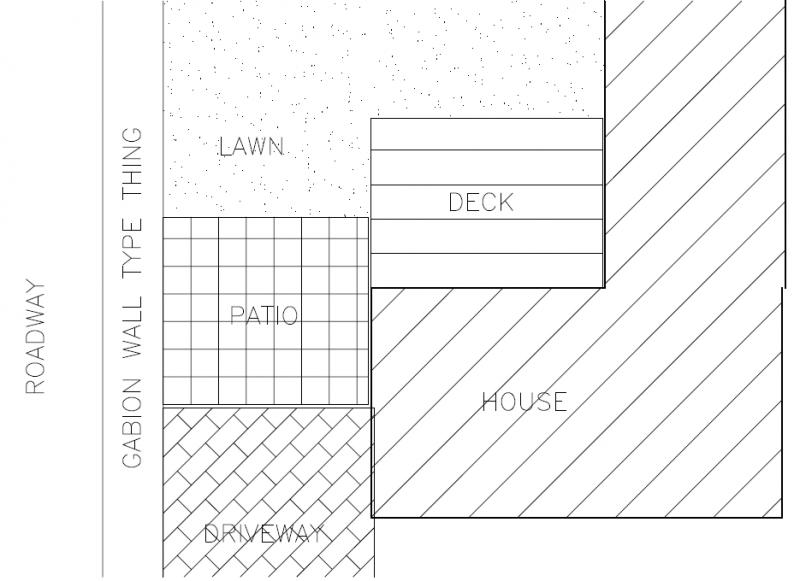
Now, speaking as a non engineer then, lets assume I draw up a design as shown below, should I feel confident in this or be insisting he gets an SE to prove it works? It won't be going through Building Regs as its below 30m2. And wouldn't I potentially be undermining the back of the wall at the top? I can see that collapsing into the trench.

Presumably this is what you chaps are suggesting?
 
Yer basically sketch shows what i described.. but if the wall is as loose as you say then you should consider temp propping it which excavating for the footing behind.. all this starts gettings pretty expensive..
May want to change that detail to show deep trench mass concrete to avoid having some poor sap down that trench laying blocks..

Other options:

Mini-piling may work out simpler.. but good chance more expensive

What is the land current used for?
 
Can you not design a pair or even a trio of foundations that runs perpendicular to the gabiomasswallthingy then use bridging steels to build the other walls?
 
Can you not design a pair of foundations that runs perpendicular to the gabiomasswallthingy then use steels to build the other walls?
Eh wosat then? :oops: :?

I can see me getting an engineer involved here. I don't like taking chances esp if BC aren't overseeing!
 
Can you not design a pair of foundations that runs perpendicular to the gabiomasswallthingy then use steels to build the other walls?
Eh wosat then? :oops: :?

I can see me getting an engineer involved here. I don't like taking chances esp if BC aren't overseeing!

Let me explain.

So far you have been looking at ways to lay foundations parallel to the gabion wall.

I am suggesting laying a series of foundations at 90 degrees to the gabion retaining wall then using steels to bridge these foundations then build the walls off these steels.
 
Oh ok so a few strips of foundations perp to the wall. Surely if these are at a normal depth I'll still have loads being distributed into the wall rather than beneath it though? I think the client's just gonna have to stump up for an engineer I think, if he doesn't want to he'll have to find another techy.
 
Thinking about this more over night i would have to agree that they will need to involve a SE.. the potential for problems is too high, both from temp works supporting the wall while you excavate for the footings and from the new garage loading the wall up..

Strip footings will still need excavating to depth which flags up the above problems..

Mini piling would probably be the ideal solution but potentially the most expensive..
 
Thanks Static, the more I think about it the more I want to use an eng, like I said he can like it or lump it and if it cost me the job so be it.
 

If you need to find a tradesperson to get your job done, please try our local search below, or if you are doing it yourself you can find suppliers local to you.

Select the supplier or trade you require, enter your location to begin your search.


Are you a trade or supplier? You can create your listing free at DIYnot Local

 
Back
Top