
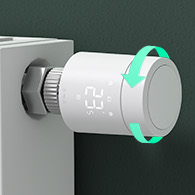
• Looking for a smarter way to manage your heating this winter? We’ve been testing the new Aqara Radiator Thermostat W600 to see how quiet, accurate and easy it is to use around the home. Click here read our review.

Slow cookers - modifying

Joined
30 Dec 2018
Messages
27,623
Reaction score
5,859
Location
Up North
Country
United Kingdom
We have two slow cookers/crock pots. Neither seems to operate on any sort of temperature control, rather crude system, of switching elements in series parallel, to get low/medium/high settings, maximum 200w. I'm toying with the idea, to maybe use a W1209 Temperature Controller module, to precisely control the temperatures.

The very same modules, that I have set up and are working rather well, to control the Chinese diesel heater, in my workshop. One turns the heater on, set for the minimum temperature, the second one, turns it off, when it gets too warm in there.
 
I thought the high setting on a slow cooker is a bit hotter than medium for 2 hours then drops to medium. Medium is what we use all the time and slow cooks food . Low keeps it warm.
We just use the medium setting as standard temperature for cooking.
Not sure what you want to achieve. Medium is cooking temperature. High is basically the same as medium.
Not sure decreasing temperature will cook food better or slower or if the element wood work properly if you drop voltage. There must been a thermostat built in as well.
Just my thoughts.

I bought one of these for a powerful vacuum. It worked.
What would happen if you connected to a slow cooker?
 
... W1209 Temperature Controller module, to precisely control the temperatures.

The very same modules, that I have set up and are working rather well, to control the Chinese diesel heater, in my workshop. One turns the heater on, set for the minimum temperature, the second one, turns it off, when it gets too warm in there.
Why 2?
 
i used to double up on a terry towel and cover and use a setting lower
iff you do this dont overfil [leave perhaps a 15-20mm below the lid lip] so the expanding liquid doesnt go in the rim space around the lid and gets absorbed by the towel
 

Because they chuck a certain level of heat at it, and hope, seems a bit crude to me.

i used to double up on a terry towel and cover and use a setting lower
iff you do this dont overfil [leave perhaps a 15-20mm below the lid lip] so the expanding liquid doesnt go in the rim space around the lid and gets absorbed by the towel

Yes, that's what we do, but it does a fast simmer, even on low.

I bought one of these for a powerful vacuum. It worked.
What would happen if you connected to a slow cooker?
https://amzn.eu/d/3Om2cIS

That would work, but there is no feedback on temperature. The module I linked to senses temperature upto 110C, is very configurable, very accurate, and is easy to adjust the temperature setting from cold, to boiling. It can switch upto 5amp 240v.

I already have a plug in dimmer around somewhere, which would do the same job as above, if that was what I was trying to achieve.
 
Because they chuck a certain level of heat at it, and hope, seems a bit crude to me.
I don't quite follow that unless you are monitoring 2 different things.
For example I draw cool air from an AC controlled room to cool a hill top transmitter, I have one 1209 looking at the top of the rack (to see if the rack needs cooling) and another looking at the temperature in the cool room (to make sure it is cool as a couple of years ago the AC failed and I was blowing hot air into the rack)
 
Today the Inkbird 308 has replaced the old STC-1000 but would think like the STC-1000 it has a slewing range where you can set the difference between on and off temperature, often 1 to 30ºC so no need for two thermostats.

As to slow cookers, the problem is they must bring the food to a temperature that will kill bacteria within a set time, I would guess 70ºC as legionnaires needs over 60ºC to kill it, and you would what it over that to ensure all has reached the critical temperature. The slow cooker may reach the critical temperature in time, but how much time?

Internet said:
How long should I cook a slow cooker recipe? If a dish usually takes: 15-30 mins, cook it for 1-2 hours on High or 4-6 hours on Low. 30 mins – 1 hour, cook it for 2-3 hours on High or 5-7 hours on Low.

The low setting on a slow cooker is generally slower than the high setting, and the difference is typically in time. The low setting usually maintains a temperature around 190°F (87°C), while the high setting reaches approximately 300°F (149°C).

It worries me that it could end up too cool.
 
Today the Inkbird 308 has replaced the old STC-1000 but would think like the STC-1000 it has a slewing range where you can set the difference between on and off temperature, often 1 to 30ºC so no need for two thermostats.

As to slow cookers, the problem is they must bring the food to a temperature that will kill bacteria within a set time, I would guess 70ºC as legionnaires needs over 60ºC to kill it, and you would what it over that to ensure all has reached the critical temperature. The slow cooker may reach the critical temperature in time, but how much time?


It worries me that it could end up too cool.
And there was I on a river cruise 2 weeks ago with veal, allegedly cooked as 55° and blood running from it.

The waiter asked if there was a problem when he saw the untouched meat. I simply said I don't eat raw meat which obviously got back to the chef as he came out to explain how it had been seared and cooked at 55° before being sliced, he was mortified when I repeated it was raw with no evidence of any part of it cooked.
 
as an aside
i eventually gave up on the slow cook
i would make up 3L off scotch broth in a 3.5L pan then transfer to the slow cook for the final hour to 90 or so off cooking
but in the end worked out soup boiled /rapid simmer on the electric hob for 30-40mins turned to on and left for about 8 mins then double folded towel to cover would simmer nicely without damage to the towel and with 45-60 mins get the same results so less faffing and no wasted heat warming a slow cook and wasted heat escaping from a cooling cooker a win win all round further savings by batch cooking as 3l=10 portions but cooked short by 20|% water concentrated so less storage in the freezer 6-7 portions with a bit off rehydration would last a week in the fridge so freeze half with crusty bread and soup every day
 
Last edited:
Not sure what you want to achieve. Medium is cooking temperature. .... High is basically the same as medium.
Not sure decreasing temperature will cook food better or slower or if the element wood work properly if you drop voltage.
Probably not 'better' or slower, but might use less electricity (hence cost).

I don't think we're really talking about 'decreasing temperature' (of food being cooked). I would have thought that if one was (as commonly) cooking something water-based (like a stew), the temp of the food would not rise to more than a little above about 100 °C unless/until all the water had been boiled away - so if the heating system is providing more power than is necessary to maintain that temp, some energy must be simply 'wasted' in boiling off the water and/or through losses (rather than having any influence on the 'cooking' - so I would have thought that an ideal system would control the heating so as to just achieve 'what was needed'.
 
I don't quite follow that unless you are monitoring 2 different things.
For example I draw cool air from an AC controlled room to cool a hill top transmitter, I have one 1209 looking at the top of the rack (to see if the rack needs cooling) and another looking at the temperature in the cool room (to make sure it is cool as a couple of years ago the AC failed and I was blowing hot air into the rack)

Sorry, I became confused, start again...

The diesel heater control, has a built in thermostat, which works fine, but is only able to switch the heater between maximum heat, or minimum heat. It doesn't switch the heater off completely, but often the minimum output level, is still too much heat. Max is 8Kw, minimum around 2Kw.

The problem was, the controller, uses one single button to turn it on, then later the same button to turn it off again - first press on, next press off. I opened the control up, added a pair of wires across the button, and wired them across the two volt-free relay contacts of two 1209 controllers. The controllers own stat is set to 15C. The 'too cold' one, makes at say 16C, the 'too warm' one makes at say 18C. Hysteresis on both is set at 0.1C.

So the sequence is - turn it on at <15C, maximum output running until 15C, heater then switches to minimum. At 16.1C the 'too cold' 1209 relay goes open. At 18C the 'too warm' 1209 closes, and switches the heater off completely.

As the space cools down, it cycles back up again. It all works, rather well.

What I've done, is fed it's hot air output, into a length of 75mm flexible tube/duct. Run the duct the 4m along the top/rear of my workbench, drilling 30mm holes every so often in the duct, so I get warm air distributed all the way along.
 
Sorry, I became confused, start again...

The diesel heater control, has a built in thermostat, which works fine, but is only able to switch the heater between maximum heat, or minimum heat. It doesn't switch the heater off completely, but often the minimum output level, is still too much heat. Max is 8Kw, minimum around 2Kw.

The problem was, the controller, uses one single button to turn it on, then later the same button to turn it off again - first press on, next press off. I opened the control up, added a pair of wires across the button, and wired them across the two volt-free relay contacts of two 1209 controllers. The controllers own stat is set to 15C. The 'too cold' one, makes at say 16C, the 'too warm' one makes at say 18C. Hysteresis on both is set at 0.1C.

So the sequence is - turn it on at <15C, maximum output running until 15C, heater then switches to minimum. At 16.1C the 'too cold' 1209 relay goes open. At 18C the 'too warm' 1209 closes, and switches the heater off completely.

As the space cools down, it cycles back up again. It all works, rather well.

What I've done, is fed it's hot air output, into a length of 75mm flexible tube/duct. Run the duct the 4m along the top/rear of my workbench, drilling 30mm holes every so often in the duct, so I get warm air distributed all the way along.
I see now(y)
 

If you need to find a tradesperson to get your job done, please try our local search below, or if you are doing it yourself you can find suppliers local to you.

Select the supplier or trade you require, enter your location to begin your search.


Are you a trade or supplier? You can create your listing free at DIYnot Local

 
Back
Top