
shmac50

Joined: 07 Oct 2009 Posts: 6 Location: Lincolnshire, United Kingdom Thanked: 0 times
|
Posted: Mon Nov 02, 2009 8:47 am Post Subject: Should screed be compacted down? |
 |
|
I am building a solid hearth for a wood burner consisting an outer single layer of blue engineering bricks (see pic), infilled with 75-85mm screed and after about a month+ of drying top it off with Sheera slate tiles. The existing surface that the screed is going down on appears to be solid flat screed\mortar base used for 33mm pavers (removed). I intend on bonding this substrate with PVA before laying screed.
Numerous people have recommended a 3:1 dry/semi-dry sand/cement screed rather than concrete. Should the screed be compacted down in any way or just leave it as it goes down and smooth off with a trowel?
The reason that I ask is that the test of a screed of this type is to clench in fist and see if it holds cleanly i.e. compacted.
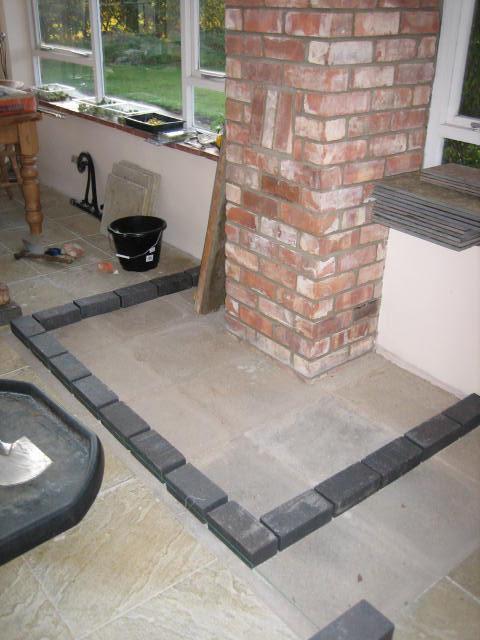
 Hearth Outer Boundary
Thanks |
|
noseall

Joined: 02 Feb 2006 Posts: 11053 Location: Staffordshire, United Kingdom Thanked: 71 times
|
Posted: Mon Nov 02, 2009 6:53 pm Post Subject: |
 |
|
When we use screed for a floor we compact it or compress it with a poly-float and a levelling tamp. Because of the 'crumbly' nature of the screed compacting it helps with cohesion and a tight surface finish, as this gets rid of air pockets within.
This is done simply by either patting it with either the poly-float or levelling board/tamp and also by dragging the tamp and applying pressure at the same time.
My version of a levelling board/tamp is one with a broad bottom edge, say, a piece of 100mm x 50mm timber, as this helps smooth and compress the surface of the screed as you drag it towards you. |
|
| Back to top |
|
shmac50

Joined: 07 Oct 2009 Posts: 6 Location: Lincolnshire, United Kingdom Thanked: 0 times
|
Posted: Mon Nov 02, 2009 7:42 pm Post Subject: |
 |
|
Thanks Noseall,
Since posting I have read a few more tips on laying screed. I was going to prime the floor with a PVA type wash but most people suggest a simple cement slurry (including you I think). Dumb question is what proportions of what (including water) makes this up?
Thanks |
|
noseall

Joined: 02 Feb 2006 Posts: 11053 Location: Staffordshire, United Kingdom Thanked: 71 times
|
Posted: Mon Nov 02, 2009 7:54 pm Post Subject: |
 |
|
Cement simply loves water and detests dry surfaces. It needs water to cure effectively, thus affording it its cohesive qualities.
Damping the surface down with water will help loads, adding any amount of cement will be a bonus. Too much though will cause drying out. I would be comfortable with half a shovel in a bucket of water.  |
|
| Back to top |
|