
the gully on our roof is lined with lead with mortar cementing the lead to the roof tiles. There are no leaks at present but the mortar has crumbled away. My question is, if I clean out the mortar and replace with 4:1 sand cement mix will it just crumble again in a few years due to dissimilar materials expansion differentials? See image

You are using an out of date browser. It may not display this or other websites correctly.
You should upgrade or use an alternative browser.
You should upgrade or use an alternative browser.
roof gully issue
- Thread starter boogyboy
- Start date
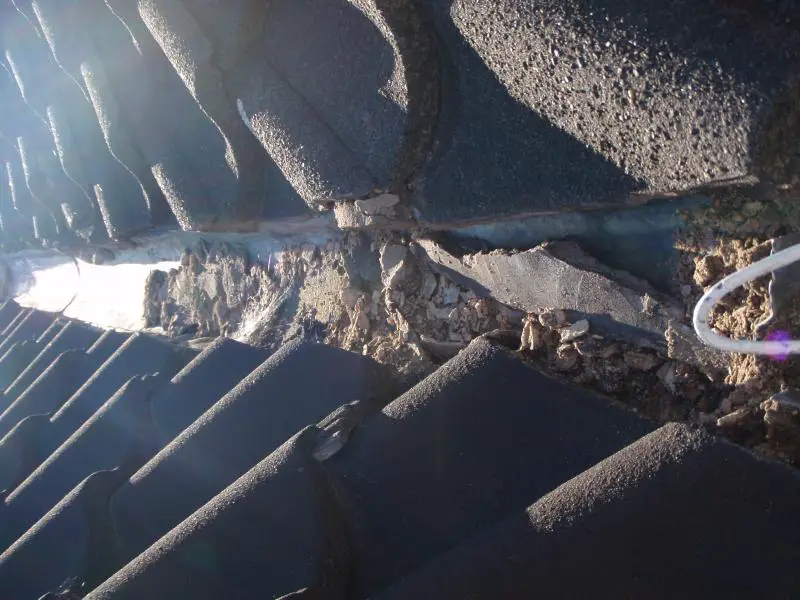

To do it properly you need to separate the two materials so they can expand and contract without interfering with each other. If you mastic down a cement board (as used on the verge) over where the lead is dressed up the roof and then fill the gap between the tiles and the cement board with mortar, this should make it last as the cement board separates the two materials without compromising the weathering. Time consuming but a proper job. I would inspect the lead first though as it may need replacing, make sure the bay lengths are correct for the code of lead.
The lead valley doesn't look very well supported? It needs to be fully supported, it looks poor in my opinion.
id take it out and replace it with a fibreglass dry valley no motor to worry about ever again..

Me too.id take it out and replace it with a fibreglass dry valley no motor to worry about ever again..
We started using these about 12 months ago. They are the simple to install and no maintenance issues to worry about either.
Needs to be done as described above by Hardmetal, everything else would be a waste of time.
GRP Valleys - short lifespan, seems little point in these if you want the building to survive beyond 20years.
GRP Valleys - short lifespan, seems little point in these if you want the building to survive beyond 20years.
HMT's solution is interesting and new to me. Thanks for that. However, i do see a very faint possiblity of failure if the mastic fails, then capillary action might cause a difficult to detect leak. Do you use this method often?
The vertical, valley battens have been fixed too far forward, they should be 25mm min. behind the compo bedding, leaving a clear 25mm channel, and this, i'd suggest, has somehow destabilised the compo along with the other points noted.
The vertical, valley battens have been fixed too far forward, they should be 25mm min. behind the compo bedding, leaving a clear 25mm channel, and this, i'd suggest, has somehow destabilised the compo along with the other points noted.
The fibre-cement slip detail is the recommended method both in the Lead Sheet Manual and BS5534 Code of Practice for Slating and Tiling, we have been doing this for many years and it works well. Make sure you use lead compatible sealant for attaching the fibre cement to the lead but only use a few blobs, not a continuous line as that may trap any moisture.
Dampen the fibre cement before you bed the tiles back down, then strike off to neat finish when the mortar has gone off enough to hold - it should last extremely well.
If the lead under the tiles has been detailed incorrectly as you suggest, then capillary action may penetrate beyond the edges whichever method you use.
http://www.leadsheet.co.uk/assets/files/autocad/PDF/Flashings/9F.PDF
It shows tile slips here but its much easier with fibre-cement undercloak and does the same job.
Dampen the fibre cement before you bed the tiles back down, then strike off to neat finish when the mortar has gone off enough to hold - it should last extremely well.
If the lead under the tiles has been detailed incorrectly as you suggest, then capillary action may penetrate beyond the edges whichever method you use.
http://www.leadsheet.co.uk/assets/files/autocad/PDF/Flashings/9F.PDF
It shows tile slips here but its much easier with fibre-cement undercloak and does the same job.
absolute tosh and blarney!GRP Valleys - short lifespan, seems little point in these if you want the building to survive beyond 20years.
Whilst i agree that fibreglass is a poor cousin to lead, i have to say that despite the cheapness of the product, fibreglass valleys are extraordinarily durable and weather tolerant.
I have had to demolish buildings as part of a new build project and have seen what 20+ years does to a fibreglass valley in a non-coastal area, and was surprised by the comparisons to lead.
How do you come by these figures Beth Slate?
He he , thought that might get someone's back up -
but all you need to do is ask any of the manufacturers of GRP valleys 'How long will these last?' some may give a 20 year guarantee if your lucky, but even if they do last 20 years, c'mon that's not good enough for pitched roofs.
They're rubbish.
'Extraordinarily durable' compared to what? I don't know of any product regularly used in valleys that is less durable.
but all you need to do is ask any of the manufacturers of GRP valleys 'How long will these last?' some may give a 20 year guarantee if your lucky, but even if they do last 20 years, c'mon that's not good enough for pitched roofs.
They're rubbish.
'Extraordinarily durable' compared to what? I don't know of any product regularly used in valleys that is less durable.
How have you come to this conclusion?'Extraordinarily durable' compared to what? I don't know of any product regularly used in valleys that is less durable.
Pitched roof valleys should not be designed to be less durable than the material on the roof slopes, they should be designed to weather for longer if possible as they take all the water.
Even concrete tiles should last around 40 years, maybe more, so to put in a valley that is not expected, even by the manufacturers, to last more than 20 years is just not right.
The only other materials widely used in valleys are lead and hard metals such as copper - these are designed to last the life of the rest of the roof - that makes sense.
Even concrete tiles should last around 40 years, maybe more, so to put in a valley that is not expected, even by the manufacturers, to last more than 20 years is just not right.
The only other materials widely used in valleys are lead and hard metals such as copper - these are designed to last the life of the rest of the roof - that makes sense.
I'd like to say, I have never replaced a faulty grp valley trough.
But I have seen a copper box gutter on a church that has been holed by water running on it over the years. However the clay tiles on the roof are fine...
This copper gutter has now been replaced....in copper
But I have seen a copper box gutter on a church that has been holed by water running on it over the years. However the clay tiles on the roof are fine...
This copper gutter has now been replaced....in copper
I have changed grp vallys for lead at least 5 years ago that doesnt make it a long lasting product to me

DIYnot Local
Staff member
If you need to find a tradesperson to get your job done, please try our local search below, or if you are doing it yourself you can find suppliers local to you.
Select the supplier or trade you require, enter your location to begin your search.
Please select a service and enter a location to continue...
Are you a trade or supplier? You can create your listing free at DIYnot Local
Similar threads
- Replies
- 1
- Views
- 3K
