
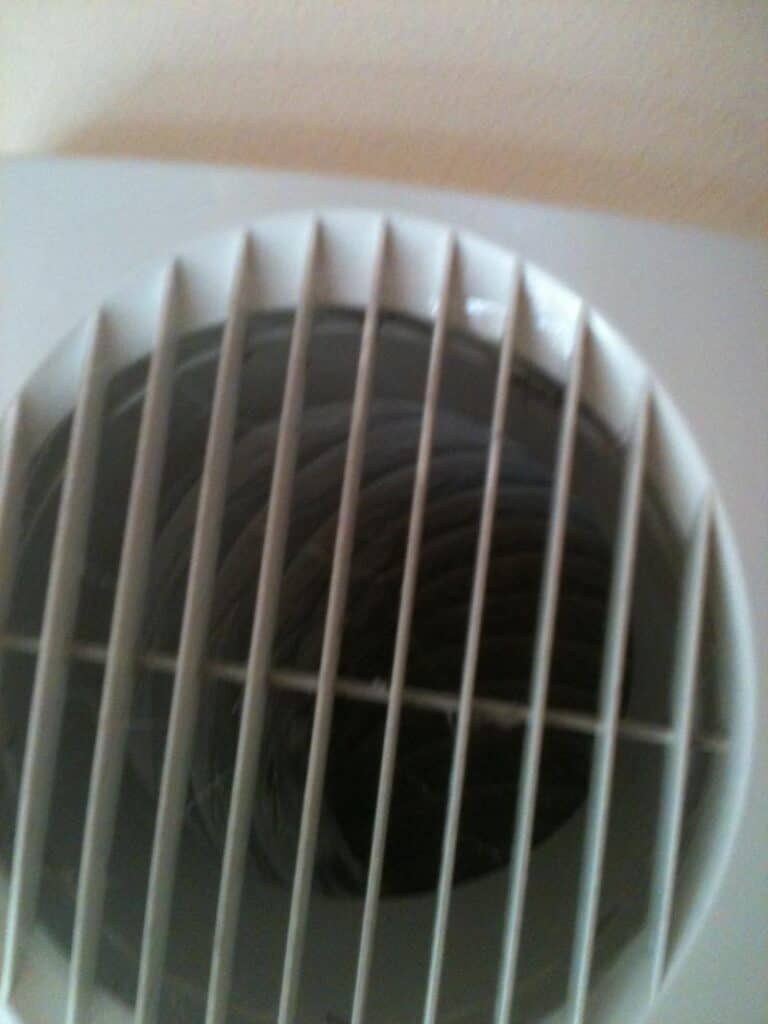
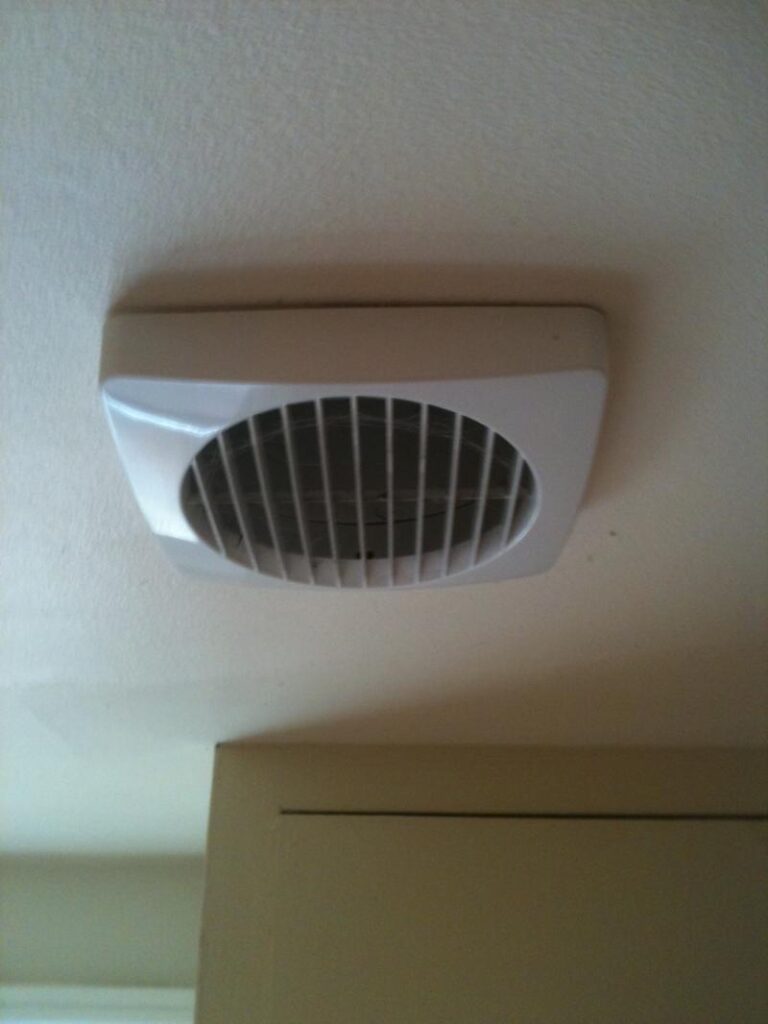
A homeowner with a ceiling-mounted bathroom extractor fan – wired to come on with the shower pull cord – found that the vent was letting freezing cold air pour into the bathroom around the clock. Looking up into the fan from inside, she could see flexible ducting running through the loft to an external wall vent. No shutters, no flaps, nothing to stop the outside air blowing straight back through. It was bad enough in winter that she had to put a draught excluder under the bathroom door to stop the cold spreading upstairs. She wanted to know if there was something she could fit over the vent inside the bathroom – ideally with a pull cord to open and close it – without having to replace the whole fan.
What’s Likely Going On
This is a common one in UK houses, and I see it a lot in properties where the original installer just ran the duct and stuck a grille on the outside wall without fitting any kind of backdraft protection. What you’ve effectively got is an open pipe from outside to inside. When the fan runs, it pushes moist air out – which is what you want. But when the fan’s off, which is most of the time, you’ve got a clear path for cold air to travel back down the duct and into the bathroom. On a windy day it’s worse, but even on a still day cold air sinks and will find its way in.
The flexible ducting she described – the stuff that looks like a tumble dryer hose – doesn’t help either. It’s ribbed inside, which slows the airflow when the fan is running and can collect condensation. But the main problem here isn’t the duct type, it’s the complete lack of any valve or flap to stop air coming back the wrong way.
Simple Checks First
- Look at the fan unit from inside the bathroom. Take off the cover if you can (usually clips or a couple of screws) and see if there’s a built-in backdraft shutter behind the grille. Some fans have little plastic flaps that sit closed and only open when the fan pushes air through. If yours has them, check they’re not stuck open with dust or grime. A wipe down might be all it takes.
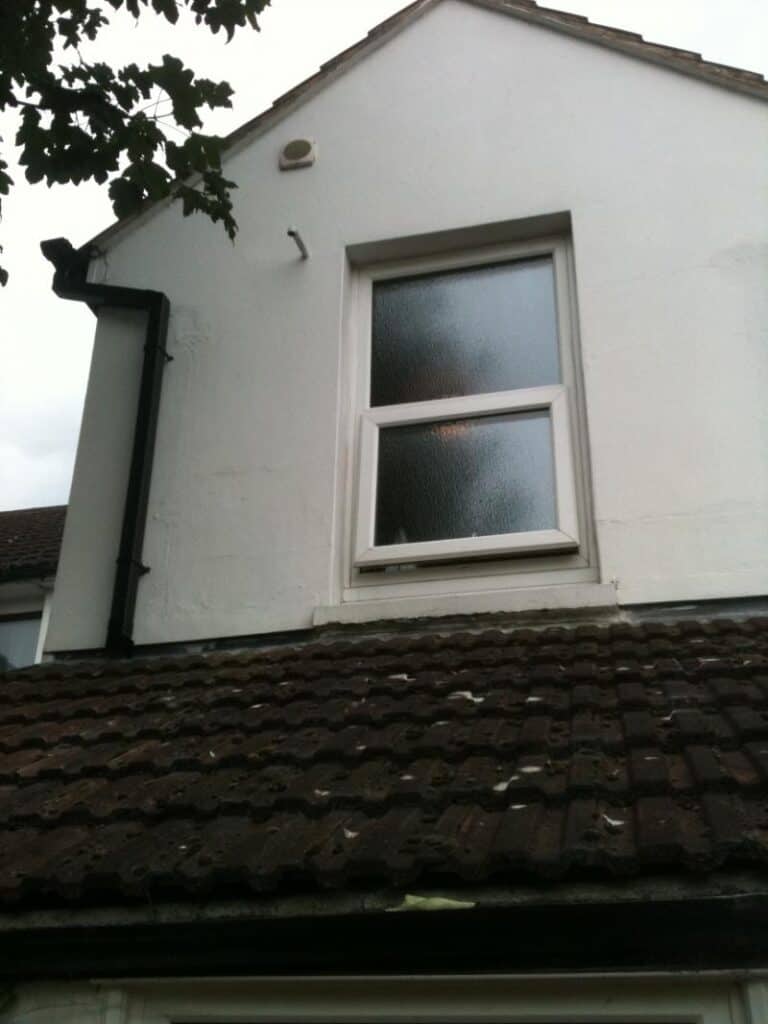
- Check the external grille from outside. If you can see it from ground level, even from a distance, you’re looking at whether it has gravity flaps or louvres. If it’s just an open grille with a mesh, that confirms there’s nothing stopping air coming back in. If it has flaps but they’re visibly broken or jammed, that’s your answer too.
- Feel the draught with the fan off. Hold a piece of tissue near the fan grille inside the bathroom. If it flutters or gets sucked towards the vent, you’ve got reverse airflow confirmed. On a cold day you’ll feel it with your hand anyway.
- Measure the duct diameter. If you can get the cover off inside, measure across the pipe. Most domestic bathroom extractors use 100mm (4 inch) ducting, but some older or larger setups use 150mm. You need this measurement before buying any parts.
The Fix – Good, Better, Best
Good – Inline backdraft shutter. This is the cheapest and simplest option if you can’t get to the outside of the house. It’s a small plastic fitting with a flap inside that only opens one way. You cut into the flexible duct somewhere accessible – either just above the fan in the bathroom or up in the loft – and fit it inline. When the fan runs, the air pressure pushes the flap open. When the fan stops, the flap drops shut and blocks the reverse flow. They cost a few pounds and they do work, but they’re not a perfect seal. Over time dust builds up on the flap and it can stick slightly open. If you can reach the duct from inside the bathroom by removing the fan cover, you might be able to fit one without going into the loft at all.
Better – External wall vent with built-in gravity flaps. If you can get access to the outside – even if it means scaffolding or a long ladder – replacing the basic grille with a cowl-type vent that has gravity shutters is a more robust fix. The cowl keeps rain out, the flaps only open under fan pressure, and they close under their own weight when the fan stops. Avoid the type with lots of little louvre slats like a venetian blind – they rattle in the wind and the slats snap off after a couple of winters. A simple single or double-flap cowl in brown or white is better and lasts longer.
Best – Replace the fan with one that has an integral backdraft shutter, plus fit a proper cowl outside. Modern extractor fans – even budget ones – come with built-in shutters as standard. Some have a self-closing iris that opens when the motor spins and seals shut when it stops. If your fan is old enough that it was installed without any backdraft protection, it’s probably not very efficient anyway. A new fan with a shutter built in, combined with a proper external cowl, gives you the best seal against draughts and the most efficient extraction. If you’re getting an electrician in for other work, it’s worth asking them to swap the fan at the same time – the wiring is already there, so it’s not a big job for them.
Bodges and Mistakes to Avoid
- Don’t block the vent permanently. I know it’s tempting – clingfilm over a kitchen vent works in a pinch, but sealing up your bathroom extraction creates a moisture problem. That moisture has to go somewhere, and it’ll end up as condensation on cold surfaces, then mould. You need the extraction to work when you’re showering.
- Don’t fit a manual flap or cover you have to open and close yourself. You’ll forget, or you won’t bother climbing on the stepladder, and the fan will run against a closed vent. That burns out the motor faster and doesn’t extract anything.
- Don’t use gaffer tape to seal the duct joints if you’re fitting an inline shutter. Use proper duct tape (the foil kind) or jubilee clips on the connections. Gaffer tape dries out and peels off within a year in a loft space.
When to Bring in a Specialist
If the fan is wired into the shower circuit or the lighting circuit, any work on the fan itself – swapping it for a new unit or altering the wiring – should be done by a qualified electrician. You’re in a bathroom, which is a special location under the wiring regulations, and the fan is connected to a circuit that runs through a wet environment. Fitting an inline backdraft shutter on the ducting is a different matter – that’s just cutting into a plastic pipe, no electrics involved – and most people can manage that themselves.
If you can’t access the outside wall at all and the inline shutter doesn’t reduce the draught enough, an electrician fitting a new fan with an integral shutter is the proper route. It’s not an expensive job if they’re already on site for other work.
Reality Check
Fitting an inline shutter is a twenty-minute job if you can reach the duct without too much trouble. If loft access is awkward – boards missing, low headroom, insulation everywhere – allow longer and bring a decent torch. The shutter itself costs under a tenner. A new fan with a built-in shutter runs from about twenty to sixty pounds depending on features. Getting an electrician to fit one, assuming the duct and wiring are already in place, is typically under an hour’s labour on top of the fan cost. The draught difference is noticeable straight away. You’ll wonder why you didn’t sort it sooner.