- Joined
- 20 Oct 2025
- Messages
- 5
- Reaction score
- 1
- Country

My project is to carpet a hall with 7 doors and skirting in situ (skirting is nailed to the walls).
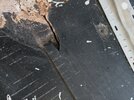
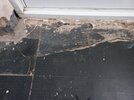
Thermoplastic vinyl tiles are damaged around edges where gripper rod was nailed. There are part tiles missing altogether around 3 thresholds, some tiles are cracked and raised up, or have pieces missing in the middle of the floor.
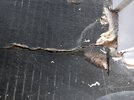
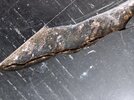
Cracks vary and I expect to find more cracks when / if the tiles are removed. Cracks are 2mm, 3mm and 4mm (only one 4mm), depth seems to be 35mm to 40mm I checked with a bit of wire. In 3 places there are open holes where the carpet thresholds were nailed. The concrete floor is hard. Adhesive is black and applied really thinly, titles come up really easy. There is a difference in floor level on either side of 2 of the cracks in different areas of the hall. I'm assuming that there is no DPM and although i've not tested the floor there has never been any evidence of damp in 32 years of occupation, except for very occasional moisture from condensation on frosty mornings near the front door - the door will be replaced end of October.
I have read other thermoplastic postings and am aware of the safety and disposal issues, and of the encapsulate versus lift tiles options. I know if I go down the ARDEX NA DPM sandwich route I won't be able to nail gripper rod when I fit my planned carpet with 9mm underlay. I'm not insulating the concrete floor or adding UFH.
I left the tiles in place in the bedroom as the tiles cover most of the floor except a couple of small missing pieces adjoining the skirting and are firmly in place. There was a half tile missing in the middle of the floor which was filled a couple of years ago with car body filler (an embarrassing admission) but it set hard and stops the heavy wheeled furniture from getting stuck in the dip, it is still intact.
I haven't screeded or DMP'd a floor before, and 7 doorways for my first attempt. Having a DPM would be reassuring as would filling the cracks and holes. I saw on another thread someone was advised to use a mortar product on the open holes (wide at the top). The cracks would need a different approach. How much depth does an Ardex NA sandwich require - thinking about skirting boards and door frames being buried in the sandwich. Does it matter that the DPM can't go up the internal walls 50mm because skirtings are in place. There is an external DPC and all of the hall walls are internal, the entrance door fills the only external opening.
My feeling is NA sandwich is the best approach for my circumstances but that i may not be the ideal person to do it. I'd be interested in your thoughts.
Thermoplastic vinyl tiles are damaged around edges where gripper rod was nailed. There are part tiles missing altogether around 3 thresholds, some tiles are cracked and raised up, or have pieces missing in the middle of the floor.
Cracks vary and I expect to find more cracks when / if the tiles are removed. Cracks are 2mm, 3mm and 4mm (only one 4mm), depth seems to be 35mm to 40mm I checked with a bit of wire. In 3 places there are open holes where the carpet thresholds were nailed. The concrete floor is hard. Adhesive is black and applied really thinly, titles come up really easy. There is a difference in floor level on either side of 2 of the cracks in different areas of the hall. I'm assuming that there is no DPM and although i've not tested the floor there has never been any evidence of damp in 32 years of occupation, except for very occasional moisture from condensation on frosty mornings near the front door - the door will be replaced end of October.
I have read other thermoplastic postings and am aware of the safety and disposal issues, and of the encapsulate versus lift tiles options. I know if I go down the ARDEX NA DPM sandwich route I won't be able to nail gripper rod when I fit my planned carpet with 9mm underlay. I'm not insulating the concrete floor or adding UFH.
I left the tiles in place in the bedroom as the tiles cover most of the floor except a couple of small missing pieces adjoining the skirting and are firmly in place. There was a half tile missing in the middle of the floor which was filled a couple of years ago with car body filler (an embarrassing admission) but it set hard and stops the heavy wheeled furniture from getting stuck in the dip, it is still intact.
I haven't screeded or DMP'd a floor before, and 7 doorways for my first attempt. Having a DPM would be reassuring as would filling the cracks and holes. I saw on another thread someone was advised to use a mortar product on the open holes (wide at the top). The cracks would need a different approach. How much depth does an Ardex NA sandwich require - thinking about skirting boards and door frames being buried in the sandwich. Does it matter that the DPM can't go up the internal walls 50mm because skirtings are in place. There is an external DPC and all of the hall walls are internal, the entrance door fills the only external opening.
My feeling is NA sandwich is the best approach for my circumstances but that i may not be the ideal person to do it. I'd be interested in your thoughts.