• Looking for a smarter way to manage your heating this winter? We’ve been testing the new Aqara Radiator Thermostat W600 to see how quiet, accurate and easy it is to use around the home. Click here read our review.

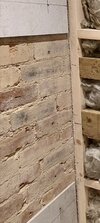
Do I need to repoint?

Cement board screwed over existing plaster will, theoretically, have a greater weight load than tiles over plaster. Equally, tiles over naked plasterboard have a greater weight load than tiles over skimmed plasterboard.
 
I agree. But I'd suggest your walls aren't suitable for dry-lining, you need wet plaster to bond it together.

Get it all off, get a couple of gallons of SBR sunk into it then get it properly plastered. You don't want a super-smooth surface for tiling. I don't know what best practice is these days, some might prefer cement render rather than plaster in a bathroom.

In my case/photos, the top skim came off with the old tiles in the shower area, and remained where it wasn't previously tiled. I tiled over the lot, managed to straddle the lip between the two halves without it being at all visible now. I used a liquid tanking kit in the shower area, over the rough plaster. It looked weird and drank the stuff up but worked really well. The bumps are good for the tiles to grip onto.

Don't use any pre-mix tile adhesive. Get slow setting powder mix. Powder is cement based, pre-mix can't be otherwise it would set in the tub, it's probably acrylic or similar but IMO inferior to cement. Cement will set underwater so has to be sold dry.
 
If you have the cement boards already, photo shows one that I did before where I stripped the plaster off and glued and fixed the cement board to the walls, no regrets about this, the finished tiling surface was solid and was flush with the other plastered parts of the wall and left perfect spacing for a tile trim at the edge of the tiles.
 

Attachments

  • Screenshot_20251108_125310_Gallery.jpg
    Screenshot_20251108_125310_Gallery.jpg
    218.7 KB · Views: 18
I agree. But I'd suggest your walls aren't suitable for dry-lining, you need wet plaster to bond it together.

Get it all off, get a couple of gallons of SBR sunk into it then get it properly plastered. You don't want a super-smooth surface for tiling. I don't know what best practice is these days, some might prefer cement render rather than plaster in a bathroom.

In my case/photos, the top skim came off with the old tiles in the shower area, and remained where it wasn't previously tiled. I tiled over the lot, managed to straddle the lip between the two halves without it being at all visible now. I used a liquid tanking kit in the shower area, over the rough plaster. It looked weird and drank the stuff up but worked really well. The bumps are good for the tiles to grip onto.

Don't use any pre-mix tile adhesive. Get slow setting powder mix. Powder is cement based, pre-mix can't be otherwise it would set in the tub, it's probably acrylic or similar but IMO inferior to cement. Cement will set underwater so has to be sold dry.


Right makes sense. For now I'll definitely get all the plaster off and I'll see what I'm dealing with on the rest of it.

If you have the cement boards already, photo shows one that I did before where I stripped the plaster off and glued and fixed the cement board to the walls, no regrets about this, the finished tiling surface was solid and was flush with the other plastered parts of the wall and left perfect spacing for a tile trim at the edge of the tiles.

That looks good. I have to say though the state of your bricks and pointing looks much better than mine though :mrgreen:
 

If you need to find a tradesperson to get your job done, please try our local search below, or if you are doing it yourself you can find suppliers local to you.

Select the supplier or trade you require, enter your location to begin your search.


Are you a trade or supplier? You can create your listing free at DIYnot Local

 
Back
Top