Search results
-
T
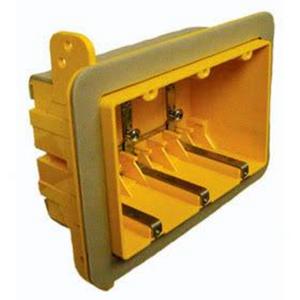
Airtight electrical back boxes
I think you're missing the point John. In an airtight house, you can't dry clothes inside, which alot of people like to do, because it is very inefficient on heating, and causes serious moisture problems. Many people don't think about where to install an appliance like a clothes dryer in an...- tew1
- Post #36
- Forum: Electrics UK
-
T
Airtight electrical back boxes
no, you can't connect a dryer to the MVHR, because it will fill the entire system with lint. What I was saying, is dryers are more commonly used in colder climates like Scandinavia and Canada. In an airtight house, the dryer would need to be located in an unheated room e.g. basement or...- tew1
- Post #34
- Forum: Electrics UK
-
T
Airtight electrical back boxes
Thanks Bernard, from my experience, a lot of mass-produced airtight homes can be designed very sterile, and often, the designers omit all the 'normal' things people expect from a house, which is something I'm interested in. Fundamentally, homes need to become more airtight, because air movement...- tew1
- Post #31
- Forum: Electrics UK
-
T
Airtight electrical back boxes
yes, but that's a cop out, it's also cold in the UK and homes need to be heated for the most part, so, it's no different. It rains alot in Canada too. I know ventilation is vital in cavities and roofs, hence the fact that insulation in cavities should be fixed to the inner leaf, leaving an air...- tew1
- Post #29
- Forum: Electrics UK
-
T
Airtight electrical back boxes
For all intensive purposes, a 'vapour barrier' is short for 'vapour control barrier'. My research is comparing UK air-tightness practices with more comprehensive strategies developed over decades in Scandinavia, Canada e.t.c. where MVHR is very common and often required by code. Ideally, all...- tew1
- Post #27
- Forum: Electrics UK
-
T
Airtight electrical back boxes
In a block wall, the block is the vapour barrier, the insulation is in the cavity, so, technically, the interior block skin is 'warm' (thermal mass). The (theoretical) cavity between the insulation and outside block is designed for moisture to condense on the cold blocks and run down to weeping...- tew1
- Post #24
- Forum: Electrics UK
-
T
Airtight electrical back boxes
RF lighting, have you encountered 'service voids' e.g. a 50mm gap between the plasterboard and vapour barrier? Is this deep enough for everything e.g. cooker points, what about RJ45/HDMI sockets for TV's e.t.c. which need deep back boxes? And what happens in the ceiling when you install recessed...- tew1
- Post #22
- Forum: Electrics UK
-
T
Airtight electrical back boxes
That's the maximum. 95% of new houses tested achieve 6 m3/hr/m2 or less, and I don't think that's achievable unless all the gaps have been sealed somehow and I'm wondering how it's done typically. I'd like to think that most buildings are a lot more energy efficient than that. For passivhaus...- tew1
- Post #21
- Forum: Electrics UK
-
T
Building Regulations On Old Loft
Just make it clear that the loft has always been living accommodation, and you are not building a loft conversion, as the loft was always intended to be used as a bedroom with a dormer window. The staircase is historic, all you are doing is replacing the roof and redoing the insulation/drywall...- tew1
- Post #5
- Forum: Building Regulations and Planning Permission
-
T
Smoke detectors
You need to install a heat detector in the kitchen, NOT A SMOKE DETECTOR!!! then, in the hall, you need an optical smoke alarm (to minimise nuisance from kitchen), upstairs, you need an ionisation alarm, and a carbon monoxide alarm (if your bedrooms are upstairs), then other rooms...- tew1
- Post #7
- Forum: Building Regulations and Planning Permission
-
T
Airtight Construction (Part L)
Hi, after getting some confused responses regarding airtight electrical boxes http://www.diynot.com/forums/electrics/airtight-electrical-back-boxes.393070/page-2 I was wondering if anyone knows what the situation is in the UK with regards to achieving Part L maximum air leakage of 10...- tew1
- Thread
- Replies: 1
- Forum: Building Regulations and Planning Permission
-
T
Airtight electrical back boxes
Interesting, well, that's given some scope for my research in itself. I'm not sure how that is the case, seeing as Part L building regulations 2010 stipulates all new buildings must have a maximum air loss of 10 m3/hr/m2.- tew1
- Post #19
- Forum: Electrics UK
-
T
Airtight electrical back boxes
The case where cold air was coming in through a thermostat was actually on a traditional block wall, where the plasterboard has been dot-dabbed into the blocks, leaving a gap which allows cold air to flow in down from the ceiling void :roll: This is the question I am asking, a vapour barrier...- tew1
- Post #17
- Forum: Electrics UK
-
T
Airtight electrical back boxes
The positive pressure idea is interesting, this is used in offices and commercial buildings, often where heat is supplied through ductwork to avoid drafts. I'm talking about sockets and switches in the plasterboard penetrating the vapor barrier on external timber framed walls. I've...- tew1
- Post #15
- Forum: Electrics UK
-
T
Airtight electrical back boxes
MVHR is very common, and is used in most new builds which aim to reach the highest standards of energy efficiency. You get better ventilation than most conventionally ventilated homes, without any heat loss, you can also combine it with ducted heat, as conventional radiators are not required in...- tew1
- Post #12
- Forum: Electrics UK
-
T
Airtight electrical back boxes
I can't believe there is no product for achieving an airtight seal around plug sockets and switches, or even for mounting boxes onto the side of wall studs. Major gap in the market. What do people do in airtight homes? Do they just slop silicon around and hope for the best?- tew1
- Post #6
- Forum: Electrics UK
-
T
Airtight electrical back boxes
Hi, I'm not sure if anyone will have an answer, but I'm doing some research into airtight construction using timber frame (e.g. on the interior of the timber studs, there is an airtight plastic membrane, taped at all corners, with fresh air brought into the structure using a mechanical heat...- tew1
- Thread
- Replies: 86
- Forum: Electrics UK