• Looking for a smarter way to manage your heating this winter? We’ve been testing the new Aqara Radiator Thermostat W600 to see how quiet, accurate and easy it is to use around the home. Click here read our review.

Decorating Tips - Preparation

Joined
12 Nov 2025
Messages
2
Reaction score
0
Country
United Kingdom
Wondering if anyone can help me with the following…

I’m currently renovating a 1960s house — mostly cosmetic work like skimming walls, fitting new skirtings and architraves, etc.

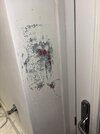
In one of the bedrooms, I’ve removed some fairly thick wallpaper and uncovered a blue, flaky layer underneath (see first picture). The plaster beneath seems to be in good condition, but I’m unsure of the best way to remove this blue layer and properly prepare the wall for skimming.

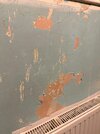
In the kitchen (which is part of a 1980s extension with a 3-year-old kitchen), the plastering and painting are quite poor. My plan is to sand everything down, fill where needed, and then prime and repaint. I used an orbital sander on a sample patch within the external door opening, and the second picture shows what was revealed.

Does this look like previous layers of paint, or could it be something else? And if I sand everything smooth, would priming and painting be the best approach?

Thanks for taking the time to read — any advice would be much appreciated!
 

Attachments

  • Bedroom.jpg
    Bedroom.jpg
    193.2 KB · Views: 33
  • Kitchen.jpg
    Kitchen.jpg
    155.9 KB · Views: 32
I am a decorator. The grey paint looks like it hasn't properly adhered. Often that is the result of the first coat not having been diluted properly. That said, if you apply a dilute coat of wallpaper paste over it and the paint doesn't start to bubble, then apply lining paper over it.

The second image looks like multiple layers of paint. The problem with using a regular orbital sander with the wrong grade of abrasive and no dust extraction is that you are likely to overheat the paint and cause it to blister. A random orbital sander with a finer grit and dust extraction would reduce the risk of overheating the paint. One the balance of probability, if you are trying to eliminate a heavy orange peel effect, it might be easier to apply lining paper over the top.

Lining paper is lovely to work with. And if you make a slight error, you can, with the right sander/abrasives sand it back.
 
I am a decorator. The grey paint looks like it hasn't properly adhered. Often that is the result of the first coat not having been diluted properly. That said, if you apply a dilute coat of wallpaper paste over it and the paint doesn't start to bubble, then apply lining paper over it.

The second image looks like multiple layers of paint. The problem with using a regular orbital sander with the wrong grade of abrasive and no dust extraction is that you are likely to overheat the paint and cause it to blister. A random orbital sander with a finer grit and dust extraction would reduce the risk of overheating the paint. One the balance of probability, if you are trying to eliminate a heavy orange peel effect, it might be easier to apply lining paper over the top.

Lining paper is lovely to work with. And if you make a slight error, you can, with the right sander/abrasives sand it back.
Thanks for your feedback. In both instances I am not looking to apply wallpaper - we have a lot of lining paper throughout the property which we would like to remove if possible. Lining paper will only be put back if plaster/wall behind is in poor condition.

Image one - wishing to re-skim and paint therefore need to remove the blue/grey layer - is this likely to be paint?

Image two - wishing to sand and re-paint. I do have fine grit sand paper and dust extraction.
 
Thanks for your feedback. In both instances I am not looking to apply wallpaper - we have a lot of lining paper throughout the property which we would like to remove if possible. Lining paper will only be put back if plaster/wall behind is in poor condition.

Image one - wishing to re-skim and paint therefore need to remove the blue/grey layer - is this likely to be paint?

Image two - wishing to sand and re-paint. I do have fine grit sand paper and dust extraction.

Image 1- the blue/grey is paint. Removing it will be time consuming though and might not be necessary. Removing it- you could use a steam stripper but you risk blowing any existing skim. I can't tell from the image if the paint is matt or silk. If the former, misting the paint may help to remove it. It is possible to sand/grind it way. I would let the plasterer advise you accordingly.

Image 2- yeah, try the finer grit.

I have no idea of the quality of finish that you are trying to achieve though.
 

If you need to find a tradesperson to get your job done, please try our local search below, or if you are doing it yourself you can find suppliers local to you.

Select the supplier or trade you require, enter your location to begin your search.


Are you a trade or supplier? You can create your listing free at DIYnot Local

 
Back
Top