• Looking for a smarter way to manage your heating this winter? We’ve been testing the new Aqara Radiator Thermostat W600 to see how quiet, accurate and easy it is to use around the home. Click here read our review.

Do I need to repoint?

Joined
6 Nov 2025
Messages
11
Reaction score
0
Country
United Kingdom
I am taking my bathroom wall back to brick in order to fit cement boards before tiling.

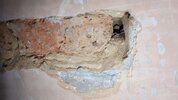
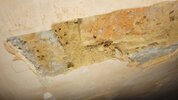
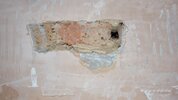
After removing a section of plaster to expose a couple of bricks, I found the brick pointing to be crumbling and pulling away with just my fingers.

- Is this lime mortar pointing? I put a piece in white vinegar, and it actively fizzed, so it probably is?
- Do I need to repoint the walls before fixing the cement boards? Or can I get away with leaving it as is?
- If I do need to repoint, how do I go about it? Rake out a few cms with an angle grinder, then repoint with lime mortar? What type of lime mortar should I use? Any particular brands?
 

Attachments

  • 1.jpg
    1.jpg
    230.8 KB · Views: 29
  • 2.jpg
    2.jpg
    293.8 KB · Views: 27
  • 3.jpg
    3.jpg
    223.1 KB · Views: 30
  • 4.jpg
    4.jpg
    131.7 KB · Views: 27
It's lime mortar. I recognise it from our previous 1930's shack.

I'd suggest it needs something to hold it together. Otherwise it will just progressively crumble. That one patch looks like there's a hole through to the cavity, which will be a heat loss against the back of the tile board.

Why are you going back to brick? The plaster looks pretty solid. You could just skim over the holes with tile adhesive and tile it. My shower room looks clean and perfect, but if you had x-ray vision and could see through the tiles and adhesive it's horrific underneath - bits of missing skim, holes and all kinds of mess. But it doesn't matter at all, just as long as it's not crumbling. Knock off any protruding bits or old adhesive first.

If it does need removing then I'd consider getting it plastered or rendered just so there's something over it all.
 
It's lime mortar. I recognise it from our previous 1930's shack.

I'd suggest it needs something to hold it together. Otherwise it will just progressively crumble. That one patch looks like there's a hole through to the cavity, which will be a heat loss against the back of the tile board.

Why are you going back to brick? The plaster looks pretty solid. You could just skim over the holes with tile adhesive and tile it. My shower room looks clean and perfect, but if you had x-ray vision and could see through the tiles and adhesive it's horrific underneath - bits of missing skim, holes and all kinds of mess. But it doesn't matter at all, just as long as it's not crumbling. Knock off any protruding bits or old adhesive first.

If it does need removing then I'd consider getting it plastered or rendered just so there's something over it all.

Decided to go back to brick and put cement boards instead of tiling on the plaster, mainly because I am putting some very large and heavy tiles, which I was worried the plaster would not hold. Also, because the walls are very uneven and the previous tiling job looked very wonky because of that so I wanted to end up with a nice square room before tiling.
 
If you're removing the plaster, no point also raking out the mortar and repointing, try fill any holes in the mortar with lime mortar, then prime the walls with diluted SBR, then attach 12mm thick cement boards in place, with tile adhesive behind, and with screws & plugs into the bricks. Then tile on top
 
If you're removing the plaster, no point also raking out the mortar and repointing, try fill any holes in the mortar with lime mortar, then prime the walls with diluted SBR, then attach 12mm thick cement boards in place, with tile adhesive behind, and with screws & plugs into the bricks. Then tile on top

Thanks, that makes sense. Just checking, would I not need to repoint because the cement boards with the adhesive would practically hold the existing pointing in place?
 
I reckon you'll be relaxing in your nice posh new bath, while listening to bits of sand raining down the back of the tile board.

Get it properly plastered.
There IS no substitute for doing the job properly (y)

The current plaster is actually fairly strong.

The only reason I am removing it is that the cement board manufacturer recommends fitting it directly onto the brick instead of plaster, as the plaster may not be strong enough to hold the cement board and tiles.

I am definitely up for doing this properly. If I was to keep the existing plaster, are you suggesting to put the cement board on top of it?
 
I’d put it on top of only to save the dust and cost of removal. Just add a few mechanical fixings (screws)
 
I wouldn't bother with the tileboard. Subject to knocking the lumps off and trying a long spirit level or straight edge at all angles all across it. It may be that the previous tiles were wonky, not the plaster.

I tiled over a right load of mess, with a bit of care you can make a silk purse out of a sow's ear.
 
My efforts...

Before.jpg


During.jpg


Obviously all grouted after. You wouldn't have a clue that mess is all there now. I used a tile levelling system to align all their edges.
 
I was actually photographing the floor and ceiling, but you can see some of the tiles. There's nothing but adhesive between the old mess and the tiles.

I added the timber/tileboard bit to make the shower deeper. I pulled off the rusty corner beading from the plaster before I built it.
 
I wouldn't bother with the tileboard. Subject to knocking the lumps off and trying a long spirit level or straight edge at all angles all across it. It may be that the previous tiles were wonky, not the plaster.

I tiled over a right load of mess, with a bit of care you can make a silk purse out of a sow's ear.

Unfortunately, the plaster itself is wonky. I have removed all the tiles and put my large spirit level on the wall, and it has large bumps and valleys all over the place. Also, after some replies here, I took a closer look and found quite a few hollow-sounding spots, which makes me think the plaster itself might not be as sturdy as I initially thought.

So I don't think I can tile on this plaster after all, unfortunately, and if I were to put the cement boards over the plaster, I would get into water pipe clearance issues (17mm existing plaster + 12mm cement board + 10mm tile), so I have a feeling I will end up removing the existing layers of plaster after all. I might be overkilling this in the end, but given this is my first major project, I don't mind going as belt-and-braces as possible.

I appreciate all the advice!
 

If you need to find a tradesperson to get your job done, please try our local search below, or if you are doing it yourself you can find suppliers local to you.

Select the supplier or trade you require, enter your location to begin your search.


Are you a trade or supplier? You can create your listing free at DIYnot Local

 
Back
Top