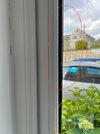
However if you ask AI the question then you get this.....
Spacer bars in double glazed units can bow inward (or sometimes outward) due to several causes, most of which are related to pressure differences, manufacturing errors, or temperature changes. Here’s a breakdown of the main causes:
1. Pressure Differential (Barometric or Thermal)
Cause: If the double-glazed unit is sealed at a different altitude or temperature than where it's installed, the air or gas inside can expand or contract.
Effect: This pressure difference causes the glass panes to flex slightly. Since the glass is bonded to the spacer, the spacer bar may bow inward (if the pressure inside is lower) or outward (if higher).
Example: A unit sealed in a warm factory but installed in a cooler environment will have internal contraction, pulling the spacer inward.
2. Gas Fill or Vacuum Issues
Cause: Improper or inconsistent gas filling (argon, krypton, etc.) or a vacuum forming inside the unit due to seal failure or incorrect filling.
Effect: Creates negative pressure, pulling the panes and spacer inward.
3. Temperature Fluctuations
Cause: The materials (glass, spacer, sealant) expand and contract at different rates due to temperature changes.
Effect: This can result in temporary or permanent bowing of the spacer bar, especially if the unit was assembled under high or low ambient temperatures.
4. Desiccant Activity / Moisture Absorption
Cause: Desiccant inside the spacer absorbs moisture and can cause a very slight vacuum as it reduces vapor pressure inside the unit.
Effect: This can contribute to minor inward bowing, especially over time.
5. Manufacturing or Assembly Errors
Cause: Misalignment or uneven sealing during manufacturing, or non-uniform butyl/silicone application.
Effect: Can cause the spacer bar to deform as it's held under tension by the glass and sealant.
6. Sealant Shrinkage
Cause: Over time, organic sealants (especially polysulfide or polyurethane) can shrink slightly.
Effect: This shrinkage can pull the spacer inward, particularly on smaller or thinner units.
If you're seeing consistent inward bowing across multiple units, it’s likely a combination of pressure differential and gas fill or sealing issues.