Losing leaves in woods/hedges etc

Joined
22 Nov 2018
Messages
2,058
Reaction score
44
Country
United Kingdom
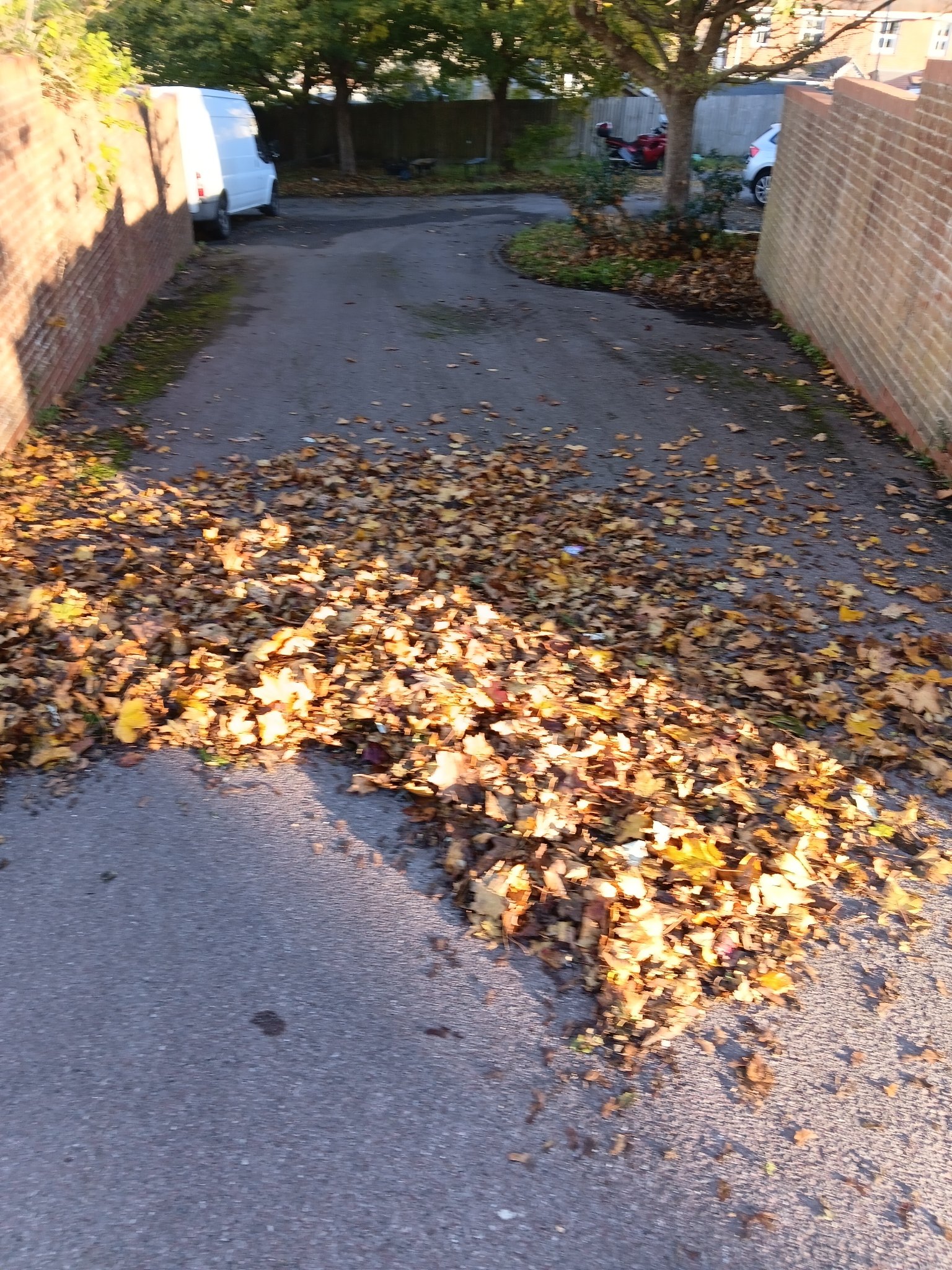
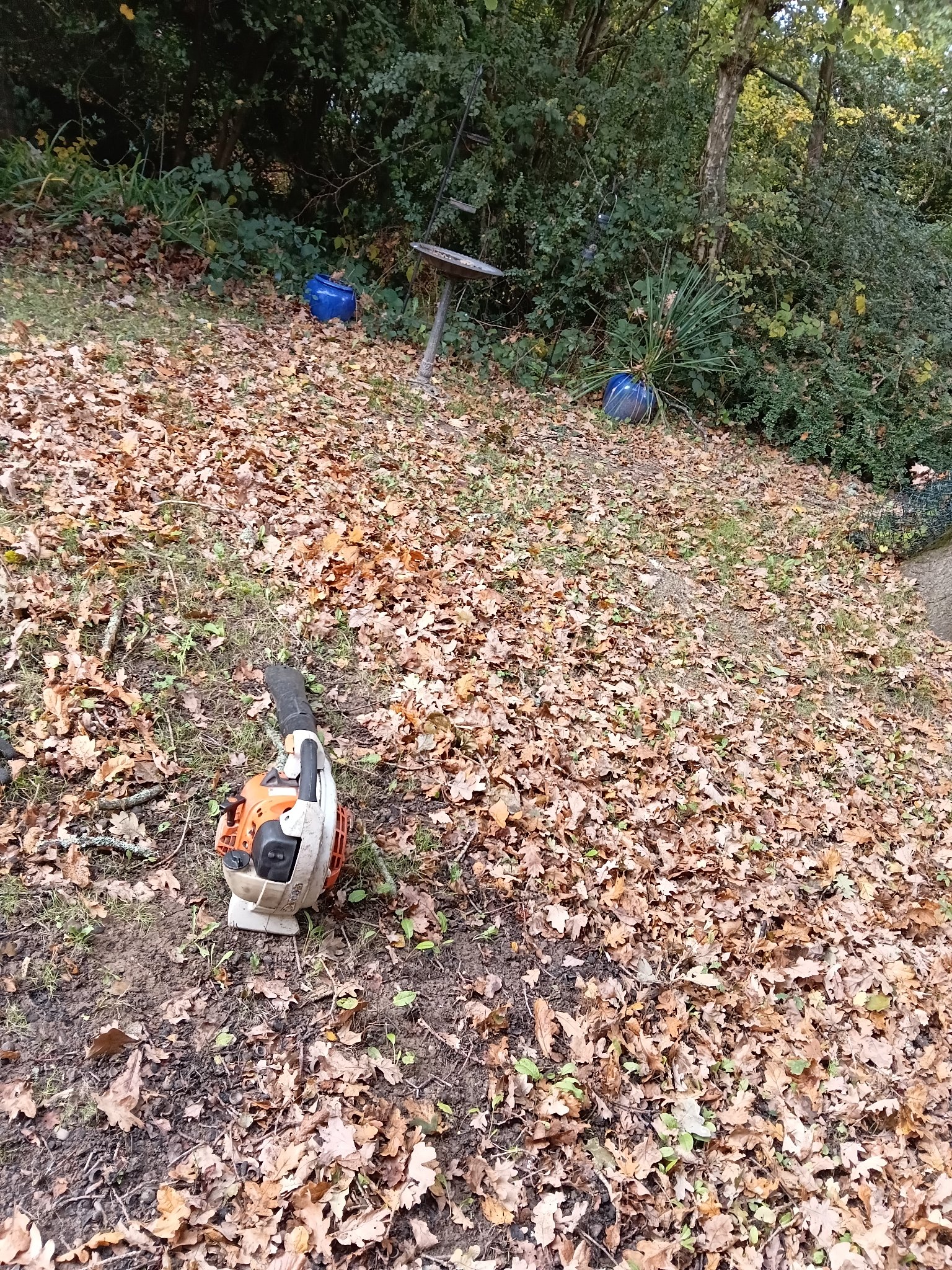
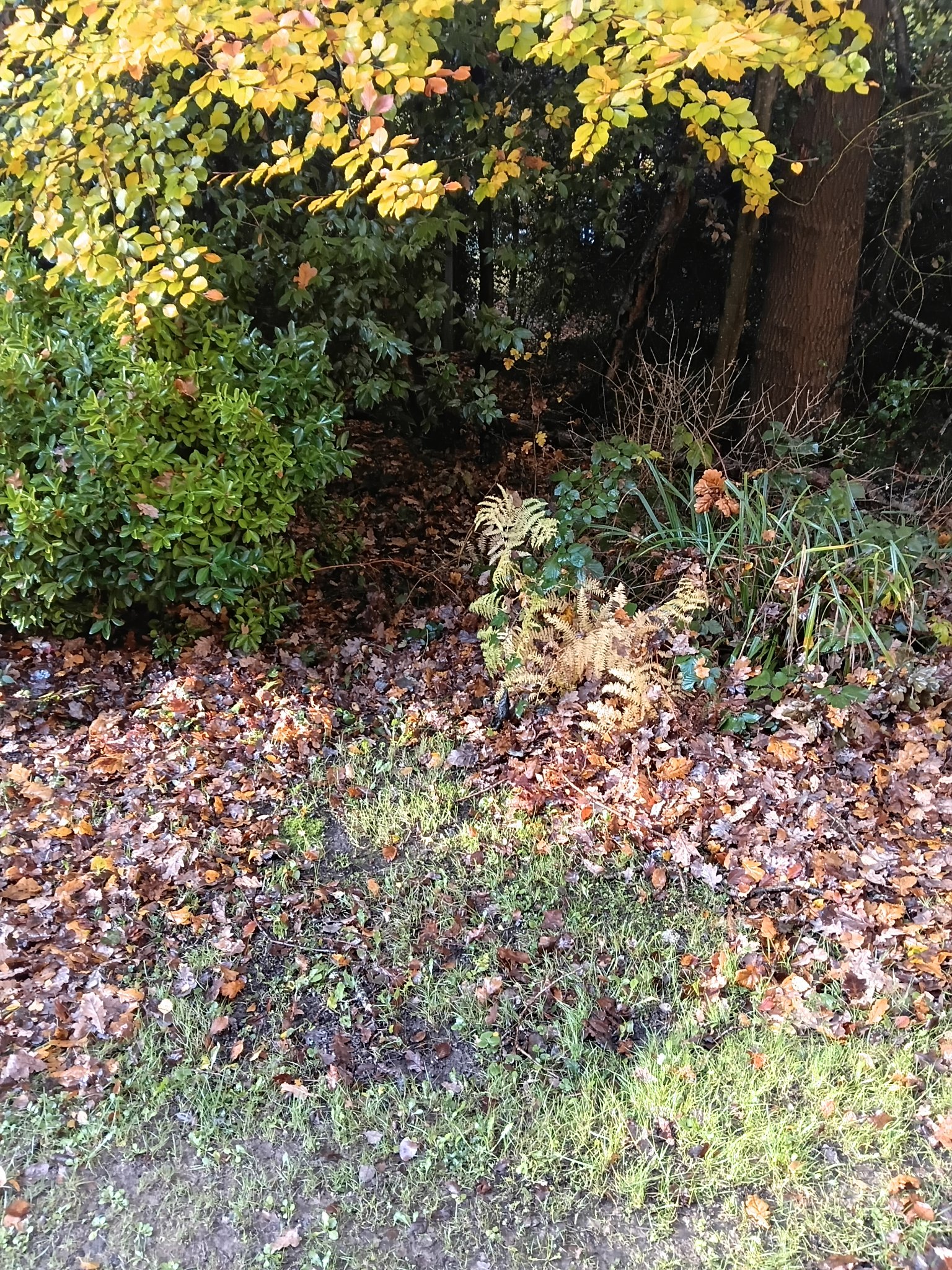
Putting leaves into bags then dragging them deep into woods and blowing leaves under bushes is fine right? It's all degradable. Is it fly tipping to put leaves which are from the tree in woods you're dumping it by?

Need to get it under bushes which trap it so doesn't blow out?


blow it around corners and down a lane until you get it all to bush it's going under worth it?


sick of bagging it
20261119_095302.jpg
20261113_143657.jpg
20261109_114543.jpg
 
If you have already bagged it then you will have some lovely leaf mould compost for your borders by next year why waste it.
 
Where I am currently painting, the pointers, when tidying up at the end of the day, push all of the leaves back on to the pavement next to the street tree which dropped them.

I watched the council guy cleaning up the leaves on Saturday. He spent a whole day doing one side of the street (covering 25 houses and 5 trees), and he wasn't slacking. He came back Monday, another day to do my side. The other side was covered in leaves again.

I have no idea about the legality of pushing the leaves which fell from a street tree back into the street but I guess you could argue that you should not have to pay for the disposal of those leaves.
 
there was an interesting one from a few years ago


That is a really odd article. It says that the letter was delivered by a local resident association and said they would report him to trading standards. Why would they comment? Later in the article, the council say they had no issue with his actions ("the removal of leaves is seasonal and legitimate").

A proper non-story.
 
You need a compost heap. If you mix brown leaves and green grass-cuttings they combine to rot faster and make a well-balanced compost. Ideally fork it over a couple of times to mix them and put sides to middle while it's working,

I put autumn leaves on flowerbeds as a thick mulch, after cutting back the summer growth. Once they have been wetted by rain they stick into a heavy organic mat that doesn't blow around. By spring they will be rotted and the worms take them down to feed the soil. The birds kick them around a bit to eat the insects.

A rake and broom are less noisy than a blower.

If it's not convenient to build a heap or box, for example a frame of decking boards which are quite cheap, you can use a builders bag, I think they are a one-metre cube, which you can drag around while filling it, and put in a quiet corner for the winter. I also use one for prunings, which will rot quicker if you chop or shred them, and mix with leaves or grass. Chopping with secateurs is slow, but not arduous if you have a small amount.
 
I tend to let them lay where they fall: leaves will provide protection for roots and mulch into the earth over winter.
 
you can use a builders bag,

I’ve twice had builders bags full of leaves stolen. The second one even had “stolen from …” painted on it in huge letters.

I suggest composting the leaves separately from other garden waste if you can. The resulting compost is different from general compost - it has less nutrients but also fewer weed seeds and a finer texture.

Heaping leaves on the borders - whether that’s a good idea depends on what is growing there. For example, if you have small spring bulbs like snowdrops or crocuses they may struggle to get through a thick crust of leaves. More substantial, or later, plants will be fine.
 
Last edited:
I suppose so, but it suits my mix of plants. I mulch the display bed to six inches in early winter. By the time the tulips push through, it has settled and rotted to two.

By the time the tulips have finished, it has dried out and been kicked around by the birds,and is ready for the summer plants, and I apply more round them once they are up to six inches.

I never need to dig it, because I employ hard-working worms
 
If you are concerned about microplastics, you might be better off with different containers/bags for vegetable plots.
 
It's very easy to make a compost bin out of decking boards. The easiest length to carry is six foot. Big gaps between the boards are a benefit for ventilation. I like to use bolts rather than screws or nails as they have no sharp ends. Which reminds me, tell your GP you are a gardener and ask for Tetanus jabs. It does not need a concrete base, worms will come up from the ground and excess water will soak away. You can put a tarp or board on top when it is full to keep it warm and rot quicker. The boards at the bottom, and the post ends, will rot first, but should last several years. Two bays enable you to dig out and use one while the other is still being filled. Diggjng out the first bin to fill the second will turn and mix it, which gives best results. I had a relative who had two bays made of concrete gravel boards in slotted posts. This is more expensive and they are heavy to carry. Do not put it against a wooden fence as it will rot.

If you have more time than money you can often pick up left-over or offcut boards and posts on freegle.

maxresdefault.jpg


The one in the pic has the front boards slid into slots so you can lift them out to empty it. Or you can use cleats. You can also leave the bottom two out to get a shovel in, which is easier woodwork. Rigid boards at the front, especially at the top, hold the box in shape and make it stronger. If the boards are inside the posts, rather than outside as shown, you are not reliant on the strength of the nails to resist the forces pushing it spart.
 
Last edited:

If you need to find a tradesperson to get your job done, please try our local search below, or if you are doing it yourself you can find suppliers local to you.

Select the supplier or trade you require, enter your location to begin your search.


Are you a trade or supplier? You can create your listing free at DIYnot Local

 
Back
Top