Plasterers and diyers don't discrimate when they knock nails through cables, the op says it is not a new fault.A bulb View attachment 396857no earth, so can't cause an earth fault. Switch is the same in most cases. The cable, unlikely to be a problem, unless you have rodents.

You are using an out of date browser. It may not display this or other websites correctly.
You should upgrade or use an alternative browser.
You should upgrade or use an alternative browser.
RCBO tripping - identify likely location - help.......
- Thread starter GoodDIYjob
- Start date

- Joined
- 27 Jan 2008
- Messages
- 29,464
- Reaction score
- 3,618
- Location
- Llanfair Caereinion, Nr Welshpool
- Country

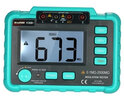
My insulation resistant tester cost me £35
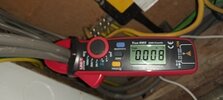
 same for the multi-meter
  the RCD tester/loop impedance was around £85
 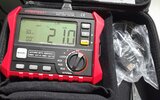 does the RCD test OK, but the loop test I think the results are wrong. But don't really need a loop test, the insulation tester I have seen cheaper, the clamp-on meter was the cheapest I could find to measure 1 mA and also DC. I have two clamp-on multimeters, but
 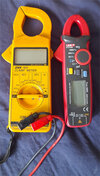 the other one (yellow) I got when working in Hong Kong, does not measure DC and only 10 mA increments but does measure frequency. It was cheap, can't remember how many HK$ it was, I was working there at the time.
But all the kit and no idea does not help. Likely it will need one to disconnect part of the circuit, and work out which half is faulty, then repeat on the faulty section, and so on until one isolates the problem. It may be a standard multimeter is good enough, but I am dyslexic, and so my problem is to write a detailed instruction set which can be followed to find the fault.
Being dyslexic helps with engineering, it means we think outside the box, but to relay that information to others, does cause a problem. Had the problem with daughter's house, and it was just a 3.5 mm screw which had touched a wire which had been poorly stripped leaving a small cut in the insulation.
same for the multi-meter the RCD tester/loop impedance was around £85 does the RCD test OK, but the loop test I think the results are wrong. But don't really need a loop test, the insulation tester I have seen cheaper, the clamp-on meter was the cheapest I could find to measure 1 mA and also DC. I have two clamp-on multimeters, but the other one (yellow) I got when working in Hong Kong, does not measure DC and only 10 mA increments but does measure frequency. It was cheap, can't remember how many HK$ it was, I was working there at the time.But all the kit and no idea does not help. Likely it will need one to disconnect part of the circuit, and work out which half is faulty, then repeat on the faulty section, and so on until one isolates the problem. It may be a standard multimeter is good enough, but I am dyslexic, and so my problem is to write a detailed instruction set which can be followed to find the fault.
Being dyslexic helps with engineering, it means we think outside the box, but to relay that information to others, does cause a problem. Had the problem with daughter's house, and it was just a 3.5 mm screw which had touched a wire which had been poorly stripped leaving a small cut in the insulation.
Thanks all, just catching up. Thanks for the pointers and suggestions. I will start and turn all power off and look what my multi meter says for resistance between neutral and earth on the faulty lighting cct. If I've read the instructions right. I will re-read again before carrying out. I could look at buying a few test tools. They're always handy but sometimes need someone who has more than half a clue to operate!!
Regards, to an earlier comment. There is historic evidence of mice in the loft space. old droppings, old bait, I've seen a dead mouse amongst the mineral wool insulation which covers everything and makes it hard to inspect large areas easily. In addition the two dormer floors and walls obstruct some wiring. I've found a couple of junction boxed and theyre tucked so tight between the joists and the ceiling plaster with tight cable lengths as well, I'm a bit apprehensive to pull them out as they may need re-doing and re-locating... Even jointing cable under there is tight....
Back to rodents - I don't think they're active now, but on some of the wiring that was not tacked to inside of joists, there were some nibble marks on exposed corners near eaves. None I found had gone to internal conductors but I may not have found it .... yet....
Regards, to an earlier comment. There is historic evidence of mice in the loft space. old droppings, old bait, I've seen a dead mouse amongst the mineral wool insulation which covers everything and makes it hard to inspect large areas easily. In addition the two dormer floors and walls obstruct some wiring. I've found a couple of junction boxed and theyre tucked so tight between the joists and the ceiling plaster with tight cable lengths as well, I'm a bit apprehensive to pull them out as they may need re-doing and re-locating... Even jointing cable under there is tight....
Back to rodents - I don't think they're active now, but on some of the wiring that was not tacked to inside of joists, there were some nibble marks on exposed corners near eaves. None I found had gone to internal conductors but I may not have found it .... yet....
- Joined
- 27 Jan 2008
- Messages
- 29,464
- Reaction score
- 3,618
- Location
- Llanfair Caereinion, Nr Welshpool
- Country
 I have the cure. Here in delta configuration they will, in the main, remove rodents, but also may deposit the odd unit to show they are doing their job, dried frogs etc.
As it's a bungalow, the fault-finding (neutral leakage to earth), should be fairly easy to trace....
Up in the loft, trace out where the lighting feed runs, beginning from the consumer unit, and draw it out on a little diagram. Once done, you move downstairs, and work out which wiring method has been used - either the neutrals will be looped at the wall switches, or looped at the ceiling roses. Multiple T&E's at the ceiling roses, would suggest the latter.
Part the neutral loop, at roughly the mid-point/half, of the run of the lighting feed, and try switching your RCBO back on, if it holds, then your fault is in the half of the circuit, which you have disconnected. If it still trips, then repeat the procedure, quartering the feed disconnection. Progressing that way, you should be able to localise the precise location of the fault.
Between times, you must, of course - remember to isolate the power.
Up in the loft, trace out where the lighting feed runs, beginning from the consumer unit, and draw it out on a little diagram. Once done, you move downstairs, and work out which wiring method has been used - either the neutrals will be looped at the wall switches, or looped at the ceiling roses. Multiple T&E's at the ceiling roses, would suggest the latter.
Part the neutral loop, at roughly the mid-point/half, of the run of the lighting feed, and try switching your RCBO back on, if it holds, then your fault is in the half of the circuit, which you have disconnected. If it still trips, then repeat the procedure, quartering the feed disconnection. Progressing that way, you should be able to localise the precise location of the fault.
Between times, you must, of course - remember to isolate the power.
I don't think he has an RCBO to hand.
I guess he could use the other one, on the other light circuit if he wanted to go this way
I guess he could use the other one, on the other light circuit if he wanted to go this way
You're right. But I will either go and buy one or I could remove one from an active cct to carry out tests. So will progress someway and report back. Thank you.I don't think he has an RCBO to hand.
I guess he could use the other one, on the other light circuit if he wanted to go this way
- Joined
- 27 Jan 2008
- Messages
- 29,464
- Reaction score
- 3,618
- Location
- Llanfair Caereinion, Nr Welshpool
- Country
There are what look like mice dropping in my loft, but actually they come from bats. As far as I know, bats do not eat cables?
The disconnecting of chunks of wiring to me is easy, the hardest job it is getting up again after getting down to wiring levels, but the work to me seems simple, but that is because I have spent most of my life as an electrician.
The hard bit is to tell someone else how to do the work. The difference between using a multi-meter to test ohms with a 9 volt battery, and an insulation tester, which has an inverter built in and used 250/500/1000 volts to test, is in some cases massive, I remember testing a motor in a compressor for a friend, multi-meter showed infinity, it ruptured a fuse, re-tested with 500 volts, and it showed dead short.
So you know you have a fault, if the multimeter shows a fault, then you can use it to find the fault, if it shows open circuit, then the multimeter will not help.
In the main, we are looking at water, be it a leak, or in some animal's body, even a spider can sometimes trip a RCD/RCBO. The other cause is vibration, insulation can wear through, but that is more unusual. We tend to look at likely places first, outside lights for example, but if that fails, then we have to work step by step moving slowly to or away from the consumer unit, the logical method is to split it in half, but that only work if we have a way to test.
So for me, guess around halfway around your lights, and test each half with the insulation tester, then take the bad half, and split that again half way, and test again, but without the insulation tester, that is not so easy, but you can still move ceiling rose to ceiling rose, connecting and disconnecting more or less of the circuit, where the problem lies, is you can cure the problem without realising you have cured it, or introduce more problems, and so one has to assess the skill of the tester, will the process of testing make it worse?
The disconnecting of chunks of wiring to me is easy, the hardest job it is getting up again after getting down to wiring levels, but the work to me seems simple, but that is because I have spent most of my life as an electrician.
The hard bit is to tell someone else how to do the work. The difference between using a multi-meter to test ohms with a 9 volt battery, and an insulation tester, which has an inverter built in and used 250/500/1000 volts to test, is in some cases massive, I remember testing a motor in a compressor for a friend, multi-meter showed infinity, it ruptured a fuse, re-tested with 500 volts, and it showed dead short.
So you know you have a fault, if the multimeter shows a fault, then you can use it to find the fault, if it shows open circuit, then the multimeter will not help.
In the main, we are looking at water, be it a leak, or in some animal's body, even a spider can sometimes trip a RCD/RCBO. The other cause is vibration, insulation can wear through, but that is more unusual. We tend to look at likely places first, outside lights for example, but if that fails, then we have to work step by step moving slowly to or away from the consumer unit, the logical method is to split it in half, but that only work if we have a way to test.
So for me, guess around halfway around your lights, and test each half with the insulation tester, then take the bad half, and split that again half way, and test again, but without the insulation tester, that is not so easy, but you can still move ceiling rose to ceiling rose, connecting and disconnecting more or less of the circuit, where the problem lies, is you can cure the problem without realising you have cured it, or introduce more problems, and so one has to assess the skill of the tester, will the process of testing make it worse?
So for me, guess around halfway around your lights, and test each half with the insulation tester, then take the bad half, and split that again half way, and test again, but without the insulation tester, that is not so easy, but you can still move ceiling rose to ceiling rose, connecting and disconnecting more or less of the circuit, where the problem lies, is you can cure the problem without realising you have cured it, or introduce more problems, and so one has to assess the skill of the tester, will the process of testing make it worse?
Yep, it has to be tackled, in a very logical way. Hopefully for the OP, the loop-in of the neutrals, will be all at the ceiling rose, making it easy for the OP to progress his testing.
If neutrals were looped at the switches, wouldn’t that avoid having to get up a ladder? (Except maybe, the room with the fault ?)
If neutrals were looped at the switches, wouldn’t that avoid having to get up a ladder? (Except maybe, the room with the fault ?)
Ceiling roses are usually easier, just unscrew the cover, and the neutrals are obvious/well-marked on the terminals.
Ok.
Board turned off at double pole isolator.
Neutral removed from mcb. (Edit. Actually neutral of problem cct removed from board neutral termination.)
Multimeter set to 200 ohms.
Between neutral and earth of problem cct. 1.5 ohms.
Between neutral of problem cct and earth connections on board. Infinity. If I switch to highest range 2000k ohms it showed 1,546ohms.
I can't get an RCBO until Monday. Also i may need an insulation tester? Will a cheapie run on 6x1.5v batteries actually work or e useful in my scenario.
Tks
Board turned off at double pole isolator.
Neutral removed from mcb. (Edit. Actually neutral of problem cct removed from board neutral termination.)
Multimeter set to 200 ohms.
Between neutral and earth of problem cct. 1.5 ohms.
Between neutral of problem cct and earth connections on board. Infinity. If I switch to highest range 2000k ohms it showed 1,546ohms.
I can't get an RCBO until Monday. Also i may need an insulation tester? Will a cheapie run on 6x1.5v batteries actually work or e useful in my scenario.
Tks
Last edited:
Between neutral and earth of problem cct. 1.5 ohms.
Right there, is the cause of the trip! I'm surprised that, whoever swapped the RCBO for an MCB, didn't leave the removed item with you..
Now you just need to track down what is causing your 1.5Ohms, by splitting the neutrals, near the mid-point, and checking your 1.5 to see if it is still there, or not. If not, your fault is beyond the mid-point.
It seems, you may not need the insulation tester.
Yeah ok. Thanks. I'll double check what i,m telling you tomorrow. Which i guess indicated a dead short between neutral and earth ..... somewhere.Right there, is the cause of the trip! I'm surprised that, whoever swapped the RCBO for an MCB, didn't leave the removed item with you..
Now you just need to track down what is causing your 1.5Ohms, by splitting the neutrals, near the mid-point, and checking your 1.5 to see if it is still there, or not. If not, your fault is beyond the mid-point.
It seems, you may not need the insulation tester.
The switches just have live in and out. So all neutrals in loft.
There aren't many ceiling roses anymore. Maybe 2 most have been changed to flush led down lights.
There are at least 2 junction boxes for lighting that maybe impossible to access without cutting into ceiling.
The downstairs lighting is actually already separate into 2 ccts. Only 1 is a problem. Most lights affected are in the non loft conversion area which is a positive. But strangely one back bedroom under the study loft is on this problem cct. It is on a rose though.
Thanks a lot for help so far!!
I should of just asked for it. But this fault showed itself when an electrician did a cu change out. So the quote was for all RCBOs. The lighting cuts were on the non rcd protected side of board. So he changed the cu, then said I had a fault and he couldn't use the rcbo... I know, what he really needed to do was fault find. And I did walk around pulling o some light fittings with him, but that was the end of it!! He doesn't seem interested in replying now or not quickly..I'm surprised that, whoever swapped the RCBO for an MCB, didn't leave the removed item with you..

DIYnot Local
Staff member
If you need to find a tradesperson to get your job done, please try our local search below, or if you are doing it yourself you can find suppliers local to you.
Select the supplier or trade you require, enter your location to begin your search.
Please select a service and enter a location to continue...
Are you a trade or supplier? You can create your listing free at DIYnot Local
Similar threads

- Replies
- 10
- Views
- 5K
- Replies
- 0
- Views
- 919