

Dear Sparkies,
I have two EICRs from my house, the first/older one says I have TN-C-S and the second/newer one (post CU & Meter replacement) says TN-S. The 100a incoming supply was not amended. The first EICR was commissioned by the previous owner via an estate agent for a rental... the second one I commissioned when I moved in. I trust the second one, also because I can see the earth bonding to the supply sheath before it goes into the henley block.
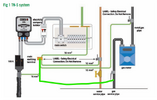
Anyhow, my setup looks basically like the standard TN-S, with additional bonding from the earthing terminal to the incoming gas supply iron pipe. All pipeworks after the gas meter are copper and bonded to the earthing terminal as well, and as expected.
Questions for my understanding
>> I had the old incoming lead water supply replaced by MPDE and I am going to get the old iron gas supply also replaced by presumably MDPE as well. Whilst I am not sure the additional bonding form the earthing terminal to the incoming iron gas supply was required in the first place, it surely won't be require after being replaced by MDPE. For earthing purposes I would still have the incoming earth via my TN-S setup, so I would not need earthing/bonding to a conductive supply pipe that is in actual contact with the earth/ground, correct? As in, given that both incoming supply pipes are not conductive anymore, I would still not require a special separate earthing rod or so to be installed.
>> Would it also be correct to state that the internal protective bonding inside the property after the meter/stopcock for both water and gas need to remain to ensure protective equipotential bonding of exposed parts not part of the electrical installation? So to protect in a fault scenario where an internal live cable touches say a copper pipe, so the current has a way to escape, go out and back in to trip to trip the surge protection device?
If I do require any changes to my earthing/bonding setup of course this will not be DIYed but done by a certified electrician.
I have two EICRs from my house, the first/older one says I have TN-C-S and the second/newer one (post CU & Meter replacement) says TN-S. The 100a incoming supply was not amended. The first EICR was commissioned by the previous owner via an estate agent for a rental... the second one I commissioned when I moved in. I trust the second one, also because I can see the earth bonding to the supply sheath before it goes into the henley block.
Anyhow, my setup looks basically like the standard TN-S, with additional bonding from the earthing terminal to the incoming gas supply iron pipe. All pipeworks after the gas meter are copper and bonded to the earthing terminal as well, and as expected.
Questions for my understanding
>> I had the old incoming lead water supply replaced by MPDE and I am going to get the old iron gas supply also replaced by presumably MDPE as well. Whilst I am not sure the additional bonding form the earthing terminal to the incoming iron gas supply was required in the first place, it surely won't be require after being replaced by MDPE. For earthing purposes I would still have the incoming earth via my TN-S setup, so I would not need earthing/bonding to a conductive supply pipe that is in actual contact with the earth/ground, correct? As in, given that both incoming supply pipes are not conductive anymore, I would still not require a special separate earthing rod or so to be installed.
>> Would it also be correct to state that the internal protective bonding inside the property after the meter/stopcock for both water and gas need to remain to ensure protective equipotential bonding of exposed parts not part of the electrical installation? So to protect in a fault scenario where an internal live cable touches say a copper pipe, so the current has a way to escape, go out and back in to trip to trip the surge protection device?
If I do require any changes to my earthing/bonding setup of course this will not be DIYed but done by a certified electrician.

