
A homeowner has a houseful of double-glazed uPVC windows fitted by a national installer maybe ten to fifteen years ago. Several of the handles have gone loose – one or two feel like they could come away in your hand. The trouble is there are no visible screws and no obvious cover plates to lever off. They want to know how to tighten them without damaging the handles or paying a call-out fee.
This is a common one in UK houses. Before you start spending money, do a couple of simple checks so you’re fixing the cause, not the symptom. I’ll run through what’s likely happening, what you can safely check yourself, and what a proper fix looks like, plus the usual bodges that don’t last.
What’s likely going on
Nine times out of ten, a loose uPVC window handle isn’t a broken handle. It’s two screws that have worked loose over years of opening, closing and locking. The handle pivots on a square spindle that drives the gearbox in the window’s locking mechanism (the espagnolette, or ‘espag’ for short). Every time you turn the handle, a tiny bit of leverage goes through those fixing screws. Add a decade of use, a bit of seasonal movement in the frame, and the screws back themselves off.
The reason you can’t see the screws is design, not magic. On most modern uPVC handles the fixings are hidden behind a slim cover plate or rose that sits flush with the body of the handle. On the older style fitted by some of the big national installers, the entire decorative back plate clips on over the screws, so until you know the trick, it looks like a sealed unit. Once you know where to look, it’s a five-minute job per window.
Simple checks first
Before you start prising anything, run through these:
- Turn the handle and watch how it moves. If the whole body wobbles on the frame but the locking action still works, you’ve got loose fixing screws. That’s the easy fix.
- If the handle spins freely without locking the window, the spindle or gearbox has failed inside the frame. That’s a different job, and a new handle alone won’t sort it.
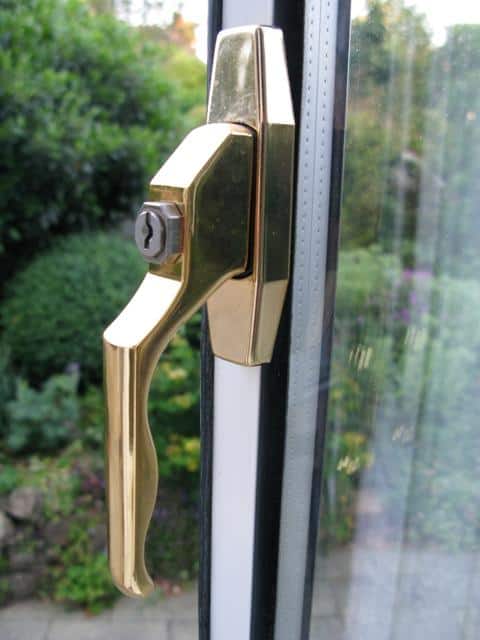
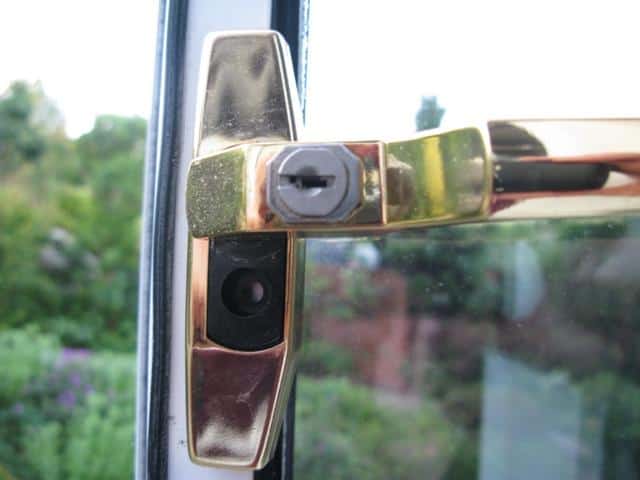
- Look for a small cover or rose at the base of the handle, where it meets the frame. On many handles this rotates or slides to expose two screws. Try turning it 90 degrees with your fingers first.
- With the handle in the locked (downward) position, look along the back plate where it meets the uPVC. If you can see a hairline gap, that’s your clue: the back plate is a clip-on cover, not part of the handle casting.
- Check if the handle is keyed. If it is, lock and remove the key before you start poking around, so the spindle stays put.
If the handle wobbles but still locks, you’re almost certainly looking at loose screws behind a cover. If it won’t lock at all, skip ahead to the gearbox section.
How to get to the hidden screws
On the clip-on back plate type, the method is straightforward:
- Turn the handle to the locked (downward) position. This lines up the cover so it can be released.
- Take a thin, stiff blade: a decorator’s knife, a thin filling knife, or an old kitchen knife you don’t mind marking.
- Slide the blade into the gap between the back plate and the window frame, at the base of the handle.
- Gently lever the back plate towards you, away from the frame. It should pop off the clips with a small amount of force.
- Underneath you’ll find two (sometimes four) crosshead screws holding the handle body to the frame.
- Nip them up with a screwdriver. Firm but not gorilla-tight. uPVC and the metal reinforcement behind it will strip if you overdo it.
- Click the back plate back on. Job done.
If the back plate won’t shift after a fair bit of gentle pressure, stop and look again. Some designs have a tiny grub screw on the underside, or a rose that twists rather than levers. Don’t keep forcing it or you’ll crack the cover.
Proper fix: good, better, best
**Good:** Tighten the existing screws as above. If they spin without biting, the screw hole in the metal reinforcement has worn. A slightly longer or fractionally fatter screw of the same head type will usually find fresh metal and bite again. Don’t go mad on length, because you don’t want to foul the locking mechanism behind.
**Better:** If one or two handles are properly tatty, scratched or the spring has gone soft, swap them for new ones. Generic replacement uPVC espag handles are widely available, come in left and right-hand versions, and are sold by spindle length (the square bar that goes into the gearbox, commonly 30mm to 55mm). Measure the existing spindle before you buy. Match the screw centres too. Most are 43mm but not all. A like-for-like swap takes about ten minutes per window.
**Best:** If the window won’t lock properly even with a tight handle, the gearbox inside the frame is on its way out. That’s a replacement espag mechanism, and it slides out of the edge of the sash once you remove a row of small screws. They’re not expensive but you need to identify the correct one (length, backset, and the position of the cams). If you’re not comfortable measuring and ordering the right part, a local window repair specialist will do the lot for a sensible price, far less than the original installer’s hourly rate.
Bodges and mistakes to avoid
- Don’t squirt WD-40 or grease into the handle hoping it’ll firm up. It won’t. Loose screws don’t get tighter with lubricant, and you’ll just attract dirt.
- Don’t tape or glue the handle to the frame. Sounds obvious, but people do it. The handle will still wobble, and you’ll have a sticky mess to clean off when you finally fix it properly.
- Don’t overtighten. The metal reinforcement inside a uPVC frame is thin. Strip the thread and you’ve turned a five-minute job into a handle replacement with oversize screws or wall plugs, neither ideal.
- Don’t lever the back plate with a big screwdriver. You’ll mark the frame and crack the cover. Thin blade, gentle pressure, locked position.
When to bring in a specialist
If the handle turns but the window doesn’t lock, or you can hear the gearbox crunching, that’s beyond a handle tighten. A window repair firm (not necessarily the original installer) can swap the mechanism for a fraction of a full window replacement. Same goes for any window where the sash has dropped and won’t close square. That’s hinge or packer work, not a handle issue.
Gas and major electrics aside, this is well within DIY territory. The only real risk is cosmetic damage to the handle cover if you get heavy-handed.
Reality check
You’ll need fifteen minutes per window once you’ve cracked the first one. Have a small tub or magnetic tray for the screws, because they’re easy to drop into a carpet and lose. If you’re replacing handles rather than just tightening, order one spare beyond what you need. It’s worth it for the postage saved when you find another loose one next month. And if the windows are well over fifteen years old and several mechanisms are tired, it’s worth budgeting for a gradual refresh of handles and gearboxes rather than chasing each one as it fails. The frames themselves usually have plenty of life left. It’s the moving parts that wear out first.