
A homeowner fitted a smart thermostat themselves on what looked like a Y-plan system (one 3-port motorised valve, hot water cylinder, separate room stat). The wiring went in following the manufacturer’s manual and, on the face of it, everything worked – hot water on demand, heating on demand, app control all behaving. The catch: every so often, usually in the middle of the night, the circulating pump would burst into life on its own. Both heating and hot water were ‘off’ at the controls, yet turning the cylinder thermostat down silenced the pump every time. Boiler PCB was replaced a couple of years back, the 3-port valve about a year ago. The question is the obvious one – is this a wiring cock-up from the swap, a dying cylinder stat, or something deeper in the boiler?
What’s likely going on
This is a classic story of a smart stat going onto an older Y-plan setup. The symptoms point hard at a control wiring issue rather than a failed component. Here’s the logic: if turning the cylinder stat down stops the pump, the cylinder stat is the thing closing the circuit. But on a properly wired Y-plan, the cylinder stat should only have a live feed when the programmer (or in this case the smart stat’s heat link) is actually calling for hot water. No call, no live, no way for the stat to switch anything on.
So if the pump is running with everything ‘off’, the cylinder stat is getting a live from somewhere it shouldn’t. Nine times out of ten that’s down to one of two things: a pair of wires swapped at the heat link (the ‘call for heat’ and ‘satisfied’ wires are often the same colour – both yellow on some setups), or wires the wrong way round at the cylinder stat itself. Don’t rule out a previous installer having already had a fiddle – if the old programmer was a simpler one, a quirk in the wiring might have been masked for years and only shows up now the new controller actually uses all the terminals.
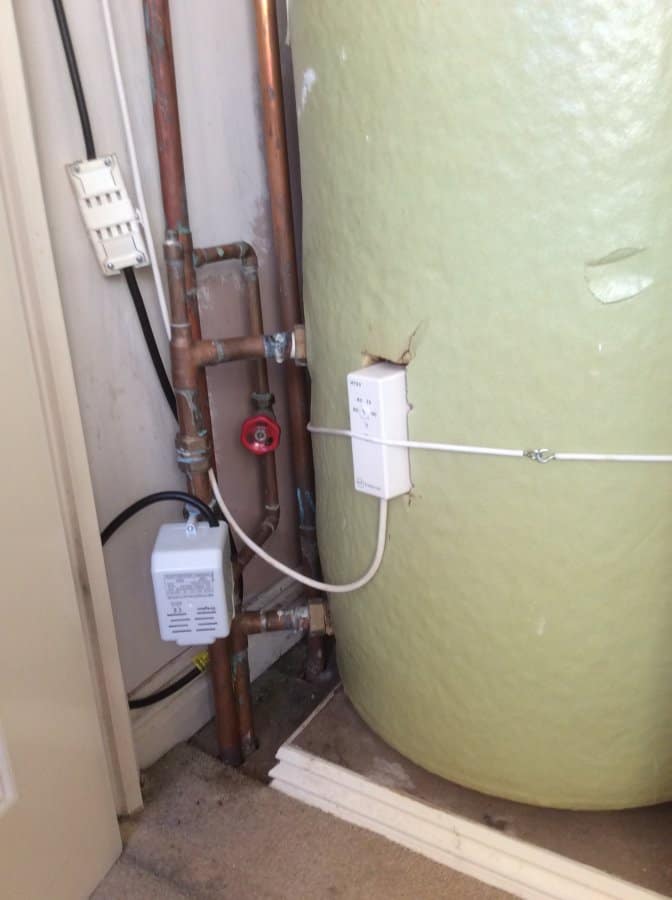
Simple checks first (safe)
Isolate the power at the spur or fused connection unit before opening anything up. Then, with the cover off and power restored carefully, work through the following with a multimeter on AC volts:
- Confirm the system type. One 3-port motorised valve with an orange, white and grey wire bundle = Y-plan. Two separate 2-port valves = S-plan. Get this wrong and you’ll be chasing the wrong diagram.
- Check the heat link terminals with everything ‘off’. There should be no 240V on the hot water ‘call for heat’ terminal or the heating ‘call for heat’ terminal. If there is, the controller itself is misbehaving or wired wrong.
- Check the heat link with hot water ‘on’ only. The hot water call terminal should go live, the heating call should stay dead. Reverse for heating only.
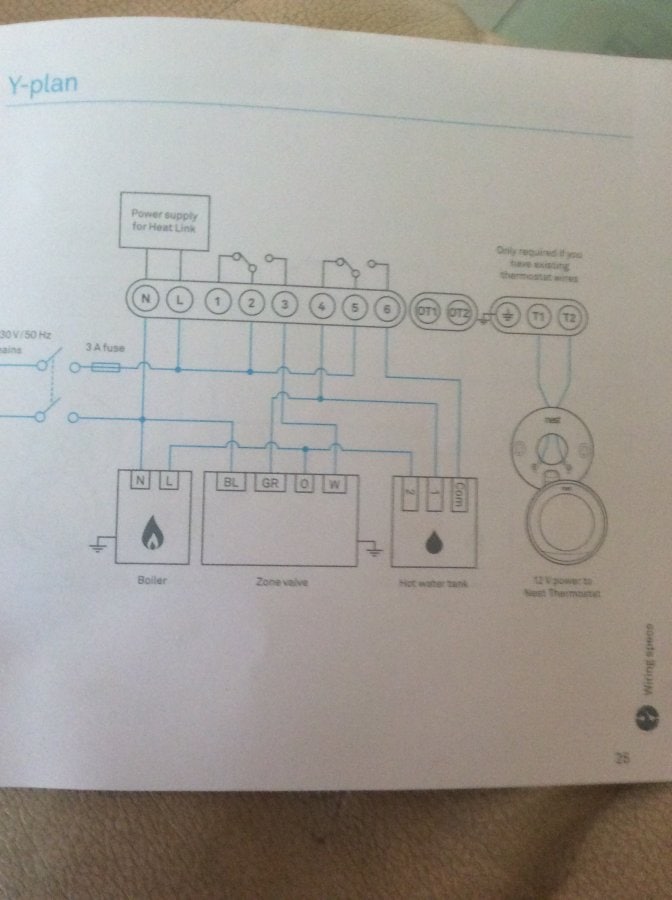
- Trace the wire from the hot water call terminal to the cylinder stat ‘common’. This is the feed that arms the stat. If it’s landing on the ‘satisfied’ terminal instead of common, you’ve got the wires swapped and the stat will be live exactly when it shouldn’t be.
- Check the cylinder stat terminals. Common is the incoming live, then there’s a ‘call for heat’ and a ‘satisfied’ terminal. The ‘call for heat’ output should run to the orange wire of the valve (and on to the boiler and pump circuit via the end-switch). Get the outputs swapped at the stat and the system runs back-to-front – hot water goes on when you select ‘off’.
- Look for any permanent live near the stat. There shouldn’t be one. If the stat has 240V on it with the controller fully off, the supply is coming from the wrong place – a junction box, a bridged terminal, or a previous bodge.
- Check where the pump is fed from. On boilers with pump overrun (most older system boilers), the pump is wired to dedicated terminals on the boiler, not straight off the valve. The boiler then runs the pump on for a couple of minutes after the burner shuts down to dump residual heat. If the pump is fed from the wrong place, the boiler can’t control it properly.
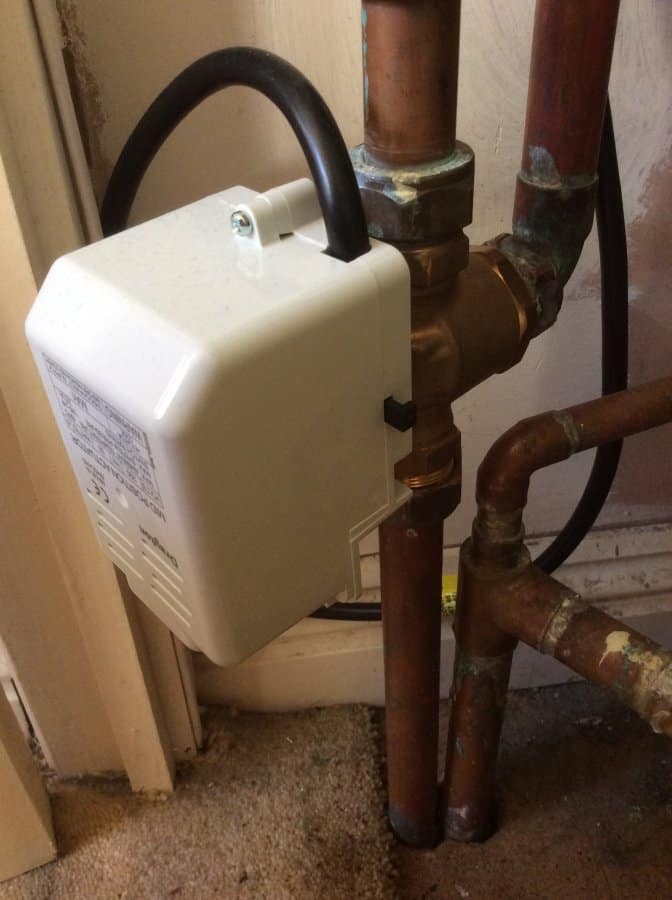
The big tell from the diagnostics in this case: with the smart stat ‘off’, the call-for-heat terminal reads 0V, but the cylinder stat is still able to fire the pump. That can only happen if the live is sneaking in somewhere downstream of the controller – which is a wiring fault, full stop.
The chain of events behind the symptoms
Picture it like this. The cylinder stat is just a temperature-operated switch with two outputs – ‘water needs heating’ and ‘water is hot enough’. Whichever output is live depends on the tank temperature. On a correctly wired Y-plan, the controller decides whether the stat gets any power in the first place. If the stat is wired back-to-front – say terminals 1 and 2 swapped – then the ‘satisfied’ output goes live when the tank is cold and the ‘call’ output goes live when the tank is hot. Combine that with a similar swap at the heat link (the two yellow wires transposed) and you can end up with a system that *appears* to work normally during the day, because two wrongs are cancelling each other out, but trips up at night when the tank cools down and the stat flips state. That’s why the pump fires intermittently, in the small hours, with no obvious call for heat. Turn the stat dial down past the current tank temperature and you flip the switch the other way, killing the rogue live – which is exactly the behaviour described.
Proper fix – good, better, best
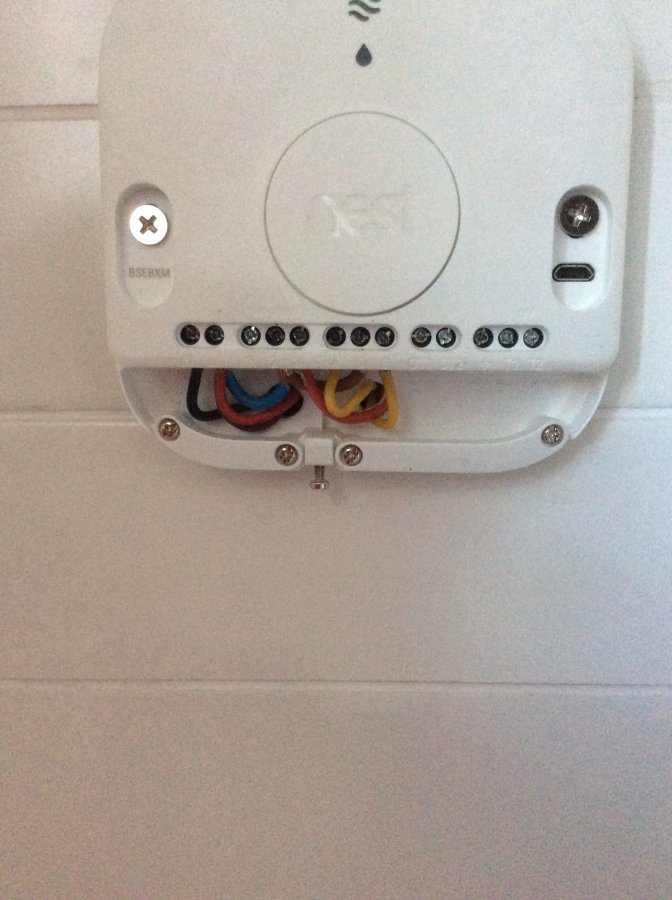
Good: Take the wiring back to a known-good diagram for your specific system type. For a Y-plan with a smart heat link, that means the hot water ‘call for heat’ terminal feeds the cylinder stat common, the stat’s ‘call’ output feeds the valve’s orange wire (which drives the valve motor to the hot water position), and the grey end-switch wire on the valve feeds back to the boiler and pump to fire them once the valve has opened. The heating ‘call’ terminal feeds the valve’s white wire to drive the valve to the heating position. Confirm with the meter that each wire is live only when it should be, before screwing the covers back on.
Better: While you’ve got it open, label every conductor with numbered sleeves or proper ferrules, draw the as-found wiring on a bit of paper, and tidy any old chocolate-block joints into a proper junction box. Replace the cylinder stat if it’s an old clip-on type that’s been wobbling about for 15 years – they’re cheap and they do drift.
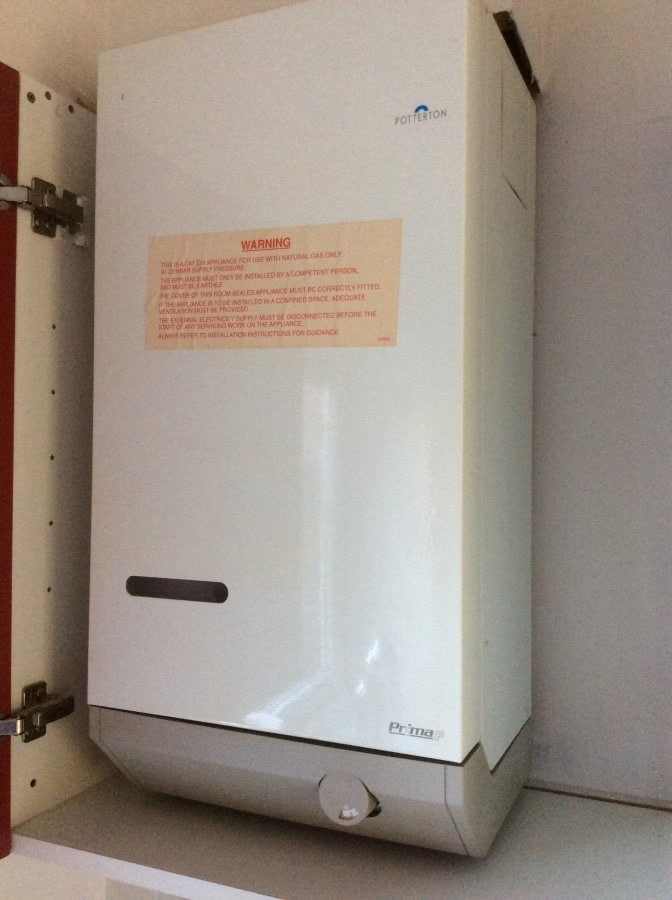
Best: Get a heating engineer or electrician familiar with smart controls to commission it properly. They’ll prove every conductor with a meter, check pump overrun is wired through the boiler’s dedicated terminals, and confirm the valve is moving fully to each position. On older boilers like a Potterton Prima F, pump overrun is provided by a thermostat inside the boiler that switches the pump from the switched live to a permanent live – if that’s wired up wrong externally, you get exactly the kind of phantom pump running being described.
Bodges and mistakes to avoid
- Swapping wires at the heat link to ‘make it work the right way round’. If hot water comes on when you select off, that’s a symptom – don’t fix it by reversing the call and satisfied wires. You’ll just push the fault somewhere else. Find the real swap and put it right.
- Leaving a permanent live on the cylinder stat. It will heat the tank at random and override the controller entirely.
- Wiring the pump direct off the valve on a boiler that needs overrun. The boiler can’t cool itself down properly and you’ll cook the heat exchanger over time.
- Assuming the old wiring was correct. Plenty of installs have been wrong for years and only show up when a new controller actually uses all the terminals.
When to bring in a specialist
If you’ve checked the diagram, proved the heat link terminals with a meter, traced the cylinder stat wiring and the rogue live is still appearing – stop and get a heating engineer in. Anything inside the boiler casing, including the pump overrun stat or PCB, is their territory, not a DIY job. Same goes if you’re not 100% confident with safe isolation on 240V controls.
Reality check
This kind of fault is fiddly but it’s not expensive – it’s mostly time with a meter and a wiring diagram. Expect to spend an evening tracing wires, possibly lifting a floorboard or two to follow the pump cable back to the boiler. Replace the cylinder stat while you’re at it if it looks tired. And don’t be surprised if the previous wiring had two errors cancelling each other out – it happens more than you’d think on houses where the controls have been swapped piecemeal over the years. Prove every wire, don’t guess, and the problem goes away for good.