
Question summary
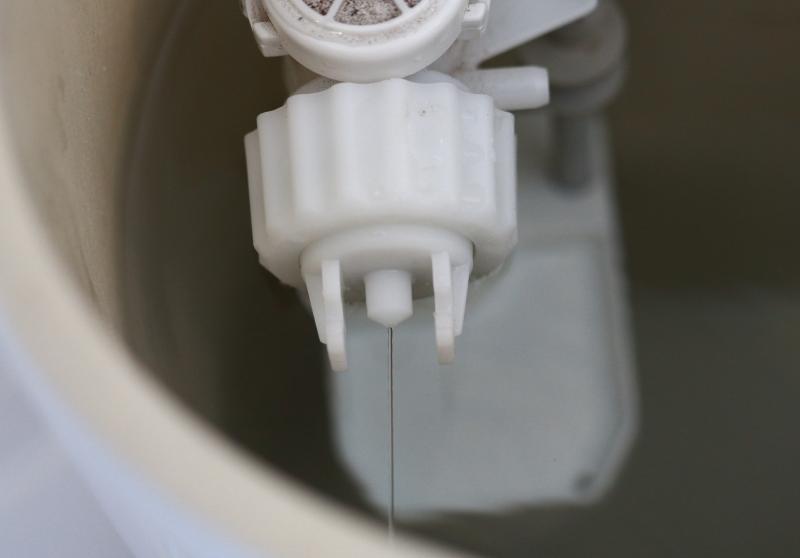
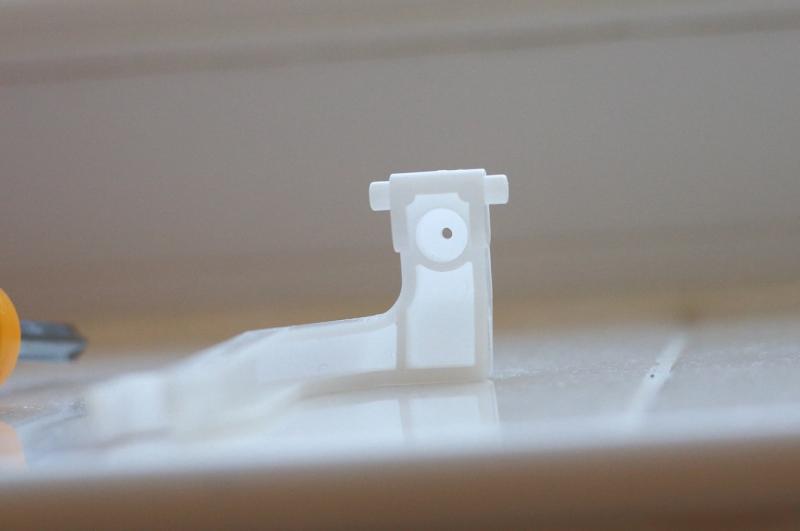
A homeowner has a Siamp Compact 99B side-entry fill valve in the loo cistern that won’t shut off – it just keeps filling. They’ve already swapped the inlet diaphragm but the problem hasn’t gone away. Looking at the valve, they can see water trickling out of a small hole on the body, and there’s a lever arm on the float that’s meant to come up and close that hole off as the water level rises – but the lever arm itself has a hole through it too. They’re scratching their heads about how this thing is actually meant to seal, and whether a part is missing.
What’s likely going on
This is a common one in UK houses. Before you start spending money, do a couple of simple checks so you’re fixing the cause, not the symptom.
The Siamp Compact valve is a servo (or pilot) operated diaphragm valve. It doesn’t shut the mains water off directly with the float – the float only has to close one tiny pilot hole. Here’s the chain of events:
- Mains water pushes up against the back of the diaphragm.
- A small bleed hole lets a trickle of water through to the chamber behind the diaphragm.
- That little chamber drains away through the pilot hole – the one you can see water dribbling out of when the cistern is filling.
- Because water can escape from behind the diaphragm faster than it leaks in, pressure stays low behind it, and mains pressure on the front lifts the diaphragm off its seat. Valve open, cistern fills.
- As the float rises, the lever arm pushes a small silicone or rubber pad up against that pilot hole and blocks it.
- With the pilot hole now sealed, pressure builds up behind the diaphragm, equalises with the mains pressure, and the diaphragm is pushed firmly back down onto its seat. Valve shut.
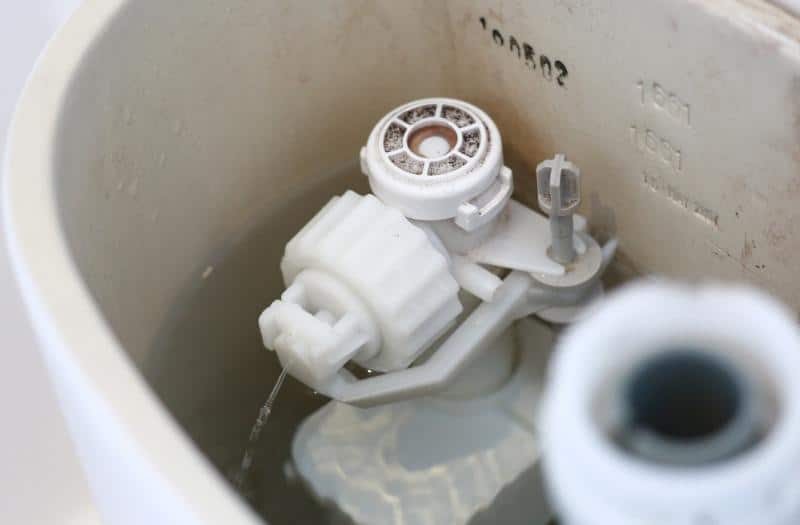
So the float doesn’t need any muscle – it just has to plug a pinhole. Clever bit of engineering, but it relies on three things being right: a clean diaphragm, a clean pilot hole, and that little sealing pad on the arm.
To answer the question directly: yes, the lever arm on a Siamp does have a hole through it, but inside that hole there should be a small soft pad (often a clear or translucent silicone disc) that does the actual sealing against the valve body. If that pad has perished, fallen out or was missed when someone serviced it before, the float arm will rise as designed but the pilot hole stays open, and the valve will never shut off. That fits your symptoms exactly.
Simple checks first (safe)
Isolate the water to the cistern first (service valve on the supply pipe, or main stopcock if there isn’t one), flush to drop the level, and have a look:
- Inspect the lever arm where it meets the valve body. You’re looking for a small soft sealing pad seated in the arm. If it’s missing, deformed, brittle, or has a chunk torn out, that’s your problem. A good pad looks plump and slightly tacky; a bad one is hard, cracked, or simply not there.
- Check the pilot hole on the valve body itself. It should be clean and sharp-edged. Bits of grit, limescale or PTFE tape stuck in there will stop the pad sealing properly even if the pad is fine.
- Check the diaphragm orientation. On these Siamp valves the diaphragm has a locating slot on the back that has to line up with a peg on the valve body. If it’s been put back rotated wrong, the bleed hole and the seat won’t be in the right place and the valve will misbehave, including not shutting off. Pop it out and re-seat it making sure the slot is on the peg.
- Lift the float by hand with the water on briefly. If lifting the float fully shuts the valve off cleanly, the float setting (water level) is too high. If it doesn’t shut off even when you push the arm hard against the body, the pad or pilot hole is your culprit.
- Check the float itself for water ingress. A waterlogged float sits low and never rises far enough. Shake it; if you hear sloshing, it’s done.
Don’t guess, prove it. Each of those checks tells you something specific before you start ordering parts.
Proper fix – good, better, best
Good: replace the missing pad.
If you can get hold of the correct Siamp service kit (diaphragm plus the small sealing pad for the arm), pop the new pad into the lever arm, refit the diaphragm with the locating slot lined up on the peg, and you’re sorted. Cheapest fix, keeps the original valve. Downside: on older valves the plastic on the arm itself can be worn where the pad sits, and a new pad won’t seal properly on a chewed-up seat.
Better: replace the whole fill valve like-for-like.
If the pad’s been missing a while, or the valve body looks limescaled and tired, swap the whole valve for a new Siamp of the same type. You keep the same hole position in the cistern and the same float arrangement, so it’s a straight swap. Isolate water, undo the back nut under the cistern, lift the old valve out, fit the new one with a fresh fibre or rubber washer, reconnect. Job done in half an hour.
Best: fit a modern side-entry servo fill valve from a well-regarded brand.
The Compact 99B is side entry, so stick with side entry unless you’re prepared to drill or change the cistern. A current-generation fill valve gives you better limescale tolerance, quieter filling and easier future servicing. Many of them have adjustable height and some come with an isolating tap built in. You’ll likely not touch it again for 10-15 years.
Bodges and mistakes to avoid
- Wedging the float down or bending the arm to “fix” the level. It treats the symptom, not the cause, and the valve will still drip past internally.
- Refitting the diaphragm with the locating slot off the peg. Looks fine, leaks forever. Always check the peg-and-slot lines up.
- Using grease or silicone goo on the pilot pad. It traps grit and the pad won’t seat cleanly.
- PTFE tape on the wrong threads. These valves use rubber or fibre washers on the back nut and tap connector. Tape isn’t needed there and shreds of it can end up blocking the bleed hole.
- Ignoring a waterlogged float. A new diaphragm won’t help if the float can’t lift.
When to bring in a specialist
Honestly, for a fill valve swap you don’t need one. It’s well within DIY territory provided you can isolate the water and you’re tidy. Call a plumber if:
- The service valve on the supply is seized or weeping and you can’t isolate cleanly.
- The cistern is an awkward concealed unit where access is tight and you risk cracking ceramics.
- You’ve got lead supply pipe to the loo. Leave that alone and get someone in.
Reality check
Set aside an hour for a straight valve swap, more if you’ve got to nip out for parts. Take a photo of the existing setup before you strip it down: water level mark inside the cistern, float position, how the flush mechanism sits. Have an old towel and a washing up bowl ready under the back nut, there’s always a cup of water trapped in there. And while you’ve got the lid off, give the flush valve seal at the bottom a wipe and a look. If that’s perished too, you may as well do both while you’re in there. Nine times out of ten on this exact symptom, it’s the missing pilot pad or a wrongly seated diaphragm. Prove which one, then fix it.