
A homeowner has snapped the little square-drive spindle off the bleed valve on one of their radiators. The bit you put the key on has sheared clean off. The heating system is a regular (non-combi) system boiler, and they want to know whether they can just swap the bleed valve out without draining the whole system down, and how to go about it without making a mess. Sensible question, and yes: nine times out of ten this is a job you can do yourself in half an hour.
This is a common one in UK houses. Before you start spending money, do a couple of simple checks so you're fixing the cause, not the symptom. I'll run through what's likely happening, what you can safely check yourself, and what a proper fix looks like, plus the usual bodges that don't last.
What's actually going on
The bleed valve (sometimes called the air vent or bleed plug) is a small brass fitting screwed into the top corner of the radiator. Inside it is a tiny tapered spindle with a square end, and that's what your bleed key grips. Over time these spindles corrode, especially if the system water is a bit tired and full of black sludge, and the square end can shear off when you put a key on it. Once it's snapped, you can't bleed that rad any more, so it needs replacing.
The good news: you don't need to drain the system. The bleed valve is threaded into a larger hex-headed blanking plug (the boss) that sits in the end of the radiator. Isolate the radiator at both valves and you'll only lose a cupful of water when you take it apart.
Simple checks first
Before you touch anything, run through these:
- Identify both radiator valves. One end will be the wheelhead or thermostatic valve (TRV), the other end the lockshield (usually with a plastic cap held on by a small screw, or just a push-fit cap). You need to shut both.
- Check for a TRV. If there's a TRV on one end, be aware that even fully closed they can weep. If you want it properly sealed, unscrew the TRV head and fit a decorator's cap in its place. That shuts it off completely.
- Look at the bleed fitting itself. Is the whole boss corroded, or just the little spindle? If only the spindle has sheared, you just need a new bleed valve screwed into the existing boss. If the boss itself is knackered, you'll be unscrewing the whole hex plug and replacing that too.
- Check the thread size. This is the one that catches people out. Standard UK bleed valves are 1/8" BSP, but some manufacturers use their own slightly different sizes. Take the old one with you to the merchant so you can match it exactly. Don't guess.
- Have a look at the water when you crack it open. If it comes out inky black, your system water is heavily oxidised and probably due an inhibitor top-up. Worth noting for later.
The job itself: good, better, best
Good (quick swap)
If only the bleed spindle has snapped and the boss is sound:
1. Turn both radiator valves fully off. Count the turns on the lockshield so you can reset it afterwards. This keeps the system balanced.
2. Put an old towel and a small container under the corner you're working on. Water spillage will be minimal but it's usually black and it will stain carpet, so protect the floor properly.
3. Using a spanner on the flats of the small bleed valve (not the big hex boss), gently unscrew the old bleed valve anticlockwise. You'll get a dribble of water. That's normal.
4. Wrap 4-5 turns of PTFE tape clockwise around the thread of the new bleed valve. A smear of jointing compound on top is belt and braces, but PTFE alone is fine for this.
5. Screw the new valve in and nip it up snug. Don't gorilla it, brass strips easily.
6. Reopen both radiator valves (lockshield back to the same number of turns), then use the bleed key on the new valve to let the air out until water runs steady.
7. Check the boiler pressure afterwards and top up via the filling loop if it's dropped below about 1 bar.
Better (whole boss and valve)
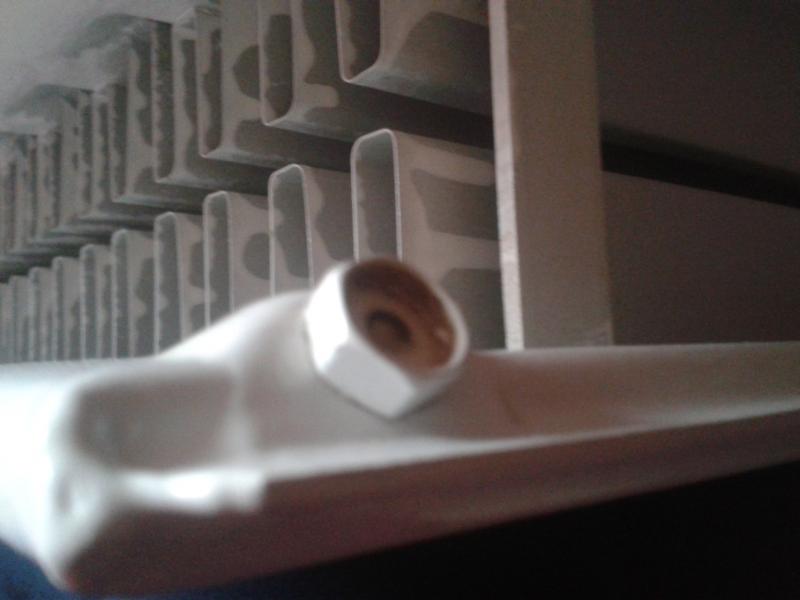
If the boss looks corroded or you can't get the sheared valve out, unscrew the entire hex boss from the radiator end cap. Same principle: PTFE the thread, wind it back in. You'll lose a bit more water this way but still nothing dramatic if both valves are properly shut. Match the boss thread carefully, it varies between makes.
Best (source the correct manufacturer part)
Some radiators, certain well-known UK brands in particular, use slightly non-standard bleed valve threads. If a generic 1/8" BSP part doesn't fit, don't force it. Take a photo of the radiator (including any maker's badge or sticker), find out who made it, and contact the manufacturer directly. Customer service departments will often post out the correct part free of charge if you explain what's happened. It's worth an email before you drive round every merchant in the county.
Bodges and mistakes to avoid
- Don't drill out the sheared spindle in situ. Very easy to slip and put a hole through the brass boss or the radiator itself. Then you've got a proper leak on your hands.
- Don't force a wrong-sized valve in. Cross-threading a brass fitting means it'll never seal properly and you'll be back to square one, or worse, with a slow weep behind the rad that rots the floor.
- Don't skip the PTFE. A dry thread might look tight but it'll seep.
- Don't leave the lockshield fully closed after the job. The rad won't heat up properly and you'll unbalance the system.
- Don't ignore black water. If it's really inky, the system would benefit from a flush and fresh inhibitor at some point. Not urgent, but on the list.
When to bring in a specialist
This job sits well within DIY territory if you're methodical. Call a heating engineer if:
- Both radiator valves are seized and won't shut off.
- You can see corrosion or pinholes on the radiator itself. The rad may be on its way out.
- The boiler keeps losing pressure after you've refilled it (suggests a leak elsewhere).
- You've got a sealed system and you're not confident using the filling loop to top the pressure back up.
Gas work on the boiler is Gas Safe only, but changing a bleed valve isn't gas work, so you're fine to crack on with that bit yourself.
Reality check
Allow yourself an hour, not ten minutes. Half of that will be finding the right part. Protect the carpet properly with old towels doubled up, and a tray or takeaway container to catch drips. The water will stain, and once it's in a light carpet it's there for good. Once the new valve is in, bleed the rad, check the pressure, and keep an eye on that corner for a day or two to make sure there's no weep. If it's still dry after 48 hours, job's a good 'un.