
A homeowner has recently had a new extension built with two large centre-pivot roof windows fitted. They've bought the opening pole, but when they push the window open it swings straight back shut under its own weight. Both windows are behaving the same way. They're not sure whether this is something they can sort themselves or whether they need the window fitter back.
This is a common one in UK houses. Before you start spending money, do a couple of simple checks so you're fixing the cause rather than the symptom. I'll run through what's likely happening, what you can safely check yourself, and what a proper fix looks like, plus the usual bodges that don't last.
What's likely going on
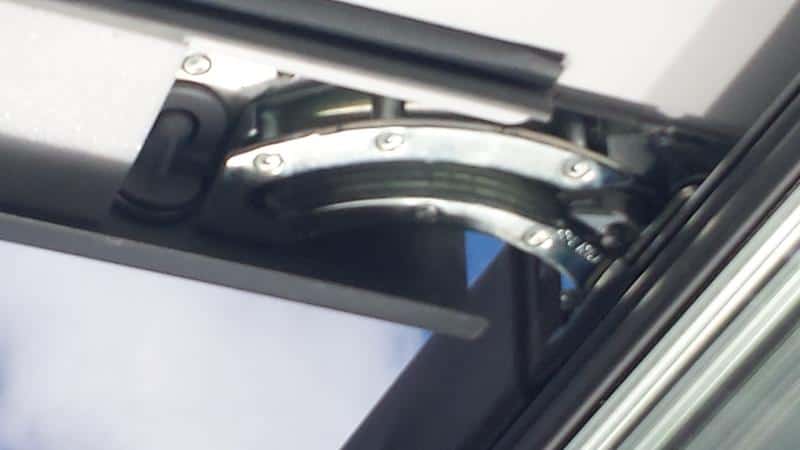
A centre-pivot roof window is designed to sit open at any angle from roughly 20 degrees up to around 45 degrees without you holding it, with the sash balancing against gravity through the friction hinge mechanism. The pivots have a friction mechanism built in that grips the pivot and stops the sash from flopping shut under its own weight. The glazed sash on these units is heavy, so the friction has to be set correctly to counter that weight.
If the window is swinging shut the moment you let go, one of three things is going on. Either the friction hinges have not been set or tensioned after installation, the friction springs themselves are faulty or missing, or a transit or packing clip has been left in place and something isn't seated as it should be. When it's happening on both windows straight out of a new install, my money is on hinge tension not being set, or the wrong spec of spring for the size and weight of that sash.
Simple checks first (safe)
Before touching anything, get yourself a stable platform, a proper step or a small tower. Don't stand on a chair balancing an opening pole. If the window's high up and awkward, get someone to foot the steps.
- Look at the pivot points on both sides of the sash. There are usually small covers or caps over the hinge mechanism. Pop one off gently with a thin blade. If you find an adjustment screw underneath, that's your friction tensioner. The presence of a screw confirms the hinge is adjustable and probably just needs setting.
- Open the window slowly and watch how it moves. Does it feel like there's any resistance at all, or does it swing freely like a shop door? No resistance at all suggests the friction spring is disconnected, missing or faulty rather than just loose.
- Check both sides behave the same. If one side has some grip and the other has none, the hinge on the loose side is the issue. If both are equally floppy, it's more likely a spec or setup problem across both units.
- Look for any plastic transit clips, cable ties or foam packers around the hinges that shouldn't be there. New windows sometimes leave the factory with restraints that installers should remove.
- Check the window is actually the right way up and fully engaged in the frame. On a centre-pivot, the sash should sit flush and even in the frame all the way round when closed. An uneven reveal can indicate the sash isn't seated properly on the pivots.
- Find the data plate. It's usually on the top edge of the sash, visible when the window is rotated. Make a note of the model reference and year. You'll need it if you have to call the manufacturer.
Proper fix – good, better, best
Good – adjust the hinge friction yourself
If you've found adjustment screws under the caps at the pivot points, this is a job a confident homeowner can do. With the window closed and supported, tighten each pivot screw a small amount, a quarter turn at a time, then test. Do both sides equally so the sash stays balanced. You're aiming for enough friction that the window holds position anywhere in its travel but you can still move it easily with the pole. Overtightening makes it a pig to operate and can wear the mechanism prematurely. Refit the caps when you're happy.
Better – request replacement friction springs from the manufacturer
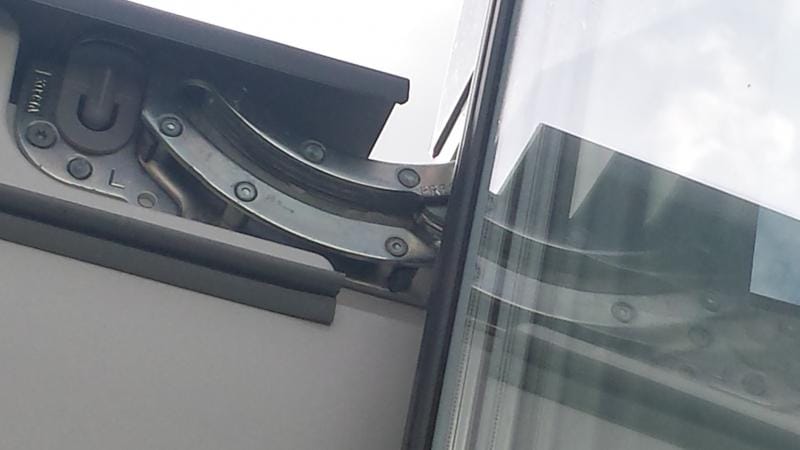
If there's no meaningful adjustment available, or tightening makes no difference, the friction springs themselves are the issue. Contact the manufacturer's customer service with your model number and year off the data plate. They're generally very good about sending out replacement springs free of charge, even years after install, because it's a known wear item. Fitting them is a screwdriver job once you have the parts and the instructions. The covers come off, the old spring lifts out, the new one clips in. Do one side at a time so you've always got a reference.
Best – get the original fitter back
This is a brand new extension. The windows should have been commissioned properly as part of the install, and that includes checking they hold open across the full range. If both sashes are dropping shut, that's a snag, not wear and tear. Contact whoever ran the job, the main contractor if you had one, or the architect or project manager if it was managed for you. It's their responsibility to come back and make it right, and if there's a bigger issue (wrong hinge spec, damaged frame, sash out of square) they need to be the ones sorting it, not you. Do this in writing so there's a record.
Nine times out of ten on a new install, a call to the fitter or a set of replacement springs from the manufacturer sorts it without drama.
Bodges and mistakes to avoid
- Don't prop the window open with a stick or a bit of timber as a permanent solution. One gust of wind and you've got broken glass, a damaged frame, or worse if someone's underneath.
- Don't crank the adjustment screws right up to solve it. You'll wear the friction faces out fast and end up back where you started, plus the window will be horrible to operate.
- Don't ignore it and hope it settles. A sash that slams shut on its own can chip the frame, crack the glazing seal over time, and it's a genuine hazard if a child or pet is under it.
- Don't take the sash off the pivots to "have a look" unless you know what you're doing. On most centre-pivot units the sash can be released for cleaning, but it's heavy and awkward and you want two people and a clear plan before you try it.
When to bring in a specialist
If the windows are in a new-build extension and still under the builder's warranty, this is a snag, so get them back. If the sash is above a stairwell, high up, or you're not steady on steps, get a window fitter or handyman to do the adjustment for you. If you find the frame itself is out of square, the sash is binding, or there's visible damage to the hinge assembly, that's beyond a friction adjustment and needs the manufacturer's approved installer to look at it.
On anything involving working at height on a roof window, be sensible about access. A slip while wrestling with an open sash is exactly how people end up in A&E.
Reality check
The fix itself, once you've got the right parts or the right screw to turn, is genuinely a ten-minute job per window. The faff is in getting to it safely, identifying the exact model, and, if you're going through the manufacturer, waiting a few days for springs to arrive in the post. If it's a snag on a new install, put it on the contractor and let them deal with it. You've paid for windows that work properly, and "stays open when you open it" is a fairly basic requirement.