
A homeowner has a 4-bed, two-storey new build fitted with wet underfloor heating throughout. Every zone works apart from one bedroom, and it's been dragging on for years. They've swapped the actuator, swapped the room thermostat, purged the loop, had the manifold rebalanced, and even fitted a new boiler. At one point, unscrewing the actuator let the room warm up – after the thermostat was later changed, even that trick stopped working. Multiple trades have been in, plumber and sparky have blamed each other, and the room now needs a plug-in radiator to be usable. They want to know where to look next.
This is a common one in UK houses where UFH has been fitted as part of a bigger build. Before you spend more money, do a couple of simple checks so you're fixing the cause, not the symptom. I'll run through what's likely happening, what you can safely check yourself, and what a proper fix looks like, plus the usual bodges that don't last.
What's likely going on
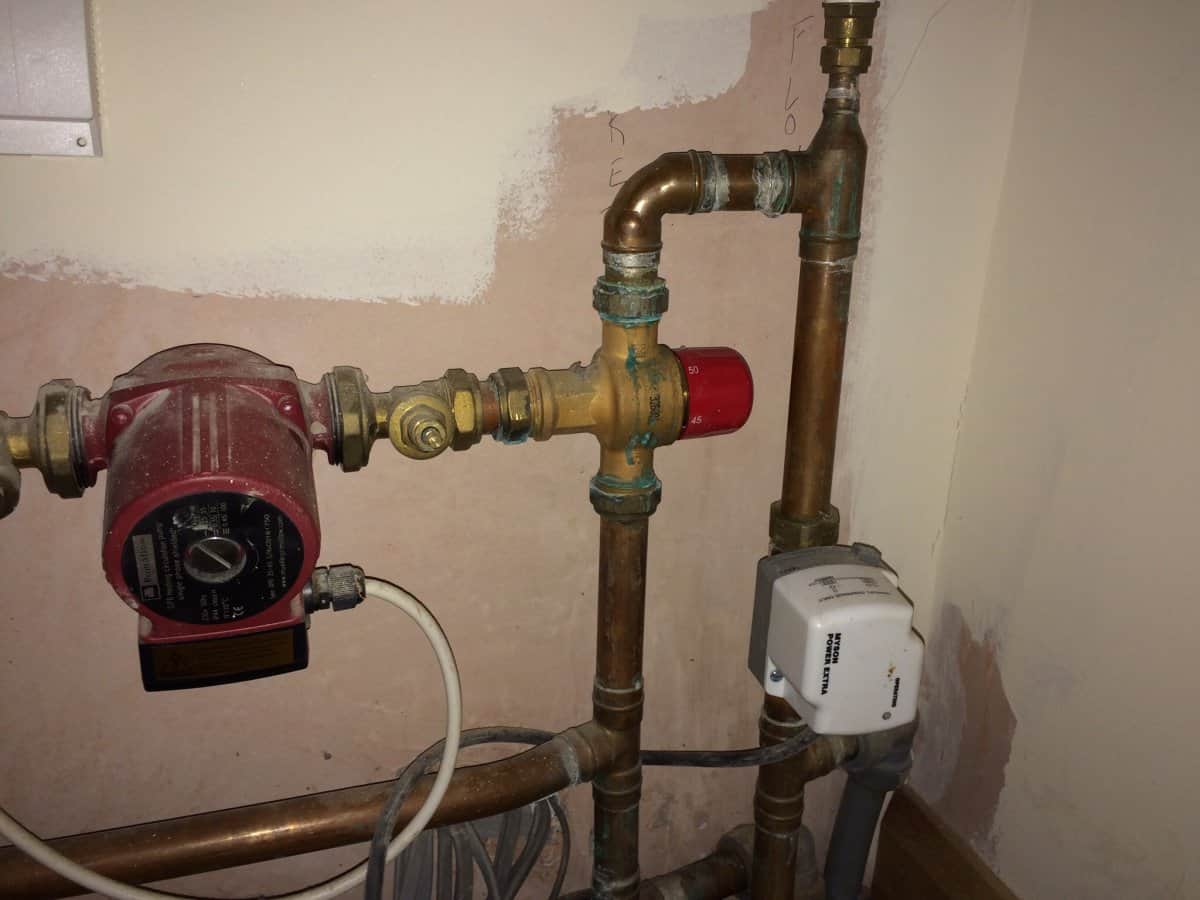
With UFH, a room needs three things to warm up: hot water at the right temperature getting to the manifold, the correct flow rate through that room's loop, and a control signal that actually lifts the actuator off the valve so water can circulate. If any one of those is missing or marginal, the room stays cold, even if the boiler is brand new.
The telltale here is that removing the actuator originally made the room heat. That points squarely at the actuator not being driven open properly. Either it isn't getting a signal from the wiring centre, the wiring centre isn't seeing a call from the thermostat, or the actuator pin itself isn't fully lifting the valve. After the thermostat was changed and it stopped working even with the actuator off, something else has shifted. Most likely the loop's balancing screw on the flow meter has been closed down, or the pin under the actuator has stuck in the shut position. The flow meter on that loop is also reported as "stuck open," which means nobody actually knows what flow that circuit is getting. Water gets in, or in this case doesn't, then it shows up somewhere else, as a cold floor.
Simple checks first
Work through these in order. Don't guess, prove it.
- Lift the actuator off and look at the brass pin underneath. Push it down with your finger. It should spring back up smartly and travel a good few millimetres. If it's sluggish, sticky, or barely moves, the valve pin is seized. Very common after years of sitting shut. A sticky pin means the actuator can push it down but can't lift it back open.
- Compare that pin's travel with a working loop's pin. Side by side is the clearest test. If the problem pin sits noticeably lower or moves less, that's your smoking gun.
- Check the flow meter (the clear tube with the float) on that loop. With the system running and all other loops shut, the float should show a reading similar to the others, typically 1 to 2 litres per minute for a domestic loop. If the float is jammed at the top or bottom, the meter itself is gubbed and needs replacing so you can actually balance the circuit.
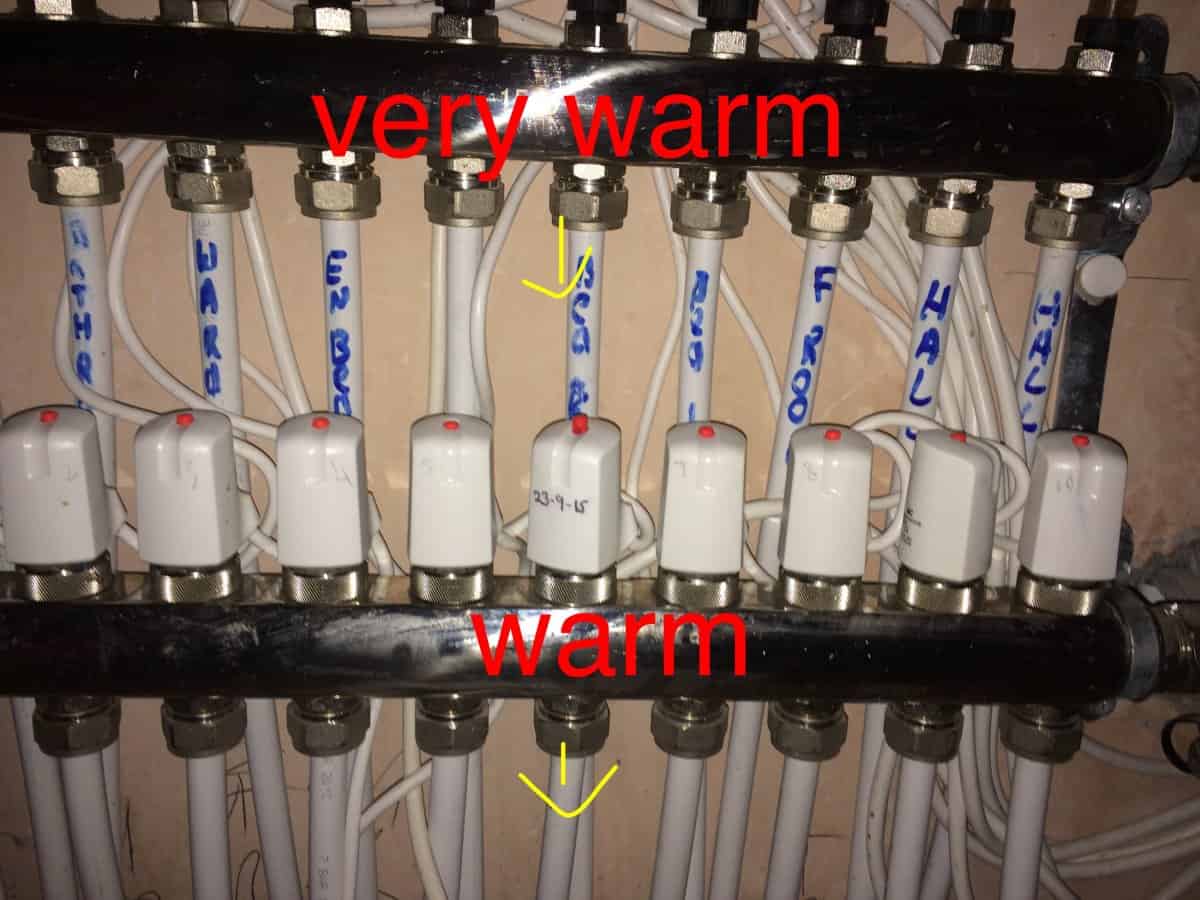
- Feel both pipes at the manifold for that loop. Flow should be hot, return noticeably cooler. If both are stone cold, no water is moving. If both are equally hot, water is racing through with no time to give up heat, usually a balancing issue.
- At the thermostat, turn the setpoint well above room temperature and listen at the wiring centre. You should hear a faint click as the relay pulls in, and within a couple of minutes the actuator head will warm up slightly as its wax capsule energises. No click = control problem. Click but no actuator movement = wiring or actuator fault.
- Check the actuator is wired to the correct zone on the wiring centre. On multi-zone jobs it's not unusual to find a room stat driving the wrong actuator. Get someone to turn each stat up in turn while you watch which actuator pin rises.
- Look at the loop length if you can find the original layout. A loop much longer than the others (over about 100m in 16mm pipe) will struggle, especially if the pump speed or blender temperature is set low.
The chain of events behind the symptoms
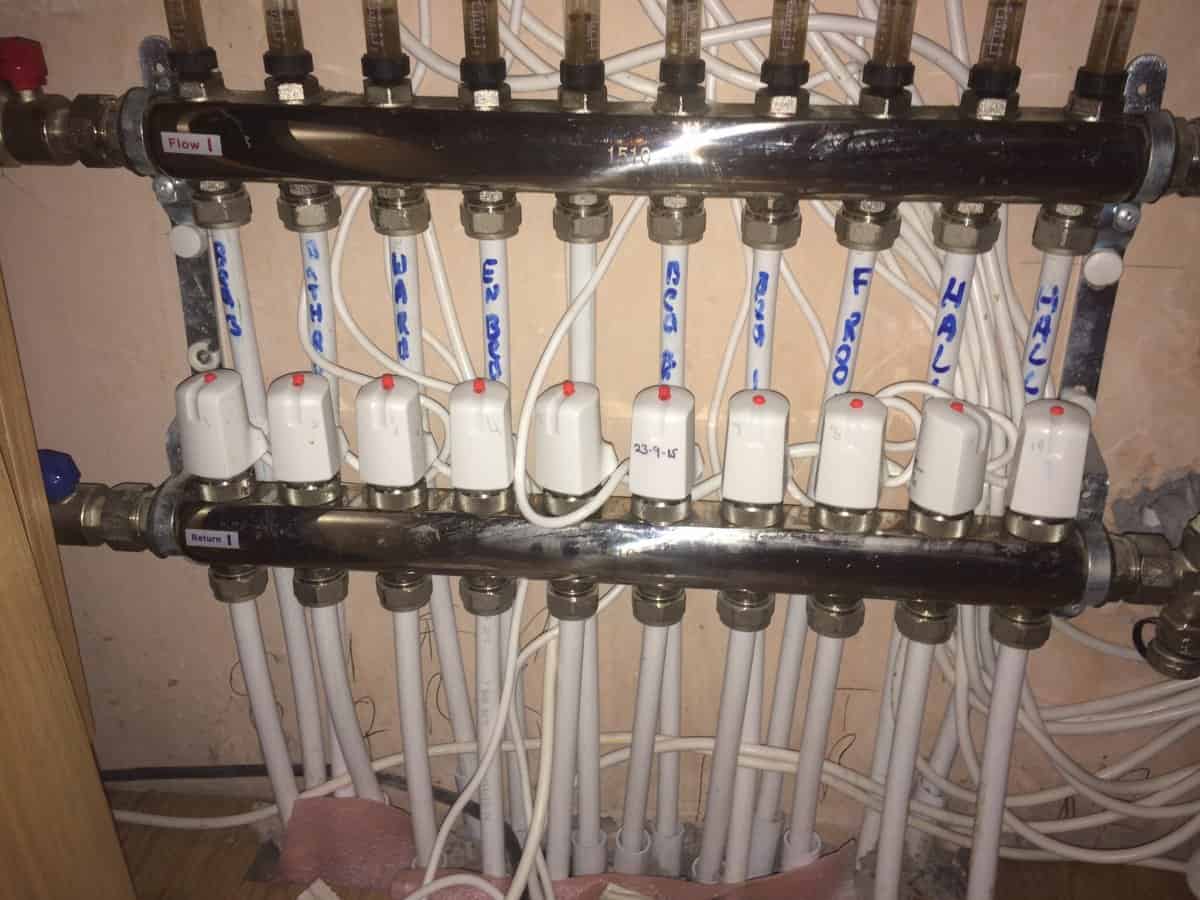
What's probably happened over the years is this: the loop had a genuine control fault from day one, most likely a wiring mix-up or a stat not calling correctly. Removing the actuator let gravity and system pressure open the valve, so the room heated. Someone then chased the wrong parts, new actuator, new stat, without proving the wiring with a meter. Meanwhile the valve pin, sat shut for months at a time, started to stick. When the stat was changed the balancing on the manifold likely got fiddled with too, and the flow meter for that loop packed in, so now nobody can see what flow the circuit is actually getting. New boiler was a red herring. The boiler was never the problem.
Proper fix – good, better, best
Good: pop the actuator off, free the valve pin with gentle taps and a smear of silicone grease, refit, and have a competent person meter out the wiring from the room stat through the wiring centre to the actuator. Confirm 230V arrives at the actuator when the stat calls for heat. Replace the dud flow meter cartridge so the loop can be balanced properly. Nine times out of ten that gets it going.
Better: do all of the above, then rebalance the whole manifold from scratch with every loop's flow meter working. Set the blender (mixing valve) to a sensible flow temperature, typically 40-45°C for screed, a bit lower for timber floors, and set the pump to the speed the manufacturer recommends for the number of loops. Get the room stats set up with a proper programme rather than just on/off, because UFH is slow to respond and needs to be ahead of demand.
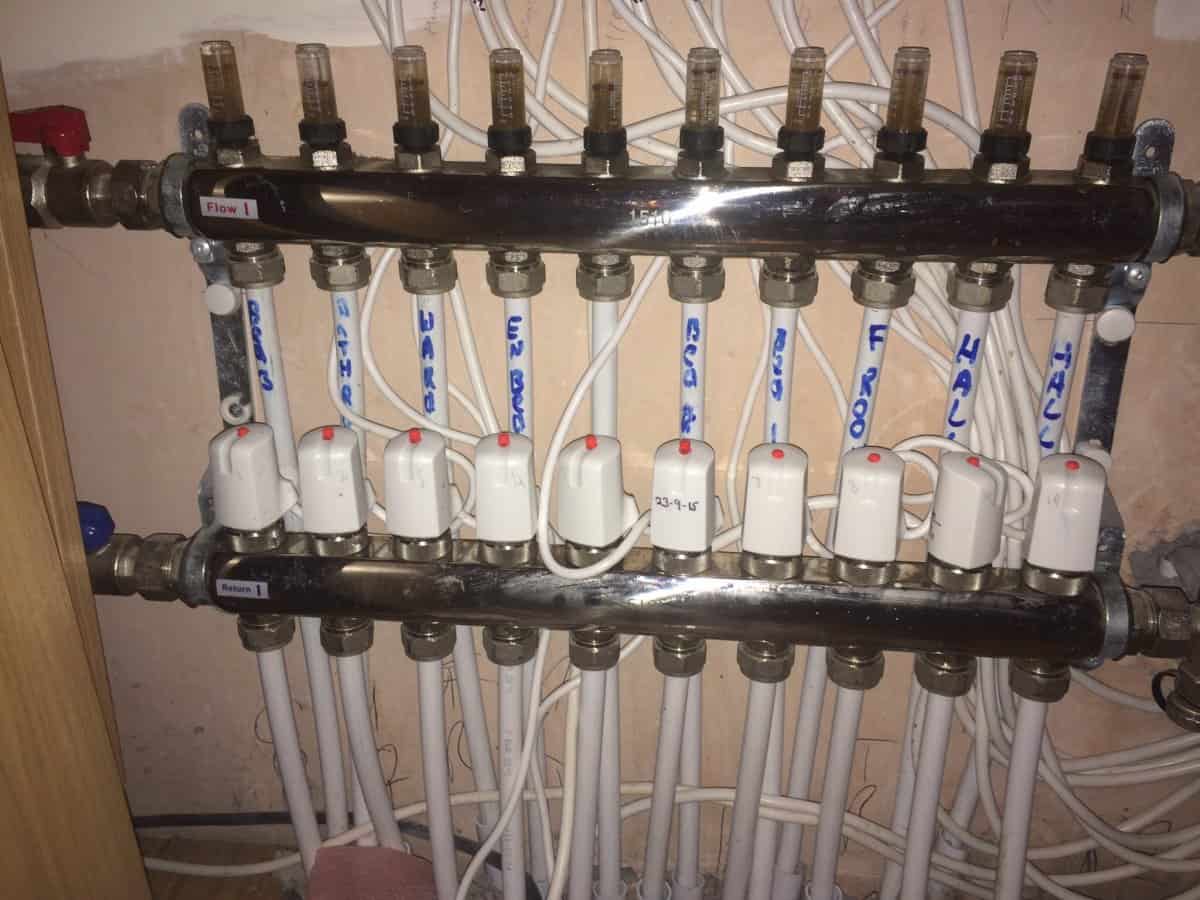
Best: bring in someone who does UFH day in, day out, with the original manifold manufacturer's commissioning sheet in hand. Have them measure flow, return, floor surface temperature and room air temperature on every zone, compare against loop lengths, and produce a written commissioning record. If the loop turns out to be too long or the room heat loss too high (big glazing, poor insulation), the answer may be a supplementary heat source rather than more fiddling.
Bodges and mistakes to avoid
- Leaving the actuator off permanently. It works short term but you lose all control of that room, and in summer the loop will draw heat when you don't want it.
- Just swapping parts without metering. New actuator, new stat, new boiler – if the wiring or a stuck pin is the real fault, you'll spend a fortune and still be cold.
- Cranking the boiler flow temperature up to force heat through. UFH pipes and screed aren't designed for high temps. You risk damaging finishes and it still won't fix a shut valve.
- Ignoring a dead flow meter. Without it you're balancing blind, and one greedy loop will starve another.
When to bring in a specialist
Anything involving the boiler itself is Gas Safe registered, stop there. For the wiring centre and any 230V work at the actuators, if you're not confident with safe isolation and using a meter, get a spark in, ideally one who has actually wired UFH before, not just sockets and lights. The key skill you're paying for is diagnostic ability: someone who will meter the circuit, prove where the signal stops, and only then change parts. If a firm turns up, shrugs, and suggests swapping bits, they're not the right firm.
Reality check
UFH faults are almost always fixable without lifting floors. The problem is nearly always at the manifold or in the controls. Budget half a day for a proper diagnosis and commissioning. Have the manifold accessible, clear the cupboard out beforehand, and if you've got the original installer's paperwork or a loop layout drawing, dig it out. It saves hours. If the pin is seized, freeing it and greasing it takes minutes. If the flow meter needs replacing, most manifold brands sell the cartridge as a spare. The room won't feel warm the instant it's fixed either. A screed floor can take 12-24 hours to come up to temperature from cold, so don't panic if it's still cool that evening. Give it a full day before you judge the result.