• Looking for a smarter way to manage your heating this winter? We’ve been testing the new Aqara Radiator Thermostat W600 to see how quiet, accurate and easy it is to use around the home. Click here read our review.

What is a "suitable meter"?

...and what if it were generated from home produced oil and gas?
I didn't think Portugal had significant amounts of either? Mr Worldometer says:
Portugal produces 12,932 barrels per day of oil (as of 2016) ranking #88 in the world.
... "#88 in the world" does not sound like a 'significant producer' ... but I'm not sure what he means when he goes on to say ...
Portugal imports 116% of its oil consumption (274,442 barrels per day in 2016).
... so Portugal seemingly imports more than it needs/uses? What, I wonder, happens to the other "16%" - do they re-export it, or what?!
Well, one thing is the so-called cap which instantly became the price to charge.
I'm not at all sure about that. I think the reason why it "instantly became the price to charge" is probably that, in the absence of the cap, suppliers would have charged even more.

The 'cap' is admittedly a help in addressing the seemingly ridiculous "percentage profit" issue but, in general, there is a limit to how far government can going in simply telling suppliers to charge less than they otherwise would, since (unless they 'subsidised the difference', with taxpayer's money) they would eventually create a situation in which the supplies 'went bust', because their outgoings were greater than the income they were being allowed to have.
Do you not think those things are precisely what I meant and was complaining about?
I have to say that if that is "what you meant and what you were complaining about" it wasn't at all clear from what you had been writing. However, I'm glad you agree with what I have written (here and elsewhere) many times!
 
You need to keep in mind, that suppliers have to buy there allocation of energy, on the spot market, ahead of time, taking the gamble on recovering their investment, and that many of the tariffs are based on customers paying a fixed price for it, or a variable price, which can be fixed for months ahead. They basically invest in the energy, in the hope of getting it back, plus a margin.
Yes, I imagine that is all correct. However ....
The percentage of risk remains the same, and so the percentage of profit needs to be commensurate.
I'm no economist or financial expert, but I'm not at all sure about that as a concept.

'Profit' is determined 'after the event' as the excess of income over outgoings and as such takes on board the net effect of the successful and unsuccessful gambles - so we are no longer talking about 'risks' but, rather, about 'known facts'. I therefore don't see that it is reasonable for a company to expect greater profit because of 'greater risks' which are no longer relevant (since the outcome of the gambles is then known).
The day by day, and especially the hour by hour variable tariffs, relieve the energy companies of the risk, thus those tariffs can be often be offered much cheaper.
I'm not quite sure how that works given that, as you wrote at the start, the suppliers have to buy their energy well 'ahead of time'?
 
'Profit' is determined 'after the event' as the excess of income over outgoings and as such takes on board the net effect of the successful and unsuccessful gambles - so we are no longer talking about 'risks' but, rather, about 'known facts'. I therefore don't see that it is reasonable for a company to expect greater profit because of 'greater risks' which are no longer relevant (since the outcome of the gambles is then known).

The greater the risk, the more they need to increase their margin, to cover the risk they take, they have to work at a profit, and cover their days of loss.

I'm not quite sure how that works given that, as you wrote at the start, the suppliers have to buy their energy well 'ahead of time'?

I understand - They buy a day ahead, they bid for what they predict they will need, to satisfy their customer's might demand.
 
I can see the debate over tariffs. The main point, is what automated control, does one have. If I could tell the system, if the battery is at 50% or more at midnight, do not charge the battery from grid, in the main it would only charge when the weather was not likely to produce enough the next day. It would not always work, but most of the time it would.

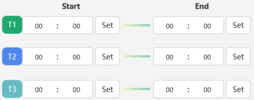
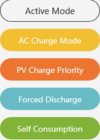
But I simply do not have that sort of control. 1746303691695.pngtimes and what it does 1746303750735.png and although control has improved, it is so easy to end up buying to charge a battery, but find it is not required, and one is exporting at less per kWh to what you bought it at.

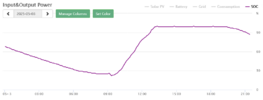
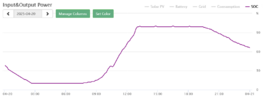
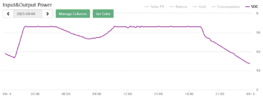
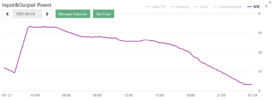
So the all important graph, is this state of charge graph. 1746304240889.pngas shown, the graph has not dipped below 10%, so no need to import to change battery. This one 1746304432623.png however bottomed out 2:40am to 7:45am so to have imported at a low off-peak rate, may have helped, but it would depend on the change over time. Since in the main change over is 5 am, looking at 2 hours 45 minutes, and unlikely to be worthwhile.

When I was charging off-peak, this 1746304909664.png was common, I had charged the battery when simply not required. On the odd day, however, the overnight charge worked out well 1746305088849.pngand I gained by it.

There is a new window, 1746305212513.png which should help decide, but it is more like a lottery. And this is before we look at the different tariffs. However, I am not using electric heating. And I do have a smart meter. The question still is, where smart meters will not work, and the teleswitch stops working, what is the "suitable meter".
 
The greater the risk, the more they need to increase their margin, to cover the risk they take, they have to work at a profit, and cover their days of loss.
I think this discussion is getting a bit confused, not the least because we seem to be talking about various different things.

If I understood correctly, the 'risk' which you initially described primarily related to the situation in which a supplier offers a fixed price (usually for 1 or 2 years). In that situation, there clearly is a risk that their predictions/guesses as to how wholesale prices over the 'fixed price' period may prove to have been wrong, so there is a potential risk that they could 'lose out' - although I suspect that, in practice, their predictions/guesses are usually sufficiently conservative/cautious that they probably rarely (if ever) actually 'make a loss'.

However, in the case of a 'standard variable rate' that risk does not exist to an appreciable extent, but they nevertheless generally increase the price of those tariffs in line with increases in wholesale price (hence expecting increased absolute profit), despite the absence of any appreciable increase in risk.

You then go on to talk about the ultimate in 'variable price' tariffs, with them buying just one day ahead and offering prices that not only can change from day to day but even from hour to hour. There is therefore essentially zero risk but, again, the prices they offer generally mirror changes in wholesale prices, hence increasing their absolute profit despite almost zero increase in any 'risk'.

I would also add that, even when there are risks, profits and 'contingency reserves' are very different things.

Moving away from energy, which I accept involves some fairly unique considerations, can we at least agree that, in general, the concept of a retailer expecting a maintained "percentage mark-up" is a bit questionable? Imagine I am a retailer who buys some rapid turnover product (hence minimal money tied up in stock) for £100 per unit and sell it for £140, making a gross profit of 40%. If, for whatever reason, the price I have to pay tomorrow goes up to £200, it is reasonable that I still expect a 40% markup, such that I would then make £80, rather than £40, of gross profit from each sale?
 
I can see the debate over tariffs. The main point, is what automated control, does one have. If I could tell the system, if the battery is at 50% or more at midnight, do not charge the battery from grid, in the main it would only charge when the weather was not likely to produce enough the next day. It would not always work, but most of the time it would. ....
..... But I simply do not have that sort of control.
Fair enough, but that is simply a shortcoming of the system you have, isn't it? In 'control system' terms, it would be pretty trivial to include the sort of functionality you suggest, wouldn't it?
 
For the user no. I am sure the software writers could give the energy providers control, but for the owner of the system they have what has been given to them.

I was under the impression that economy 7 was a really cheap tariff, but seems not any more.
Octopus Energy's Flexible Octopus Economy 7 tariff has a peak rate of 34.44p/kWh and an off-peak rate of 14.45p/kWh as of May 1, 2025, at 17:00:05.
That is one heck of a price for electric. I pay 25.37p/kWh and 68.17p/day standing charge.
To work it out, one needs to look at past use, but with a teleswitch, one can't really look at one's phone app. For years, we were told to heat electric
and now it seems now they are kicking away the support.
 
I didn't think Portugal had significant amounts of either? Mr Worldometer says:
... "#88 in the world" does not sound like a 'significant producer' ... but I'm not sure what he means when he goes on to say ...
... so Portugal seemingly imports more than it needs/uses? What, I wonder, happens to the other "16%" - do they re-export it, or what?!
We're not discussing Portugal.
I am complaining about rip-off Britain about which you appear to be quite happy.
.
I'm not at all sure about that. I think the reason why it "instantly became the price to charge" is probably that, in the absence of the cap, suppliers would have charged even more.
The fantastic profits made by the suppliers obviously contradict that.

The 'cap' is admittedly a help in addressing the seemingly ridiculous "percentage profit" issue but,
You can't have it both ways.

in general, there is a limit to how far government can going in simply telling suppliers to charge less than they otherwise would, since (unless they 'subsidised the difference', with taxpayer's money) they would eventually create a situation in which the supplies 'went bust', because their outgoings were greater than the income they were being allowed to have.
Are you saying there is no option between excessive profits and going bust?

I have to say that if that is "what you meant and what you were complaining about" it wasn't at all clear from what you had been writing. However, I'm glad you agree with what I have written (here and elsewhere) many times!
I am not sure that me complaining about something and you happy with it counts as agreement.
 
For the user no. I am sure the software writers could give the energy providers control, but for the owner of the system they have what has been given to them.
That's what I meant - not that users (like you) could do it themselves but, rather, that the system you have bought is not as 'fit for your purpose' as it could have been (even though I think it would have been easy for them to implement the sort of things you mention).
I was under the impression that economy 7 was a really cheap tariff, but seems not any more.
Octopus Energy's Flexible Octopus Economy 7 tariff has a peak rate of 34.44p/kWh and an off-peak rate of 14.45p/kWh as of May 1, 2025, at 17:00:05.
That is one heck of a price for electric. I pay 25.37p/kWh and 68.17p/day standing charge.
Try a different supplier :-) For my E7, I'm paying 24.876 p/kWh peak and 18.095 p/kWh off-peak. Mind you, Octopus has a much greater peak/off-peak difference so it could work out cheaper than mine for someone who used a high proportion of their electricity during the off-peak period.
 
I can see the debate over tariffs. The main point, is what automated control, does one have. If I could tell the system, if the battery is at 50% or more at midnight, do not charge the battery from grid, in the main it would only charge when the weather was not likely to produce enough the next day. It would not always work, but most of the time it would.

Eric, I think you are saying you are using smart meters, also that you are an Octopus customer.....

If you delve into the Octopus customer forums, then they are doing some quite clever things in there. https://forum.octopus.energy/
 
We're not discussing Portugal. I am complaining about rip-off Britain about which you appear to be quite happy.
That's a totally different discussion, which I would be happy to have with you in an appropriate thread. However, when, amidst a discussion about whether having a 'smart' meter could result in a reduction in bills ("a saving") (the answer to which si 'yes' in appropriate circumstances), you wrote ....
The point you are missing is that "cheap periods" and "cheapest" are relative. If you are being ripped-off some or most of the time the rest will be "cheaper" (and not a "saving").
... I presumed (I would say 'reasonably') that you were talking about the cheaper and more expensive periods of a day with TOU tariffs.t
The fantastic profits made by the suppliers obviously contradict that.
I don't think so. Traditionally, suppliers responded to increases in wholesale price by increasing their prices pro rata to that increase. Hence, when the 'energy cris' (largely the results of Russia) caused the wholesale price to sky-rocket, in the absence of restrictions they would have increased their prices pro-rata. However, they were no allowed to increase them to that extent because of the ';cap'. Yes, their profits increased, since they were able to increase prices considerably within gthat cap (and stuck to their prior 'percentage profit', but prices (hence their 'percentage profit') did not rise as much as they probably would have done in the absence of the cap.
You can't have it both ways.
As above, the cap did work to some extent, since profits would probably have gone up even more in the absence of the cap.
Are you saying there is no option between excessive profits and going bust?
I'm saying that if (as you would seem to like) suppliers were forced to reduce prices to what they were "10 years ago" (or any figure remotely close to that), despite that meaning that they would be selling for far less than they were buying, they would suffer a continuing loss, not an 'excessive profit' and therefore would eventually 'going bust'.
I am not sure that me complaining about something and you happy with it counts as agreement.
It was you who said that you were complaining about the same thing that I have repeatedly complained about in the past - namely that suppliers were allowed to greatly increase their profits merely because wholesale (hence also retail) prices has greatly increased.

It seems that not everyone agrees with us - Harry has been trying (not successfully) to convince me that that this increase in profits was justified
 
I'm saying that if (as you would seem to like) suppliers were forced to reduce prices to what they were "10 years ago" (or any figure remotely close to that), despite that meaning that they would be selling for far less than they were buying, they would suffer a continuing loss, not an 'excessive profit' and therefore would eventually 'going bust'.

Just a few years ago, many of the energy companies did actually go bust. Whilst they were under-cutting the big suppliers, obviously the profit margin wasn't as high as some might suggest.

It seems that not everyone agrees with us - Harry has been trying (not successfully) to convince me that that this increase in profits was justified

Obvious to me, the more unstable the energy market, the higher the risks, the better the margin has to be. These short term, high risk loan companies, which we are once again seeing advertising on TV, charge and need to charge some horrendous rates. They charge it because they can, loaning to desperate people, and to cover their potential losses/ people who default.
 
Last edited:
Just a few years ago, many of the energy companies did actually go bust. Whilst they were under-cutting the big suppliers, obviously the profit margin wasn't as high as some might suggest.
Quite so.
Obvious to me, the more unstable the energy market, the higher the risks, the better the margin has to be.
I think that moves the goalposts to a different discussion.

I have been saying that it is questionable whether it is reasonable to expect a larger margin solely because the wholesale price has risen, but you are now talking about an 'unstable market', which is a different matter. In any vent, when the market is 'unstable' (as it was in the early stages of the 'energy crisis', the suppliers all protected themselves from the instability/uncertainty as best they could by stopping offering new fixed-price tariff contracts for quite a long time.

As I wrote yesterday, in order to protect against potential risks (e.g. sudden large increases in wholesale price when one has a lot of customers enjoying 1-year or 2-year fixed prices), one has to have created resilience by establishing a 'contingency reserve' - which exists to cover losses due to changes in circumstances (which clearly don't exist when one is enjoying ever-increasing profits).

I suspect that we're probably going to have to agree to disagree about this.
 
Eric, I think you are saying you are using smart meters, also that you are an Octopus customer.....
For me, yes, I'm alright, jack. I was not talking about me, but those who can't use a smart meter, and there are many in this area of Wales.
Try a different supplier :) For my E7, I'm paying 24.876 p/kWh peak and 18.095 p/kWh off-peak. Mind you, Octopus has a much greater peak/off-peak difference so it could work out cheaper than mine for someone who used a high proportion of their electricity during the off-peak period.
That does sound better, as I have said it's not me, however 24.876p/kWh is less to the 25.37p/kWh I am now paying, plus the 68.17p standing charge. But I have been stuck with British Gas for around 20 months, trying to get them to pay for my export, their figures were good on paper, but I simply never got it, at long last I am now getting 15p/kWh for export, and at least until end of August satisfied. And not sure if I want to chance it moving supplier, and having another battle to get export payment.

But back to what is this "suitable meter" for those who smart meters don't work?
 
have been saying that it is questionable whether it is reasonable to expect a larger margin solely because the wholesale price has risen, but you are now talking about an 'unstable market', which is a different matter. In any vent, when the market is 'unstable' (as it was in the early stages of the 'energy crisis', the suppliers all protected themselves from the instability/uncertainty as best they could by stopping offering new fixed-price tariff contracts for quite a long time.

The w/sale prices rises, came hand in hand, with instability, so covering themselves took care of that extra margin. Energy retail is a highly competitive market, with so many companies involved. Increase their prices, expect too big a profit, then they soon lose customers, who seek out a better offer.
 

If you need to find a tradesperson to get your job done, please try our local search below, or if you are doing it yourself you can find suppliers local to you.

Select the supplier or trade you require, enter your location to begin your search.


Are you a trade or supplier? You can create your listing free at DIYnot Local

 
Back
Top