
Silicone sealant walk in shower

Joined
25 Sep 2019
Messages
427
Reaction score
13
Country
United Kingdom
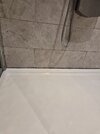
Hi, anyone that can recommend me a very good sealant for my walk in shower? Need to seal a gap between the tile wall and base, so no water etc goes in. As you can see the previous silicone I used has become mouldy which I understand is impossible not to as it is a high moisture place etc

Was told about bt1 sealant, can anyone advise on this? Someone said its an adhesive and I just need a sealant.
 

Attachments

  • 20250822_222132.jpg
    20250822_222132.jpg
    226.1 KB · Views: 25
BT1 is an adhesive as well as a sealant. You probably don't need any adhesion, so you don't need BT1.

You just need any standard bathroom silicone sealant.

It's just a theory of mine, but if you run a bigger bead of silicone (say 10mm diameter), and then use a silicone finishing tool to give a 45 degree angle, then you will have a larger sealant surface that water will run off better, and not get trapped so easily in a near 90 degree angle as you have at present. This will mean it dries out faster and you'll get less mould.

Getting as much ventilation into the shower as possible after using it will also help keep it dryer and keep down the mould, e.g. leave the shower door open and open a bathroom window if there is one.
 
BT1 is an adhesive as well as a sealant. You probably don't need any adhesion, so you don't need BT1.

You just need any standard bathroom silicone sealant.

It's just a theory of mine, but if you run a bigger bead of silicone (say 10mm diameter), and then use a silicone finishing tool to give a 45 degree angle, then you will have a larger sealant surface that water will run off better, and not get trapped so easily in a near 90 degree angle as you have at present. This will mean it dries out faster and you'll get less mould.

Getting as much ventilation into the shower as possible after using it will also help keep it dryer and keep down the mould, e.g. leave the shower door open and open a bathroom window if there is one.
Last part makes sence. A 45 degrees angle would be good. I think it is at a 45 degrees angle. P.S I used the blue silicone block tool for the finish, I prefer the plastic tools instead, easier to use/less messy. Also it is roughly 10mm I did, would 14mm be better?

I was thinking of getting unibond brand sealant, sanitary anti mould, is this a good option?
 
which I understand is impossible not to as it is a high moisture place etc
Not at all but good cleaning is essential. Shower area needs to be dried off once it's been used. The mould comes from water just left sitting on the silicone.

You can get a sanitary silicone with mould inhibitors but in the long run it will always seems to comes back, yet to find a silicone that doesn't eventually go black if not dried and cleaned regularly, apart from black silicone and that just seems to take a bit longer.
 
Last part makes sence. A 45 degrees angle would be good. I think it is at a 45 degrees angle. P.S I used the blue silicone block tool for the finish, I prefer the plastic tools instead, easier to use/less messy. Also it is roughly 10mm I did, would 14mm be better?

I was thinking of getting unibond brand sealant, sanitary anti mould, is this a good option?

Like I said, it's just a theory of mine, and I think you should ask for a few more opinions on the best size and profile of silicone to put in. My point is, if it's a small bead of silicone, water will just sit over it, and it will stay wetter for longer. If you can use a profile that makes water run off, that's better, but then water will still sit at the bottom of the profile on the tray. There's also the look to consider. As others have said, it's better if the shower can be fully dried after each use, then you won't ever get any mould. Another technique that's worthwhile, is to use a squeegee to dry off the walls after each shower. This helps the shower environment to be less humid, and that helps keep mould down.

That Unibond sealant would be fine. Whether it does a better job of keeping mould off than an own brand sealant is questionable, e.g. Wickes sealant. I tend to use the own brand because they're cheaper, and redoing the silicone later if needed is easy and cheap anyway.
 
I used the metex silicone blue block and I personally didn't like the use of it. Makes a big mess on the block to clean off. I prefer the plastic tools, even though sometimes it aint 100% perfect it is better than wonky finger doing!
 
I used the metex silicone blue block and I personally didn't like the use of it. Makes a big mess on the block to clean off. I prefer the plastic tools, even though sometimes it aint 100% perfect it is better than wonky finger doing!

Looks a bit unwieldy. I also prefer the smaller plastic tools. I love a bit of siliconing!
 

If you need to find a tradesperson to get your job done, please try our local search below, or if you are doing it yourself you can find suppliers local to you.

Select the supplier or trade you require, enter your location to begin your search.


Are you a trade or supplier? You can create your listing free at DIYnot Local

 
Back
Top