• Looking for a smarter way to manage your heating this winter? We’ve been testing the new Aqara Radiator Thermostat W600 to see how quiet, accurate and easy it is to use around the home. Click here read our review.

SPD's compulsory

It depends how quickly, it increases. Many years ago, we had our supply go up to 260v, it was obvious from the tungsten lamps, the voltage had gone up. I was able to simply switch things off, to protect them, then ring the DNO. I have nothing like that now, which would respond to slight over voltage, but a 'voltage alarm' might be handy. Nothing would be damaged, by under voltage.
I suppose it has to be said that supply voltage gradually increasing, eventually to a worryingly high level must be an extremely unusual event and, off the top of my head, I can't really think what would/could cause that to happen (unless simply progressive fall in demand).

Mind you, as you said,the ubiquitous SMPSUs are very tolerant to a wide range of input voltages, and I strongly suspects that remains the case for voltages well above what the manufacturer states as the 'maximum'.
 
For the price you might aswell, not convinced they do anything mind.
The way they're wired I agree.

I know I've mentioned it before but in 1983 my first house was the first on the run from the sub followed by another 80 or so houses. While I was 'doing it up' I was getting through bulbs like they were going out of fashion and measured some very high voltages, complained to SEEBoard who fitted a pen recorder for a week. I soon assertained the scale was 200V to 300V and saw too many examples where the trace went over 300V, I took the paper roll off, photocopied it at work and replaced it showing an appropriate blank patch. They moved the taps at the sub but I was still at 260+ most of the time but the far end were way down, often below 200V.

SEEBoard provided a mixed box of rough service bulbs which saw me right through the refurb, then they fitted another cable to the far end to create a ring main which fixed the problem.
 
Last edited:
Even SPDs are not (yet!) 'mandated' (well, 'required by BS7671') for normal owner-occupied domestic properties, the owner theoretically able to make a (hopefully 'informed') decision as to whether or not they want them.

AFDDs are 'next in the queue' (even more 'benefit' for manufacturers, distributors, sellers etc.!), but I think a fair way away from being 'required'.

It does, (although I remain sceptical, but partially because I don't know much about this topic) but ....

I suspect that there may never be any particularly useful statistics (just profit for those mentioned above!) - since I have to wonder how on earth one can determine whether any particular fire (if any!) started as a result of arcing??

I suspect that, as with many things, AFDDs have appeared because it became technologically possible to produce them, without enough (if any!) consideration as to whether they were actually needed to address a significant actual problem, let alone being 'cost-effective'!
Arc Fault Detection Devices are now required in the US (and Canada [?]) on circuits which feed Socket Outlets in Bedrooms (among other locations).
The main reason for requiring AFDDs in such situations is ostensibly the possibility of an Arc Fault in an Electric Blanket.

However, I strongly suspect that the real reason that AFDDs are now required on many circuits in the US and Canada
is the use there of relatively poor "Connection Devices".

Among these are Twist On Wire Connectors (Wire Nuts), without the use of a Set-Screw,
although the original patented design (1923/1926) included one.

The later patented device (1930/1933) left out this set-screw and this is the device which is now (largely) used there.
(https://en.wikipedia.org/wiki/Twist-on_wire_connector ).

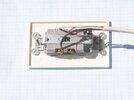
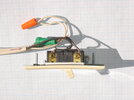
US and Canadian Socket-Outlets and Switches also do not use Set-Screws
but (mostly) use Side-Screws,
which require that only one solid conductor be used,
wrapped in a clockwise direction around the screw.

In addition, it is a requirement that they be tensioned within particular specifications, using a torque screwdriver,
which is probably seldom done - resulting in possible loose connections.


The fact that only one solid conductor may be connected under any screw leads to the use of Auxiliary Connectors,
to allow the connection of multiple conductors, twisted together,
which would not be required if set-screws were used,

These Side-Screws are exposed at the sides of these devices.
IMG_7648.JPG

IMG_7688.JPG
I find it difficult to understand that such a design is still permitted in an OECD Country in the 21st Centaury.

I strongly doubt that such a design would be permitted in the UK, or in any European country (apart from Russia !).
 
RCD’s were an option rather than a necessity when they emerged in domestic settings. The OP should go with the flow and have the SPD fitted.
 
Arc Fault Detection Devices are now required in the US (and Canada [?]) on circuits which feed Socket Outlets in Bedrooms (among other locations).
The main reason for requiring AFDDs in such situations is ostensibly the possibility of an Arc Fault in an Electric Blanket.

However, I strongly suspect that the real reason that AFDDs are now required on many circuits in the US and Canada
is the use there of relatively poor "Connection Devices".

Among these are Twist On Wire Connectors (Wire Nuts), without the use of a Set-Screw,
although the original patented design (1923/1926) included one.

The later patented device (1930/1933) left out this set-screw and this is the device which is now (largely) used there.
(https://en.wikipedia.org/wiki/Twist-on_wire_connector ).

US and Canadian Socket-Outlets and Switches also do not use Set-Screws
but (mostly) use Side-Screws,
which require that only one solid conductor be used,
wrapped in a clockwise direction around the screw.

In addition, it is a requirement that they be tensioned within particular specifications, using a torque screwdriver,
which is probably seldom done - resulting in possible loose connections.


The fact that only one solid conductor may be connected under any screw leads to the use of Auxiliary Connectors,
to allow the connection of multiple conductors, twisted together,
which would not be required if set-screws were used,

These Side-Screws are exposed at the sides of these devices.
View attachment 398157

View attachment 398156
I find it difficult to understand that such a design is still permitted in an OECD Country in the 21st Centaury.

I strongly doubt that such a design would be permitted in the UK, or in any European country (apart from Russia !).
Having worked on some American kit in an embassy I found the whole design to be absolutely appalling, a screw in the middle of a brass plate with a raised thread part and no upstands
1762256965049.png
to stop the wire slipping sideways is an incident waiting to happen. What I found was initial installation was trapping the wire on the raised part
1762257857821.png
rather than on the flat part
1762258575629.png
which meant they were susceptible to coming loose.

In comparison the appalling wirenut arrangement with the wires twisted together is much more stable, let's not forget we used to use ceramic wirenuts too - but fortunately they are long discontinued here and now a rare find.
 
Wow. Lots of info there.
As it happens, I do have an overhead incoming supply. I hate it, the pigeons love it -but we have to keep vehicles out of the "zone" in the summer. May be a good reson for the SPD's, although we have never had an issue. On the other hand, about 15 years ago when I owned a Showroom, our burglar alarm went off. I dashed into town. No burglars, but a grass vergeoppositethe shophada small crater, where something to do wit mains electric had "blown up"! We had to have the alarm system repaired, and tried to claim against the utility. They knocked the claim back, on the grounds that modern equipment should be designed to withstand surges! I was too busy to get into any argument with them, but that staement suggests that SPD's should not be neccessary? (Although the "surge" clearly caused damage, and may have been worse if the computers were switched on.

Speaking of which - is it practical to fit anti bird spikes on that cable outside my house?

Thanks
 
Speaking of which - is it practical to fit anti bird spikes on that cable outside my house?

I doubt you would be allowed to fit anything, on the cables, but - You could try a dummy hawk, or similar, moving it occasionally - they get used to dummy hawks, being in one position.
 
RCD’s were an option rather than a necessity when they emerged in domestic settings. The OP should go with the flow and have the SPD fitted.
Sure, we have no choice but to 'give in' - but that doesn't necessarily make it sensible or even 'right'.

Having said that, I don't think your analogy is all that valid. RCDs will undoubtedly have 'saved a few lives' (and serious injuries), even if far less than many seem to imagine, and even though one can argue about their 'cost-effectiveness' (in terms of saving lives/injuries). In contrast SPDs are not going to save any lives, other than in the most indirect and contrived fashions.

As is being discussed, AFDDs are 'next in the queue', and undoubtedly will follow the path that RCDs and SPDs have gone down before them - but I have yet to see evidence of their potential benefits. People who take your view (which, ultimately, ends up as being most of us) will presumably continue to blindly accept anything and everything new which is 'forced on us'.

One of the problems is the tendency (in very many fields) to produce, start using and then eventually 'require use of' things because they have become technologically possible, often with far too little consideration of 'need', 'benefit' or cost-effectiveness. Another issue (certainly in the UK, and probably everywhere) is that a high proportion of individuals in the groups involved in the creation of regulations (or even laws) which do the 'requiring' often have vested interests in the massive financial benefits that result from use of a any new type of device being 'required'
 
RCD’s were an option rather than a necessity when they emerged in domestic settings. The OP should go with the flow and have the SPD fitted.

RCD's/RCBO's were a major leap forward in safety, versus the tiny improvement offered and the much higher expense of SPD's. There has to be a cost/benefit.

It's only in the past couple of years, that I managed to persuade myself to upgrade my CU, to a new one including RCD's for all but one circuit, the fridges and freezer. The upgrade in part, was to increase the number of circuits available, make my layout more logical. Previously, I had done a partial upgrade, covering my garage/workshop and outdoor socket with RCD's.
 
Last edited:
RCD's/RCBO's were a major leap forward in safety, versus the tiny improvement offered and the much higher expense of SPD's. There has to be a cost/benefit.
In terms of 'safety', I'm not sure what even 'tiny' improvements you are thinking that SPDs can offer - the only things I can think of are (incredibly improbable) surge damage of electronics in 'life-supporting' equipment, of in smoke etc. alarms if there happened to be a fire at the same time as the surge ... but they are verging on the 'silly'!

Whilst I agree with the contrast you are making between RCDs and SPDs (based on the fact that RCDs probably really have saved 'a life or three' over the decades!), I would personally not regard them as a 'major leap forward in safety'. As I always point out, prior to the appearance of RCDs there were (somewhat surprisingly) so few deaths or serious injuries due to electric shocks that there was no real scope for anything to result in a 'major leap forward' - and one has to think about that in conjunction with knowledge of the 'billions' that has been spent in obtaining, installing and testing the devices.
 
RCD's/RCBO's were a major leap forward in safety, versus the tiny improvement offered and the much higher expense of SPD's. There has to be a cost/benefit.

It's only in the past couple of years, that I managed to persuade myself to upgrade my CU, to a new one including RCD's for all but one circuit, the fridges and freezer. The upgrade in part, was to increase the number of circuits available, make my layout more logical. Previously, I had done a partial upgrade, covering my garage/workshop and outdoor socket with RCD's.
Likewise, several decades without rcd’s hasn’t impacted on my health and safety. IIRC they were brought in as a response to the mayhem of unregulated DIY in the 70’s and 80’s
 
Sure, we have no choice but to 'give in' - but that doesn't necessarily make it sensible or even 'right'.

Having said that, I don't think your analogy is all that valid. RCDs will undoubtedly have 'saved a few lives' (and serious injuries), even if far less than many seem to imagine, and even though one can argue about their 'cost-effectiveness' (in terms of saving lives/injuries). In contrast SPDs are not going to save any lives, other than in the most indirect and contrived fashions.

As is being discussed, AFDDs are 'next in the queue', and undoubtedly will follow the path that RCDs and SPDs have gone down before them - but I have yet to see evidence of their potential benefits. People who take your view (which, ultimately, ends up as being most of us) will presumably continue to blindly accept anything and everything new which is 'forced on us'.

One of the problems is the tendency (in very many fields) to produce, start using and then eventually 'require use of' things because they have become technologically possible, often with far too little consideration of 'need', 'benefit' or cost-effectiveness. Another issue (certainly in the UK, and probably everywhere) is that a high proportion of individuals in the groups involved in the creation of regulations (or even laws) which do the 'requiring' often have vested interests in the massive financial benefits that result from use of a any new type of device being 'required'
There don’t seem to be many or any who argue for risk appetite but plenty who focus on risk tolerance, or rather risk intolerance!
 
In terms of 'safety', I'm not sure what even 'tiny' improvements you are thinking that SPDs can offer - the only things I can think of are (incredibly improbable) surge damage of electronics in 'life-supporting' equipment, of in smoke etc. alarms if there happened to be a fire at the same time as the surge ... but they are verging on the 'silly'!
I have to disagree John...

Someone could be holding the 230V live wire when the 1000V surge comes in.

Seems you've already addressed that one ;)
 
Someone could be holding the 230V live wire when the 1000V surge comes in.
My ability to correctly make this distinction appears to be deteriorating in my old age - is that intended as a serious comment or as a joke? ;)
 
I suspect most failures under surge conditions are down to "poor quality" electronics - everything built down to a price, no headroom in component specs, that sort of thing.

I do have experience with stuff getting fried - but SPDs as currently fitted would have done ... absolutely nothing at all to help.
The case there was overhead lecky supply, overhead phone line, coming from opposite directions and coming in to opposite ends of the house - in a rural setting. Naturally it was not infrequent for fax machines, cordless phone bases, and modems (i.e. thing connected to both phone line & mains) to get fried during thunderstorms.
An SPD at the CU would do s.f.a. to fix that. The fix would need routing the phone line close to the CU, fitting a surge protector to it as well (with a very short earth bond to the MET), and providing a good shared earth.

I once had a client come back from Madagascar with a similar problem. Except he'd had a much bigger surge that destroyed laptop & printer. They have real thunderstorms out there !
 

If you need to find a tradesperson to get your job done, please try our local search below, or if you are doing it yourself you can find suppliers local to you.

Select the supplier or trade you require, enter your location to begin your search.


Are you a trade or supplier? You can create your listing free at DIYnot Local

 
Back
Top