

I’ve read several threads on the forum, the FAQs, and the Wiki but not found anything which quite addresses my issue. I’m hoping some generous soul can help.
This thing is inside a blocked-off area in my flat. It is part of the apparatus from the water line to the toilet cistern:
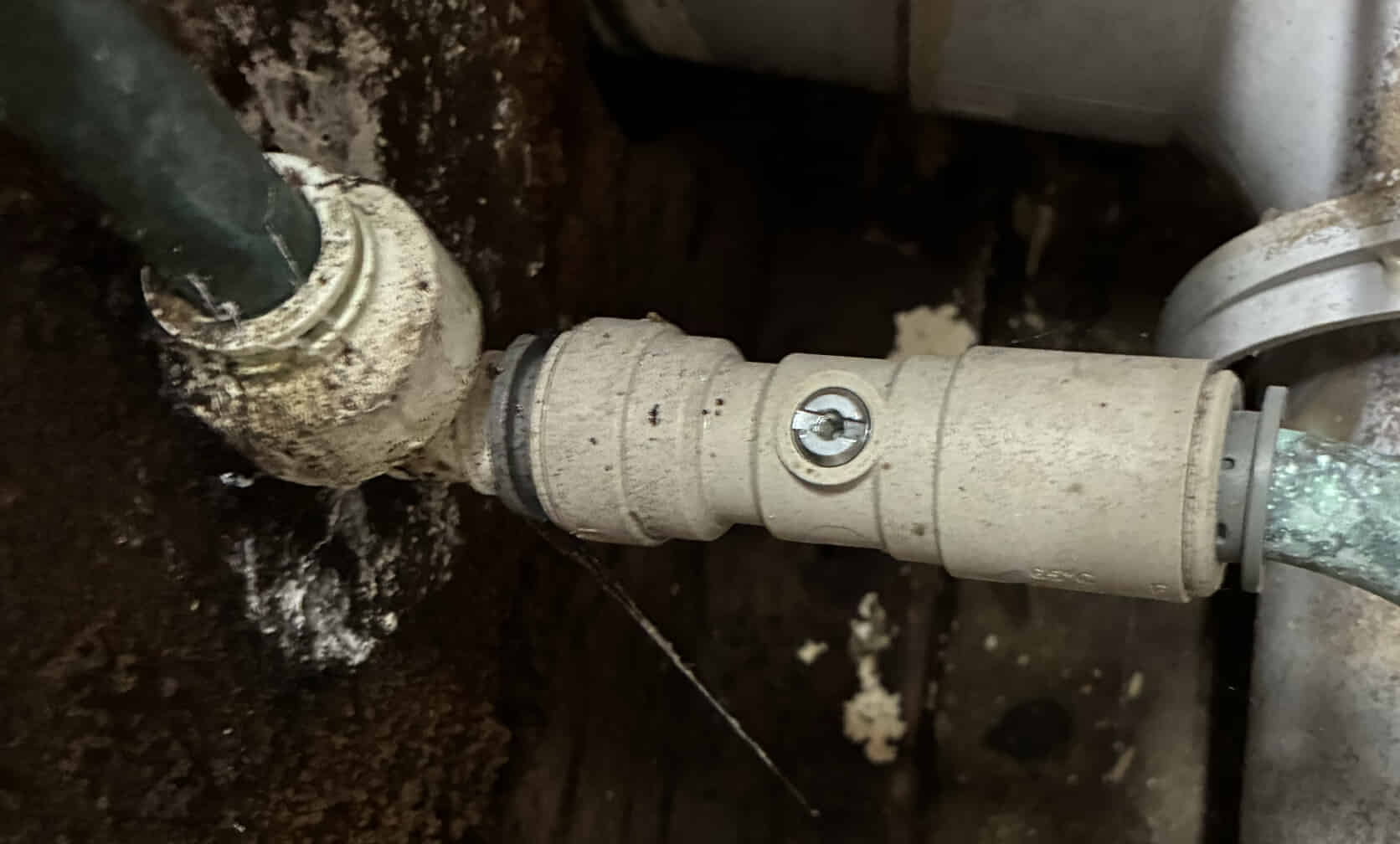
It connects to the toilet inlet through a series of joins. Some of these are seeping. This one is not. The line it connects to (where the water comes from) appears to be 15mm copper.
I’m considering replacing the series of joins with a flexi-pipe. I figure best not to disturb the one which isn’t leaking, so I’ll try to connect there. But I’m not sure what connecter I need.
Here’s the whole ugly mess:
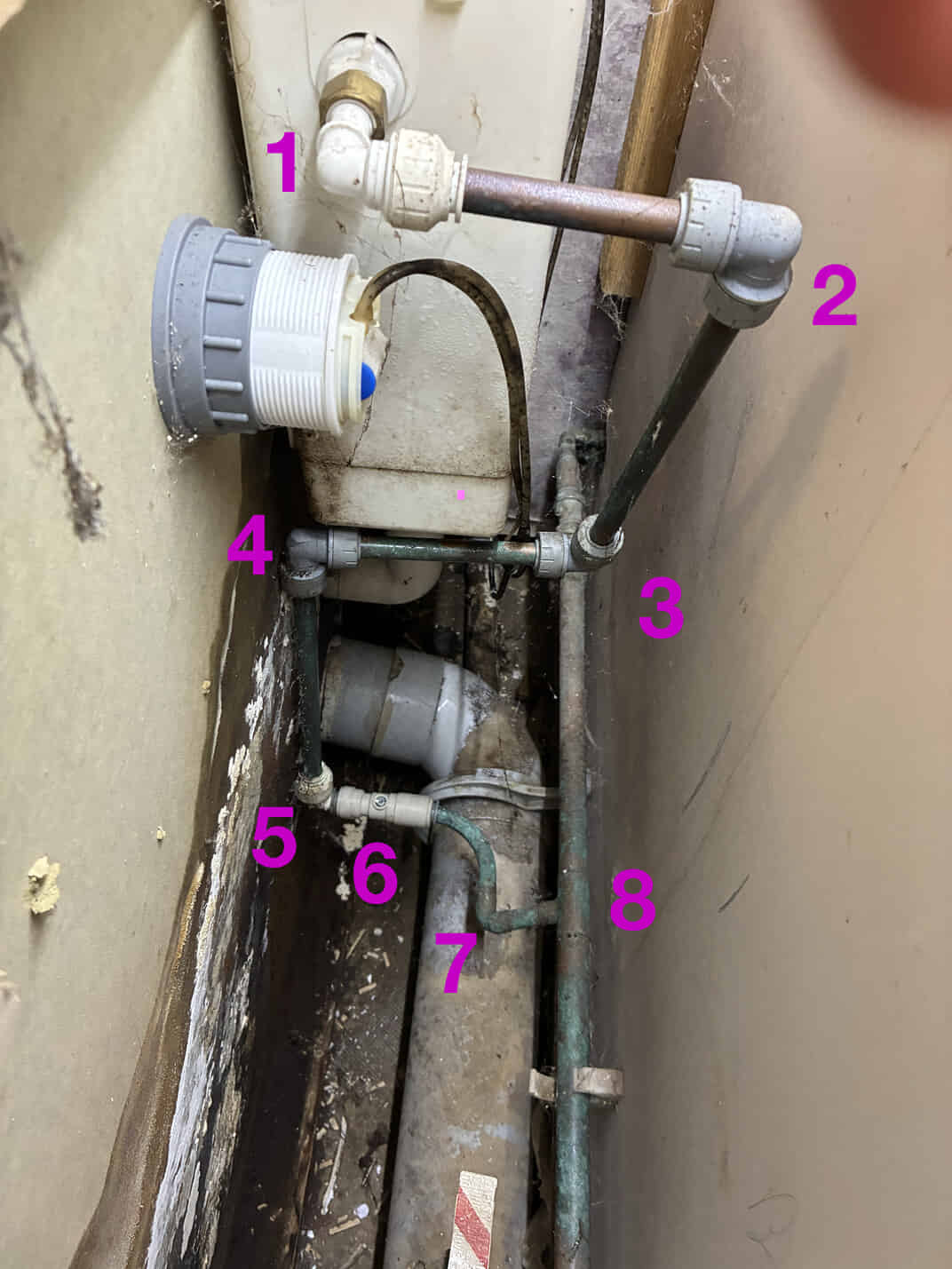
The upstream (closer to water source) side of 2, both sides of 3 and 4, and the downstream (closer to the cistern) side of 5 all seep to some degree. I don’t think the downstream side of 6 does. I’m certain the upstream side of 6 and both sides of 7 and 8 are dry.
I’m guessing the join to the cistern is ½" BSP. But I’m not sure what I need to connect to the thing pictured up top (6 in the photo immediately above).
Alternatively, if my plan is daft and there’s a better way I’d love to learn. I am utterly clueless about…well, most things really. But plumbing in particular.
EDIT: Gah! Just noticed the finger in the 2nd photo. I was going to replace with a better one, but decided to leave it as a vivid illustration of the scintillating intellect and formidable skill I possess.
This thing is inside a blocked-off area in my flat. It is part of the apparatus from the water line to the toilet cistern:
It connects to the toilet inlet through a series of joins. Some of these are seeping. This one is not. The line it connects to (where the water comes from) appears to be 15mm copper.
I’m considering replacing the series of joins with a flexi-pipe. I figure best not to disturb the one which isn’t leaking, so I’ll try to connect there. But I’m not sure what connecter I need.
Here’s the whole ugly mess:
The upstream (closer to water source) side of 2, both sides of 3 and 4, and the downstream (closer to the cistern) side of 5 all seep to some degree. I don’t think the downstream side of 6 does. I’m certain the upstream side of 6 and both sides of 7 and 8 are dry.
I’m guessing the join to the cistern is ½" BSP. But I’m not sure what I need to connect to the thing pictured up top (6 in the photo immediately above).
Alternatively, if my plan is daft and there’s a better way I’d love to learn. I am utterly clueless about…well, most things really. But plumbing in particular.
EDIT: Gah! Just noticed the finger in the 2nd photo. I was going to replace with a better one, but decided to leave it as a vivid illustration of the scintillating intellect and formidable skill I possess.


