
- Joined
- 8 Nov 2024
- Messages
- 34
- Reaction score
- 2
- Country

Hi, apologies if i'm not using the correct terminology here. I'm not really sure what to do so grateful for any pointers.
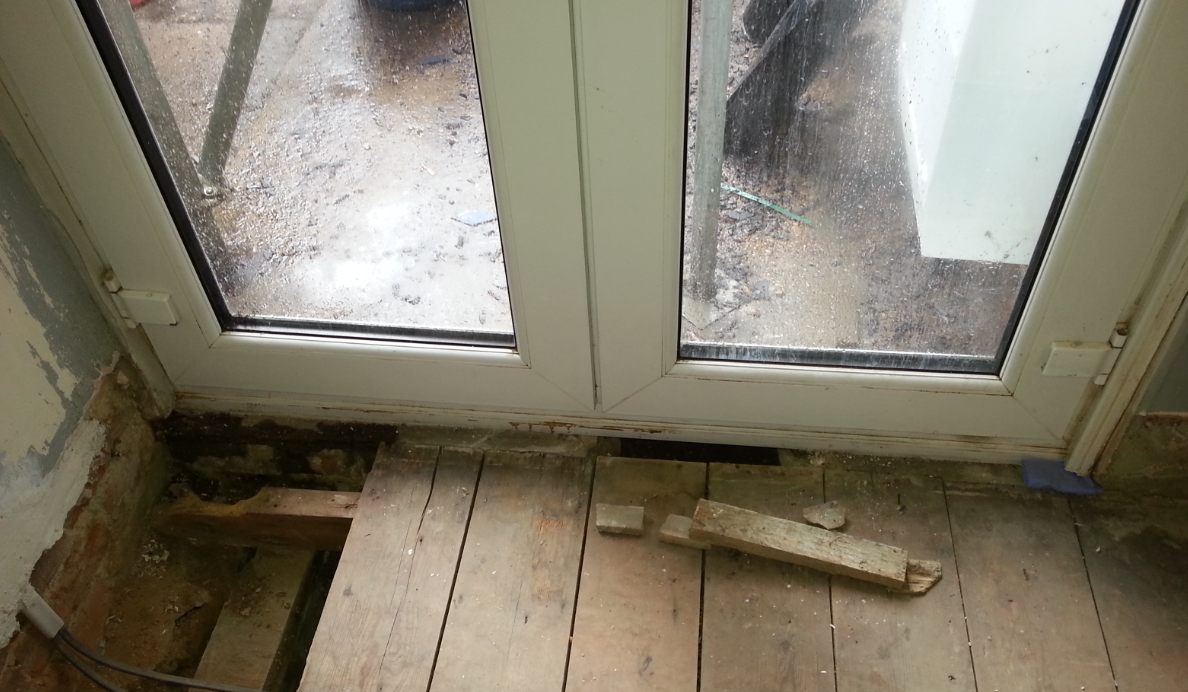
I have an old house in need of renovation, solid walls and suspended timber floor. There's a uPVC double door onto the patio, where water seems to be coming in - but from underneath the screed that it sits on. Here's a pic from the inside. The section in the middle is where the threshold above the air brick has collapsed. The water ingress is mainly on the left. This must have been going on for a while as the timber joist and sill have woodworm exit points.
Outdoor view:
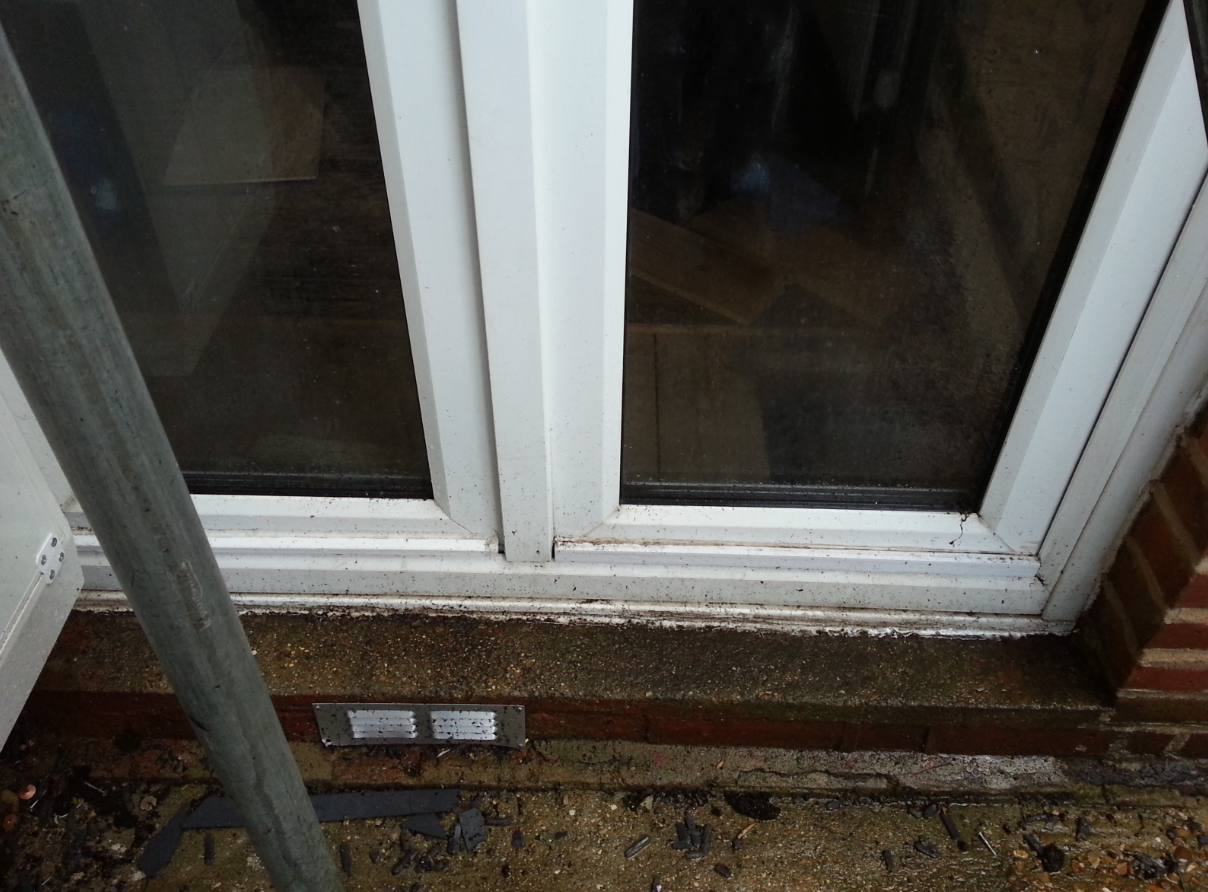
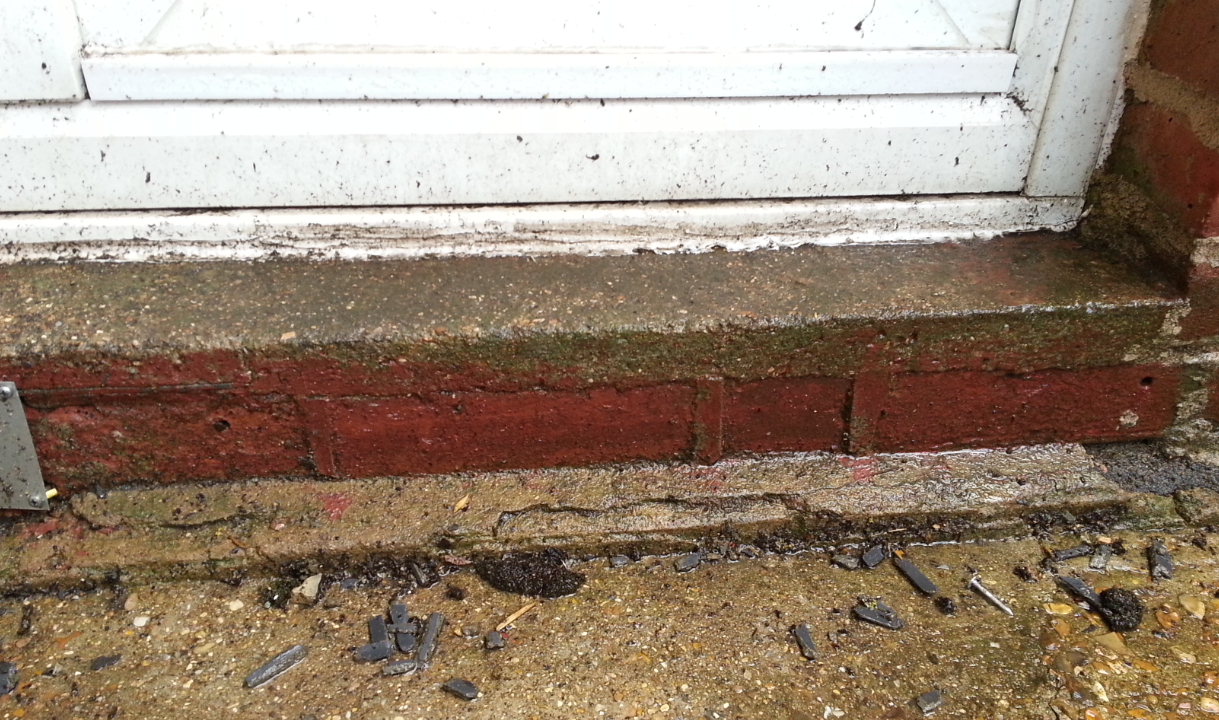
I don't know if you call that a sill or a threshold? The air brick cover is temporary as the original has perished. Although the seal between the door and the concrete looks bad, when i watch the water come through in heavy rain it seems to be drawn through the concrete then drips off the bottom edge.
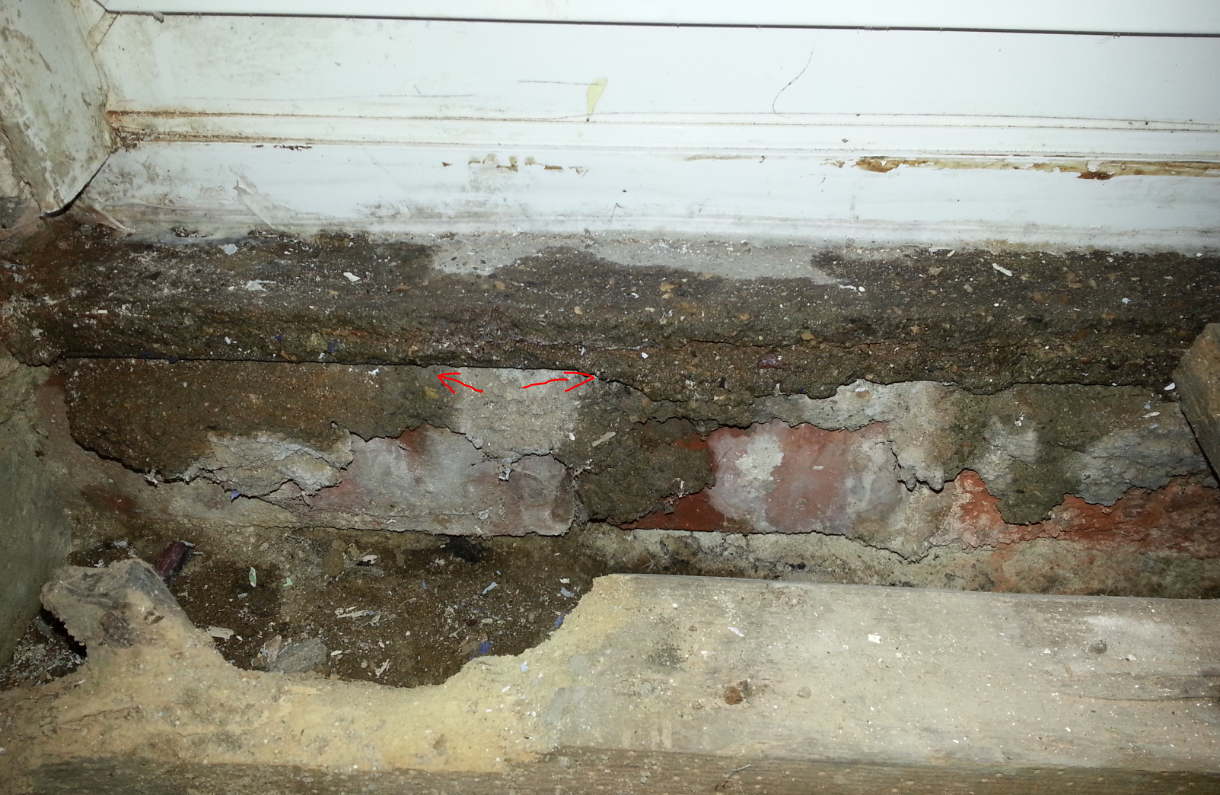
The straight edge is a DPC by the looks of it, it's rigid. The concrete threshold itself seems to wick the moisture as the edge gets wet first then moves backward as the water continues to drip.
In the heavy rain today i tried putting some tiles in front of the step outside to shield it, but that didn't seem to do much. I thought maybe the fall of the threshold outside wasn't steep enough, but water doesn't seem to pool there and i'm confused why a threshold would be made of such a porous material (ok maybe to release the moisture but not to wick it in during rain?).
I'll try and post a video of it dripping in if that's any use. But really keen to get some advice on short term fixes, maybe covering it in Black Jack or storm dry?
Thanks
I have an old house in need of renovation, solid walls and suspended timber floor. There's a uPVC double door onto the patio, where water seems to be coming in - but from underneath the screed that it sits on. Here's a pic from the inside. The section in the middle is where the threshold above the air brick has collapsed. The water ingress is mainly on the left. This must have been going on for a while as the timber joist and sill have woodworm exit points.
Outdoor view:
I don't know if you call that a sill or a threshold? The air brick cover is temporary as the original has perished. Although the seal between the door and the concrete looks bad, when i watch the water come through in heavy rain it seems to be drawn through the concrete then drips off the bottom edge.
The straight edge is a DPC by the looks of it, it's rigid. The concrete threshold itself seems to wick the moisture as the edge gets wet first then moves backward as the water continues to drip.
In the heavy rain today i tried putting some tiles in front of the step outside to shield it, but that didn't seem to do much. I thought maybe the fall of the threshold outside wasn't steep enough, but water doesn't seem to pool there and i'm confused why a threshold would be made of such a porous material (ok maybe to release the moisture but not to wick it in during rain?).
I'll try and post a video of it dripping in if that's any use. But really keen to get some advice on short term fixes, maybe covering it in Black Jack or storm dry?
Thanks


