- Joined
- 27 Jan 2008
- Messages
- 29,496
- Reaction score
- 3,631
- Location
- Llanfair Caereinion, Nr Welshpool
- Country

 This keeps coming up, so I had a look. As I am getting older, I find getting up to do minor tasks harder and harder, and falling asleep in the chair with the TV, and waking as it times out is not unknown.
So sitting there, trying to find something to light my way to the light switch.
But such a simple task, can be done so many ways, auto turning on lights ½ hour before dusk, using the mobile to light ones way, using the mobile to turn on the lights, using speakers like Nest Mini's to turn on lights, fitting a power failure torch
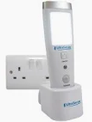 is likely one of the better options, once you move in darkness it turns on, and is also there in a power cut, but is that "Smart" no internet involved, no voice recognition, and even with a total black out, it still works. I personally think they are a very smart idea, even if not classed as a smart device.
But we read this and there's not even a mention, not that I expected one, but sometimes we must look back to basics, why do we need it?
So I would sit in front of a gas or coal fire, and not realise how hot the room had got, until I left and re-entered the room, so a device (called a thermostat) to stop the room overheating seems a good idea.
But how far should we go? And more to the point maybe, will it work? The idea of turning down the heating as I leave the house, and turning it back up as I return seems at first glance great. I had expected the room to get cooler and cooler as my distance from home increased, and the reverse as I returned, so I have saved money on heating, but house still warm on my return, it is called geo-fencing, but in real life, it did not work that way, on leaving the house it turned heat down, but did not turn it back up until I was about to walk through the door, so a bit like a chocolate fireguard. A simple timer worked better.
In the main, so much depends on our actual home, I have parking front and rear of the property, and at the rear I have no street lighting, slopes and steps, and 5 foot drops, so really do need lighting, be it built into the phone, or in the garden, and with the latter, as I found out the hard way, a PIR turning off when you're on a set of steps with arms full of shopping is not funny. So for me, turning the lights on with the phone, and off with a voice command once in the house, seems to work out very well, but I am sure there are homes where PIRs work, but only I park at back of house, why should I help an intruder miss those 5 foot drops?
The same with the heating, with 14 heated areas, I want to heat as and when required, with just 4, I may think just heat all 4 together, so it does depend on the home. And we have to consider how many thermostats, and what type, and how they interact with each other, so I have 16 thermostats, of them, 4 can fire the boiler, 12 are programmable, 3 are wall mounted, and 14 control water flow through the radiators (TRVs).
The English used "Color Temperature" not "Colour Temperature" it is clearly written for the USA, and items like Nest wall thermostats sold in the USA are very different to Nest wall thermostats sold for use in the UK.
going beep are the end of the cycle is not going to help anyone, but starting the cycle drawing the time when we get off-peak will, and we are getting more and more incentives to use electric when it is plentiful, and often this means passing over some control to the electric supplier, so they decide when to recharge batteries in the house and EV car.washing machines that notify you when cycles are complete are becoming more common.
As to heating, the storing of heat in storage radiators has not really been successful, in a larger central heat store it does work well, but these need to be included in the orignal design, not an add on latter. But turning on heating an hour early to use a cheaper supply, or delaying it to use cheaper supplies, may still be an advantage, but before this can be considered, the home needs to be well insulated.
I know I can turn the heating from 22°C to 17°C at 11 pm and at 9 pm next day the heating has very rarely come on, but the way a room cools, and how much heat transfers room to room, varies home to home, so we have some very educated chaps and chapesses who have gone to University to learn how heat transfers and how to design a system to suit the home. This is not what a plumber does, he/she is a worker of lead, and can repair the flashing on a flat roof or the pipework within the house, and may work with heating and ventilation engineers and will have picked up some skills, and may be able to install a system, but as to if that system works equnomically is another question, it will work, but will it work using as little energy as possible?
So we are working with complex systems, and I got things wrong with my automation, so yes talking/writing about it is good, so others don't make the same mistakes.
But half of what a device does, is not in the adverts, a simple plug in smart adaptor varies in what they can do so much, I am using one to turn off my drill battery charger once the charge is complete, it was not bought to do that, but it became a spare, so it turns off 6 bright green LEDs ½ hour after charge is complete. But I would not have bought it to do that. Be it turn on ½ hour before dusk or off ½ hour after dawn, these functions are often not included in the description.
Same with a TRV head which can be controlled from a wall mounted thermostat/sensor, so not affected by a cold outside wall, and even when two devices both use zigbee, it does not mean both can use the same hub.
And the Nest learning thermostat I found useless, mainly as it would not connect to any remote sensors, only the USA model does that. I have moved to Drayton Wiser, but mainly as did not want to risk using any cheaper unit which may or may not work. Their socket adaptor does far less to the Tapo (TP-Link) one I am using, but the Wiser zigbee will not work with other zigbee products, so the Wiser socket adaptor is needed to relay the signal to the TRV head.
Be it light switches which cause lights to stay on dim or flash, or bulbs without the option to turn off at dawn, often only way to find out is try them.