Mains tripping

Joined
28 Aug 2017
Messages
43
Reaction score
1
Country
United Kingdom
I have a weird issue where the mains is tripping immediately when the washing machine (Siemens - 12 years old) is switched on.

The weirdness is, is that it is only happening intermittently and the mains has tripped with the washing machine unplugged.

When the mains trips, its the larger RCD that is tripping and taking out everything on that side of the fuse box (if that makes sense).

Things I've tried:
- Unplugged a lot of things on the circuit and we found that the iron was causing the mains to trip, but then that corrected itself. The mains also trips with the iron unplugged and you turn the washing machine on.
- Ran an extension lead from a neighbours house to the washing machine and iron and his mains did not trip when both were switched on.
- Removed the neutrals from the boiler and the power still tripped (a friend suggested this) when the washing machine was turned on.
- We were able to run a quick wash on the machine successfully. It was a 30 degree wash so the heater element should have come on and it didn't trip during that cycle. But also it tripped when running an extra spin cycle (it had 1 min remaining on the cycle before it tripped).
- checked the terminals inside the socket for the washing machine to make sure all were tight.

I've ordered a new mains suppressor (worth a punt at £32 vs a new washing machine) for the washing machine which should arrive in a couple days but I have doubt on whether the washing machine is entirely to blame (if at all). I did order a new washing machine, but cancelled it as we were seeing the issue with the machine unplugged and the existing one worked "in" the neighbours house.

Is there anything else I can check/try before I get an electrician in?

TIA
 
What's a 'mains suppressor'? A capacitor?
Whatever it is, it's not going to remedy your problem.

Appliances don't have to be 'in use' to cause an issue, because unless it's unplugged, if it is faulty it can still cause the RCD to trip.

You've obviously got an older 'split' consumer unit, so the circuit your washing machine is plugged into shares the RCD with other circuits. It could be caused by a fault on any of those circuits. If there's a fault elsewhere on one of those circuits, it generally might be not quite enough (most of the time) to trip the RCD, and it's just likely that using the washing machine might give the RCD that little 'extra impetuous' to trip, even though on it's own, the washing machine might be absolutely fine.

You'd be better with an RCBO board, at least then you could rule out issues with other circuits.
 
What's a 'mains suppressor'? A capacitor?
Whatever it is, it's not going to remedy your problem.

Appliances don't have to be 'in use' to cause an issue, because unless it's unplugged, if it is faulty it can still cause the RCD to trip.

You've obviously got an older 'split' consumer unit, so the circuit your washing machine is plugged into shares the RCD with other circuits. It could be caused by a fault on any of those circuits. If there's a fault elsewhere on one of those circuits, it generally might be not quite enough (most of the time) to trip the RCD, and it's just likely that using the washing machine might give the RCD that little 'extra impetuous' to trip, even though on it's own, the washing machine might be absolutely fine.

You'd be better with an RCBO board, at least then you could rule out issues with other circuits.
Thanks, yes the same friend that suggested to remove the neutrals from the boiler suggested to get an RCBO too

Yeah, the mains suppressor is a capacitor.
 
Last edited:
Thanks, yes the same friend that suggested to remove the neutrals from the boiler suggested to get an RCBO too

Yeah, the mains suppressor is a capacitor.
An instant trip can be easy to find regardless of wiring setup

If it’s a random trip or a wiring fault it’s get more tricky with your setup and you lose power to more equipment

Separate RCBOs means you can immediately narrow down the fault and lose power to less equipment
 
Last edited:
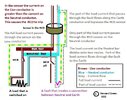
Diffrence line neutral 8 Feb 24 reduced.jpg
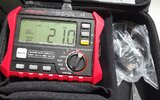
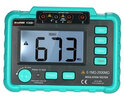
It is a pain finding an earth fault, my whole house is just under the limit for one RCD, 9 mA is the limit, as background leakage, and the RCD should not trip below 15 mA most will trip a lot higher mine RCD tester ramp.jpg trips at 21 mA as seen here. But I had a fault, on both front and rear of house RCBOs but not at the same time, and I went slowly item to item testing VC60B.jpg and no fault found, and all started to work again, like you
I've ordered a new mains suppressor
I suppect the suppressor in some item had likely failed, then blown clear, but never did find the fault, even with the test gear as shown.

But I thought it was worth going all RCBO, so at least only lost one circuit. The flat ring final tripped with good reason, water in the back of a socket, roof leaked, but sometimes, it can be a real pain working out what was faulty, I thought it must be my dishwasher, but tested neutral to earth and it showed clear, it may have been the 500 volt of the tester which cleared the fault?

I know we should test back-ground leakage, but for years my clamp-on meter would only measure in 10 mA incruments, so it was if it does trip at 30 mA and does not trip at 15 mA then leakage is less than 15 mA, but often it is a neutral - earth fault, and often the main switch, does not switch the neutral, so a bit of damp toast in the toaster, plugged in but not switched on, can cause a trip when the kettle is used.

Not the kettle at fault, it is due to the load making earth to neutral voltage rise due to the resistance in the feed cables.

So step one, unplug anything not in use. Two, if the item uses a lot of current, it may not be that item at fault, so I test with the insulation tester (can get cheap ones at around £35) earth to neutral so the switch on the item is not switching it off. The clamp-on also around £35 for one with 1 mA increments only works before it trips. But can identify when there is a high back-ground leakage, the RCD could be faulty which a RCD tester will find, but these cost around £80 for the cheapest.

So clearly you don't want to dump something which is not faulty, so I have shown around £150 worth of test equipment, and not that much cheaper to hire, due to being re-calibrated after every hire, so may be a lot cheaper to just get an electrician to test things for you.

The clamp-on around the meter tails will with you running around turning stuff on/off likely find the fault quickly, where with trial and error you may never find the fault, and dump something which has no fault anyway. As said even with the test equipment it does not always work, but most of the time it does.
 
Thanks @ericmark. It was too late to cancel the suppressor for the washing machine and I suspect @seasickstevie is correct in that it won't fix the issue, however, there is no harm in replacing it anyway.

As you say, I think the way to go now is to get an electrician in. Changing to RCBO's is also worth considering. The power tripping often is likely to cause problems with computer equipment we have in the house too.
 
Most of my PCs are laptops, so loss of power not really a problem. In around 1995 I fitted two RCDs to the house, well before the consumer unit was invented, and I would find, could get 6 trips in 2 weeks, then 2 years to the next one. I since the RCBO arrived wanted to change, but never got around to it, I was looking after mother just before we moved, and so was not at home, and a trip caused three freezers to fail, and insurance would not cover, as out of the house too long.

So I in this house went for all RCBOs to start with, then had solar installed with a battery, so the freezers are now from RCD sockets, which are in turn feed from the solar inverter, so even with a loss of grid, my freezers and central heating still works, nothing else, just the freezers and central heating.

We keep getting people wanting to sell us heat pumps, and the question is always the same, how long will they run if we have a power cut, and the answer means I always say I will stick with oil.

But the RCBO does not really matter that much now, but only reason for not having RCBO is you can not get B type, and unless you have an EV, that does not really matter.
 
The ‘consumer unit’ was surely invented well before 1995
Im not that familiar with the way these things are defined in the uk

If we’re talking about a main board with rcds and mcbs they were around long before
 
Photos of the consumer unit would be a great help

Accumulated leakage would be my best guess, based on the vague information provided so far
 
Sounds like a textbook example of a neutral to earth fault. Any substantial load on the same RCD causes a voltage drop on the neutral, which then causes current to flow from neutral to earth and that trips the RCD. These faults are pretty much impossible to find without an insulation resistance tester (an Ohm meter that works with 250 or 500 V DC instead of the 3-9 V in a regular multimeter).
 

If you need to find a tradesperson to get your job done, please try our local search below, or if you are doing it yourself you can find suppliers local to you.

Select the supplier or trade you require, enter your location to begin your search.


Are you a trade or supplier? You can create your listing free at DIYnot Local

 
Back
Top