
You are using an out of date browser. It may not display this or other websites correctly.
You should upgrade or use an alternative browser.
You should upgrade or use an alternative browser.
Insulating concrete floor.
- Thread starter Bella b
- Start date

Multifoil insulation used for a concrete floor? I've never seen that done, it's a compressible insulation so how do you install it in that situation without compressing it? Which one, got a link?
It’s Superfoil SFUF . I notice the installation guide said use battens but I rang the Insulation Superstore Tech help they said you can put OSB on top though that does seem strange except its thinness is it’s selling point where you don’t want too much heightI am insulating a concrete floor with multifoil layer and T and G OSB on top. Does this need to be screwed into the concrete , the insulation supplier says not, the contractor says yes?
Well if the manufacturer is saying no fixings then why is the contractor saying to use fixings?
Not sure I may have considered just a vapour permeable membrane but it won’t be warm enough . It’s an old Cornish unit council house remediated and the floor is very dry and smooth . Any ideas for more suitable insulation under the OSB without drilling into the concrete? Not involving any screeds?
So you just have a flat concrete slab atm? Can you add any height at all? What would you be achieving by drilling into the concrete?
Yes flat concrete. I’m not sure the fitter / contractor says he does them by drilling holes through the 2 layers then using mortar repair sealant before concrete screws at 50 cm to stop OSB popping up . I have seen that people do that in my googling, to stabilise the subfloor
I doon't know anything about the material you are planning to use but in a similar situation you would not need to screw down a floating floor which is basically just what ever thickness of polystyrene sheets you chose ( I used 50mm ) with T & G OSB loose on top of it. The skirtings hold it in place.
I am insulating a concrete floor with multifoil layer and T and G OSB on top.
That sounds crazy. Who’s idea was it? Have you bought it yet?
Just put down as much PIR board as you can and then float the OSB over the top; no screws needed. How smooth is the concrete?
- Joined
- 7 Sep 2022
- Messages
- 4,368
- Reaction score
- 1,247
- Country

i think you're being taken for a ride. Only a fool would put multifoil insulation directly under a floor boarding (actually I think only a fool would use multifoil in any application but..)
Multifoils work by having several fleece type layers between impermeable foil layers. Their biggest benefit, when well installed, is in draught reduction - the fleece part/overall thickness is typically incredibly thin and the manufacturer claims that it is as effective as considerably thicker insulation doesn't hold up to scientific scrutiny; the physics of the universe don't change - the basic tenet of insulation is that the greater the thickness of air you can trap in a material that is a poor conductor of heat, the better the insulation factor - air is an incredibly good insulator if you can stop it moving.
If it's free to move the warmed bit floats away to be replaced by a cooler bit, aiding heat loss.
By trapping air (300 mm of fibreglass wool, 150mm of closed cell bubble structure in PIR, even 500mm of hay/shredded paper/flayed denim etc) you create a great insulator. 10mm of multifoil squashed flat by flooring, against a cold concrete slab; useless
If you want to insulate without increasing the height of your floors I'm afraid there isn't a magic bullet; smash the concrete up, remove it, lay a decent thickness (100mm+) of rigid PIR/EPS and pour a new slab (I'd go for a self levelling liquid screed with embedded underfloor heating, every time.
If you can suffer loss of height in rooms, by all means go over the slab with a rigid board, then lay a floating floor eg T&G osb glued together then decorative floor on top of that. Do not use any form of insulation that can be compressed. Compressing robs you of the vital thickness of trapped air; squash all the air out of compressible insulation and it ceases to insulate (screwing it down exacerbates this). Maybe also find a different contractor, as the one you found so far seems a wee bit thick with regard to how insulation works - I wouldn't rate my chances of getting a decent install of anything insulation related by such a person
If you aren't looking to put UFH in, and hence need a nice thick insulation layer to stop your paid for heat soaking into the ground, you can get away with less, but equally you won't notice the same benefit as you would spending the same money on upgrading other insulation on/in the walls and roof as heat loss through a floor accounts for less of the overall house losses than the walls and roof
Multifoils work by having several fleece type layers between impermeable foil layers. Their biggest benefit, when well installed, is in draught reduction - the fleece part/overall thickness is typically incredibly thin and the manufacturer claims that it is as effective as considerably thicker insulation doesn't hold up to scientific scrutiny; the physics of the universe don't change - the basic tenet of insulation is that the greater the thickness of air you can trap in a material that is a poor conductor of heat, the better the insulation factor - air is an incredibly good insulator if you can stop it moving.
If it's free to move the warmed bit floats away to be replaced by a cooler bit, aiding heat loss.
By trapping air (300 mm of fibreglass wool, 150mm of closed cell bubble structure in PIR, even 500mm of hay/shredded paper/flayed denim etc) you create a great insulator. 10mm of multifoil squashed flat by flooring, against a cold concrete slab; useless
If you want to insulate without increasing the height of your floors I'm afraid there isn't a magic bullet; smash the concrete up, remove it, lay a decent thickness (100mm+) of rigid PIR/EPS and pour a new slab (I'd go for a self levelling liquid screed with embedded underfloor heating, every time.
If you can suffer loss of height in rooms, by all means go over the slab with a rigid board, then lay a floating floor eg T&G osb glued together then decorative floor on top of that. Do not use any form of insulation that can be compressed. Compressing robs you of the vital thickness of trapped air; squash all the air out of compressible insulation and it ceases to insulate (screwing it down exacerbates this). Maybe also find a different contractor, as the one you found so far seems a wee bit thick with regard to how insulation works - I wouldn't rate my chances of getting a decent install of anything insulation related by such a person
If you aren't looking to put UFH in, and hence need a nice thick insulation layer to stop your paid for heat soaking into the ground, you can get away with less, but equally you won't notice the same benefit as you would spending the same money on upgrading other insulation on/in the walls and roof as heat loss through a floor accounts for less of the overall house losses than the walls and roof
Last edited:
Thanks all you knowledgeable people. I have been researching for a while haven’t bought yet , I will definitely read all this through carefully and think about PIR boards
The concrete is really smoothThat sounds crazy. Who’s idea was it? Have you bought it yet?
Just put down as much PIR board as you can and then float the OSB over the top; no screws needed. How smooth is the concrete?
Yes I have found that carpet / flooring sellers know little about u and r values etc and aren’t interested. The rest of the house is well insulated with new roof ,and wall insulation put in at the remediation in 2003.
I wouldn’t have the £££ to dig up the floor and the neighbours have put up with a lot of noise already, also the floor is too good to dig up I’m trying to do project with as little new material as possible , to present to Council the waste of housing stock by not upgrading their older property. i.e if a 71 year old can do it with only help from son to batten out and replace rotten upstairs ceiling plasterboard why is a housing association doing nothing. I think I will take the advice about going a bit higher with PIR slabs and glued OSB T and G , I’m just needing to move in hence getting work from artisan . There is much conflicting information so this is all very helpful I hope other people with doer uppers on a shoestring will read and be saved much internet footslog so thanks very grateful for all the input and back to drawing board!
I wouldn’t have the £££ to dig up the floor and the neighbours have put up with a lot of noise already, also the floor is too good to dig up I’m trying to do project with as little new material as possible , to present to Council the waste of housing stock by not upgrading their older property. i.e if a 71 year old can do it with only help from son to batten out and replace rotten upstairs ceiling plasterboard why is a housing association doing nothing. I think I will take the advice about going a bit higher with PIR slabs and glued OSB T and G , I’m just needing to move in hence getting work from artisan . There is much conflicting information so this is all very helpful I hope other people with doer uppers on a shoestring will read and be saved much internet footslog so thanks very grateful for all the input and back to drawing board!
Had an excellent roofer who repaired the timber framework around new windows in hip roof then I could repair the interior reveals . Whole place was black with mould but after stripping out and airing is snuff dry ,the windows were never opened . I understand about floor heat loss not being the most but I am a textile worker and work on the floor a lot . The workroom is downstairs ,with the concrete floor.Sitting room upstairs for warmth in evening .
Attachments
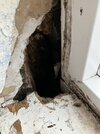
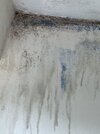
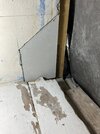
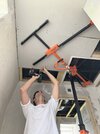
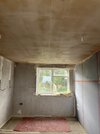
You need to step back for a minute and have a good look at the entire property.
I don't really understand what "remediation" is, but if it (including "wall insulation") was carried out in 2003 and the place subsequently became riddled with mould I would question what work was done and to what standard - certainly looking at that dormer cheek/exposed cavity or whatever it is - there appears to be little evidence of insulation. Many insulation "upgrades" carried out in that period have been found to be flawed and causing serious damp problems.
If it's a rented council property it doesn't really appear fit for habitation but it's their responsibility so I'm a bit confused as to why you are carrying out these works?
I don't really understand what "remediation" is, but if it (including "wall insulation") was carried out in 2003 and the place subsequently became riddled with mould I would question what work was done and to what standard - certainly looking at that dormer cheek/exposed cavity or whatever it is - there appears to be little evidence of insulation. Many insulation "upgrades" carried out in that period have been found to be flawed and causing serious damp problems.
If it's a rented council property it doesn't really appear fit for habitation but it's their responsibility so I'm a bit confused as to why you are carrying out these works?
Similar threads

- Replies
- 0
- Views
- 877