

You are using an out of date browser. It may not display this or other websites correctly.
You should upgrade or use an alternative browser.
You should upgrade or use an alternative browser.
A Red Dawn
- Thread starter Odds
- Start date

will do.Starmer is cracking down on anything anti-Starmer and far-right. Offenders must expect jail sentences.
Feel free though, to slag off Trump, Farage, the Tories etc, up to and including death threats.


- Joined
- 17 May 2012
- Messages
- 11,450
- Reaction score
- 1,042
- Country

History is repeating itself in terrifying ways.
Comparisons between the geopolitical climate of the 1930s and current events in 2026.
1. Territorial Expansion and Sovereignty
Greenland vs. The Sudetenland: The 2026 U.S. push to annex Greenland—a semi-autonomous territory of Denmark—is compared to 1930s "expansionist revisionism." Critics argue that justifying the seizure of an ally’s land for "national security" mirrors the rhetoric used by Germany to justify the 1938 annexation of the Sudetenland.
Ukraine and "Ethno-Nationalism": Russia’s ongoing invasion of Ukraine is frequently likened to the early stages of WWII. The justification—protecting ethnic populations abroad—parallels the 1930s German doctrine of Heim ins Reich (bringing ethnic Germans back into the Reich).
2. The Erosion of Alliances
NATO vs. The League of Nations: In the 1930s, the League of Nations collapsed because it could not enforce collective security against aggressive powers. Today, the "Greenland Crisis" is described as an existential threat to NATO. If one member (the U.S.) threatens the territory of another (Denmark), the core principle of mutual defense is effectively neutralized.
Global Inaction: Much like the 1935 Italian invasion of Abyssinia (Ethiopia), current conflicts in Sudan and elsewhere are seen as evidence that international institutions are paralyzed, signaling a return to a "might-makes-right" world order.
3. Domestic Enforcement and Civil Liberty
"ICE on the Streets" vs. Paramilitary Policing: The 2026 surge in high-visibility federal enforcement for mass deportations has drawn comparisons to the 1930s Gestapo. Critics point to the use of unmarked vehicles, the bypassing of local judicial oversight, and the targeting of specific ethnic groups as signs of a "Dual State"—where constitutional protections apply to some but not all.
Political Polarization: Both eras feature a collapsing political center. In the 1930s, economic hardship led to the rise of extremist parties; similarly, 2026 sees record-high polarization and the use of "lawfare" and purges within federal institutions (the "Schedule F" reclassifications) to consolidate executive power.
4. Economic Warfare and Nationalism
Trade Wars vs. Smoot-Hawley: The 1930 Smoot-Hawley Tariff Act worsened the Great Depression and fueled global resentment. The 2026 shift toward "Fortress America" economics—including 20%–100% universal tariffs—mirrors this isolationist trend, which historically leads to retaliatory trade wars and increased international tension.
Resource Scarcity: Just as the 1930s saw a race for coal and steel, the current struggle for Rare Earth Elements (found in abundance under Greenland’s ice) and Arctic shipping routes is driving modern territorial ambitions.
5. Conflict Escalation (The "Proxy" Wars)
Israel/Gaza vs. The Spanish Civil War: Many historians view the current conflicts in the Middle East as "modern proxy wars." Much like the Spanish Civil War (1936–1939), these regions serve as testing grounds for new military technologies—such as AI-driven drone warfare—while drawing in global powers on opposing sides.
Comparisons between the geopolitical climate of the 1930s and current events in 2026.
1. Territorial Expansion and Sovereignty
Greenland vs. The Sudetenland: The 2026 U.S. push to annex Greenland—a semi-autonomous territory of Denmark—is compared to 1930s "expansionist revisionism." Critics argue that justifying the seizure of an ally’s land for "national security" mirrors the rhetoric used by Germany to justify the 1938 annexation of the Sudetenland.
Ukraine and "Ethno-Nationalism": Russia’s ongoing invasion of Ukraine is frequently likened to the early stages of WWII. The justification—protecting ethnic populations abroad—parallels the 1930s German doctrine of Heim ins Reich (bringing ethnic Germans back into the Reich).
2. The Erosion of Alliances
NATO vs. The League of Nations: In the 1930s, the League of Nations collapsed because it could not enforce collective security against aggressive powers. Today, the "Greenland Crisis" is described as an existential threat to NATO. If one member (the U.S.) threatens the territory of another (Denmark), the core principle of mutual defense is effectively neutralized.
Global Inaction: Much like the 1935 Italian invasion of Abyssinia (Ethiopia), current conflicts in Sudan and elsewhere are seen as evidence that international institutions are paralyzed, signaling a return to a "might-makes-right" world order.
3. Domestic Enforcement and Civil Liberty
"ICE on the Streets" vs. Paramilitary Policing: The 2026 surge in high-visibility federal enforcement for mass deportations has drawn comparisons to the 1930s Gestapo. Critics point to the use of unmarked vehicles, the bypassing of local judicial oversight, and the targeting of specific ethnic groups as signs of a "Dual State"—where constitutional protections apply to some but not all.
Political Polarization: Both eras feature a collapsing political center. In the 1930s, economic hardship led to the rise of extremist parties; similarly, 2026 sees record-high polarization and the use of "lawfare" and purges within federal institutions (the "Schedule F" reclassifications) to consolidate executive power.
4. Economic Warfare and Nationalism
Trade Wars vs. Smoot-Hawley: The 1930 Smoot-Hawley Tariff Act worsened the Great Depression and fueled global resentment. The 2026 shift toward "Fortress America" economics—including 20%–100% universal tariffs—mirrors this isolationist trend, which historically leads to retaliatory trade wars and increased international tension.
Resource Scarcity: Just as the 1930s saw a race for coal and steel, the current struggle for Rare Earth Elements (found in abundance under Greenland’s ice) and Arctic shipping routes is driving modern territorial ambitions.
5. Conflict Escalation (The "Proxy" Wars)
Israel/Gaza vs. The Spanish Civil War: Many historians view the current conflicts in the Middle East as "modern proxy wars." Much like the Spanish Civil War (1936–1939), these regions serve as testing grounds for new military technologies—such as AI-driven drone warfare—while drawing in global powers on opposing sides.

- Joined
- 10 Aug 2025
- Messages
- 2,770
- Reaction score
- 2,580
- Country
History is repeating itself in terrifying ways.
That's very true, history does repeat itself. The best indicator of the future is what happened in the past, and therefore I predict endless hysteria and bedwetting forever.
- Joined
- 17 May 2012
- Messages
- 11,450
- Reaction score
- 1,042
- Country
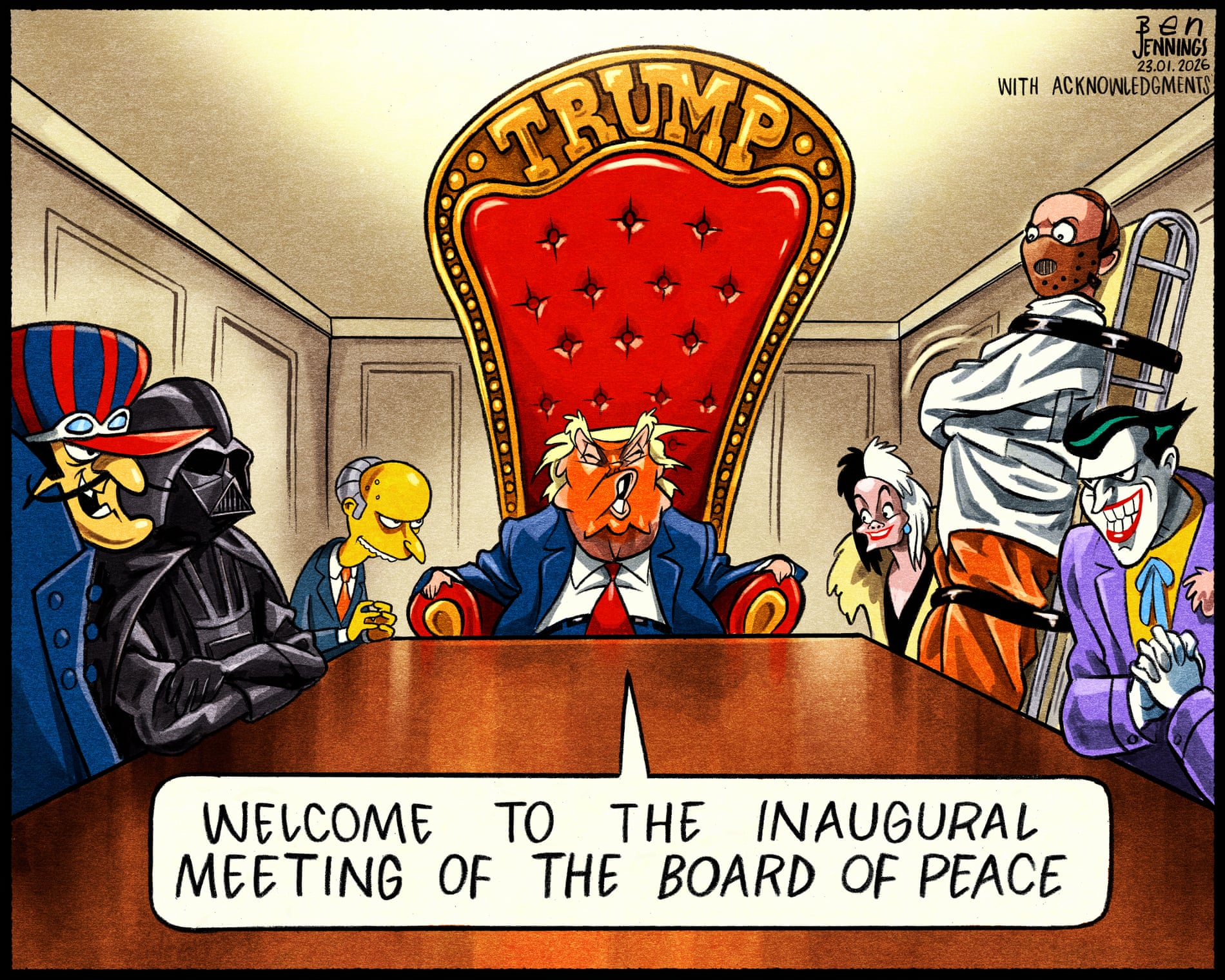
Yes, the holocaust was just bedwetting and hysteria.That's very true, history does repeat itself. The best indicator of the future is what happened in the past, and therefore I predict endless hysteria and bedwetting forever.
Martin Rowson has been drawing for the Guardian since the 1980s; Ella Baron since 2022. In paint and pixels, each is tasked with capturing the chaos and absurdity of our political moment:
This week, we challenged the pair to draw on the same subject (Trump and a world in turmoil), on the same day, to see what each – with their different styles, tools and perspectives – would come up with. Martin landed on a Shakespearean scene, with a warped “King Leer” flanked by snickering world leaders. Ella proposed him squatting in a dystopian nest, surrounded by his spoils. Below, each reflects on their process, the challenges and joys of political cartoons, and what they have learned from one another.
--- ---
Rowson is 'old school'; using pencils, pens and brushes which are reflected in the intricate drawings he designs, while Baron uses a tablet and stylus, creating a sharper image. Both have their merits but Rowson's attention to detail and his wider knowledge of the tradition he inherits mean the drawings he creates have a depth and nuance that a computer cannot capture in the same spirit. Give me 'old school' every time.
This week, we challenged the pair to draw on the same subject (Trump and a world in turmoil), on the same day, to see what each – with their different styles, tools and perspectives – would come up with. Martin landed on a Shakespearean scene, with a warped “King Leer” flanked by snickering world leaders. Ella proposed him squatting in a dystopian nest, surrounded by his spoils. Below, each reflects on their process, the challenges and joys of political cartoons, and what they have learned from one another.
--- ---
Rowson is 'old school'; using pencils, pens and brushes which are reflected in the intricate drawings he designs, while Baron uses a tablet and stylus, creating a sharper image. Both have their merits but Rowson's attention to detail and his wider knowledge of the tradition he inherits mean the drawings he creates have a depth and nuance that a computer cannot capture in the same spirit. Give me 'old school' every time.
Sure, but a cartoon in today's news with regard to Watergate is hardly a commentary on current events, is it?The world was in turmoil before Trump.
- Joined
- 10 Aug 2025
- Messages
- 2,770
- Reaction score
- 2,580
- Country
From an 'X' post:
"Imagine the level of idealogical capture required to stand shoulder to shoulder with ten thousand people in minus thirty degree weather, not to defend your own children, your own neighbourhoods, your own wages, or your own sovereignty, but to protest on behalf of illegal criminal aliens who violated the law to enter the country and would never endure that cold, that sacrifice, or that risk for you.
That is not compassion. That is inversion. You are freezing your body to protect people who openly reject your laws, your culture, and your nation… while ignoring citizens crushed by crime, addiction, inflation, and collapsing public order. You have been trained to feel morally superior for defending outsiders while treating your own people as expendable.
No nation survives when loyalty flows outward instead of inward. No society remains sane when empathy is weaponized against self-preservation. And no movement is more dangerous than one that convinces people to suffer proudly for those who would never lift a finger for them. That is not virtue. That is liberal brainwashing."
Turn around Odds please.
Freedom is not free...From an 'X' post:
"Imagine the level of idealogical capture required to stand shoulder to shoulder with ten thousand people in minus thirty degree weather, not to defend your own children, your own neighbourhoods, your own wages, or your own sovereignty, but to protest on behalf of illegal criminal aliens who violated the law to enter the country and would never endure that cold, that sacrifice, or that risk for you.
That is not compassion. That is inversion. You are freezing your body to protect people who openly reject your laws, your culture, and your nation… while ignoring citizens crushed by crime, addiction, inflation, and collapsing public order. You have been trained to feel morally superior for defending outsiders while treating your own people as expendable.
No nation survives when loyalty flows outward instead of inward. No society remains sane when empathy is weaponized against self-preservation. And no movement is more dangerous than one that convinces people to suffer proudly for those who would never lift a finger for them. That is not virtue. That is liberal brainwashing."
Turn around Odds please.
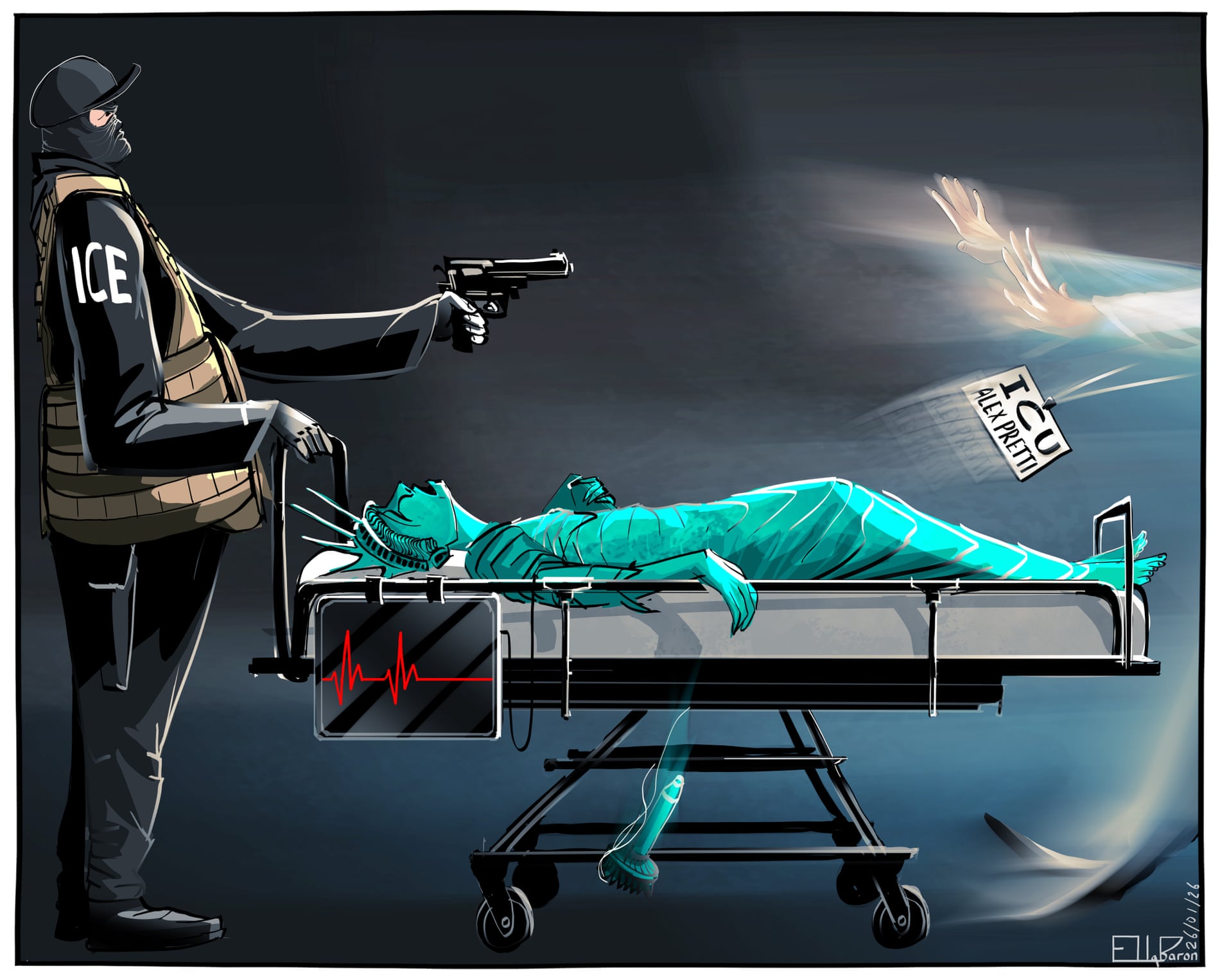
Alex Pettri: shot and killed defending a woman on the streets of Mn.
- Joined
- 10 Aug 2025
- Messages
- 2,770
- Reaction score
- 2,580
- Country
He should have stayed at home caring for his own rather than interfere.Freedom is not free...
Alex Pettri: shot and killed defending a woman on the streets of Mn.
You mean he should've stood aside and allow the ICE agents push the woman around?He should have stayed at home caring for his own rather than interfere.
V. noble of you.