Hi everyone,
I’m looking for some advice from people with experience in damp diagnosis.
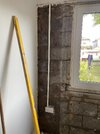
I removed some 50 mm insulated plasterboard from around one of my windows in the bedroom, after noticing damp around the window. The board was mechanically fixed directly to the wall with mushroom fixings.
When I removed it I found:
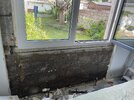
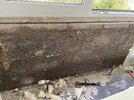
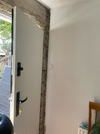
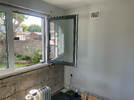
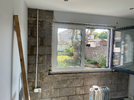
The concrete block wall behind was damp.
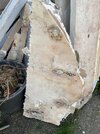
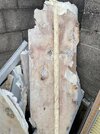
There was black mould on both the back of the insulated board and the block wall.
The left-hand side of the window is noticeably wetter than the right.
The right side is not as damp, but still has damp.
I haven’t yet removed the insulation above the window, so I don’t know the condition there, I only removed small section, but it looks dry.
There was no standing water or dripping, just damp masonry and mould.
Some additional details that may be important:
The foil facing on the insulated board was intact overall, but I cut it in a few places to run electrical cables.
There is one socket cut-out in the insulated board.
Around the outside of the window there was a gap between the frame and the render which I never sealed with silicone or another external sealant.
The house has hollow concrete block walls (Ireland).
I’m trying to determine whether this is most likely:
Condensation caused by warm air getting behind the insulation board.
Rainwater entering through the unsealed window perimeter.
A combination of both?
Before I reinstall the wall, I’d really like to identify the actual cause rather than just covering it up again.
I’ve attached photos of:
The exposed wall.
The removed insulation board.
Any opinions or suggestions on what to inspect next would be greatly appreciated.
I’m looking for some advice from people with experience in damp diagnosis.
I removed some 50 mm insulated plasterboard from around one of my windows in the bedroom, after noticing damp around the window. The board was mechanically fixed directly to the wall with mushroom fixings.
When I removed it I found:
The concrete block wall behind was damp.
There was black mould on both the back of the insulated board and the block wall.
The left-hand side of the window is noticeably wetter than the right.
The right side is not as damp, but still has damp.
I haven’t yet removed the insulation above the window, so I don’t know the condition there, I only removed small section, but it looks dry.
There was no standing water or dripping, just damp masonry and mould.
Some additional details that may be important:
The foil facing on the insulated board was intact overall, but I cut it in a few places to run electrical cables.
There is one socket cut-out in the insulated board.
Around the outside of the window there was a gap between the frame and the render which I never sealed with silicone or another external sealant.
The house has hollow concrete block walls (Ireland).
I’m trying to determine whether this is most likely:
Condensation caused by warm air getting behind the insulation board.
Rainwater entering through the unsealed window perimeter.
A combination of both?
Before I reinstall the wall, I’d really like to identify the actual cause rather than just covering it up again.
I’ve attached photos of:
The exposed wall.
The removed insulation board.
Any opinions or suggestions on what to inspect next would be greatly appreciated.