
• Looking for a smarter way to manage your heating this winter? We’ve been testing the new Aqara Radiator Thermostat W600 to see how quiet, accurate and easy it is to use around the home. Click here read our review.

Drones

Joined
22 Aug 2006
Messages
7,049
Reaction score
1,171
Country
United Kingdom
Hope y'all don't mind if this is OT. I thought someone might be interested. ... . I can't help wondering where drone tech will be going next.
has a video - the origininal page I found had several other links, not sure what you'll see.

It would be easy to recognise something like a T-72 tank, fly over it, and drop an armour piercing grenade onto it. Or recognise a man next to a big gun, or whatever.

Anti-drone tech is playing catch-up. Though some devices look clever, they all have problems. Anything scanning with radar looking for drones is a target to go and blow up, etc. The drones are so cheap you can afford to send 10, or 100, or....

Apparently Russians are buying up DJI drones in China and sending them to Ukraine for Russians to use for reconnaisance. Out of the box they'll use hobby frequencies which would be easy to jam, but I doubt the equiment to do it is common among the Ukranians.
 
Last edited:
Hand grenades are surprisingly light a DJI Mavic could theoretically carry 2. 1.1kg payload vs 400g grenade. If you could get it in an open hatch it would be pretty destructive.
 
Didn't they do something clever with a huge swarm of drones at the opening (or closing) ceremony of the Olympics?
 
The display ones are pre-programmed, these are autonomous, that's the clever bit. They know where they have to go but work out for themselves how to get there. The algorithms for making them swarm aren't obvious, but they're developing fast. How would you make them go with the others but not hit each other :evil:.
.
No need to have an open hatch on a tank. The Ukes are using the grenades which are finned so land on their armour-piercing point. There's a shaped charge on it which will go through a tank turret armour. Those have to be individually guided though.
There's one type here . If it has reactive armour, ok you use one to remove the R-A and then another.

Add the autonomous bit, and send 2000 to where you think there's an armoured column. Or make them recognise and follow and kill anything moving, like a person. They can hang around with their i-r cameras for a while. Something transmitting radio? Kill it.
Anti-personnel ones could be very small, so if their batteries got down they could go off and land on a tall building or in a field, maybe to recharge for as long as it takes or until told to take off again. If you put your mind to it you can make them be a real nuisance.


You've probably seen the ones which play ping-pong all by themselves; they track the ball and hit it back. OK so you have very clever little drones on each side in your war, so they have to fight each other, and so on. Anti anti anti drone drones...:evil::evil:
 
Last edited:
Remote controlled cars packed with plastic explosives is an option. The Ukraine has been given masses of plastic explosives by our gov and we are paying for it.
 
Oh sure. :rolleyes: What range do you think they would have? On what terrain? They'd entertain the other side's lads who'd just pick them off with a rifle.
When you have nothing to say, boy, say nothing.
 
The US armed forces are now hunting for a solution—and they want it fast. Every branch of the service and a host of defense tech startups are testing out new weapons that promise to disable drones en masse. There are drones that slam into other drones like battering rams; drones that shoot out nets to ensnare quadcopter propellers; precision-guided Gatling guns that simply shoot drones out of the sky; electronic approaches, like GPS jammers and direct hacking tools; and lasers that melt holes clear through a target’s side.

Then there are the microwaves: high-powered electronic devices that push out kilowatts of power to zap the circuits of a drone as if it were the tinfoil you forgot to take off your leftovers when you heated them up.

That’s where Epirus comes in.

The Army awarded Epirus a $66 million contract in early 2023, topped that up with another $17 million last fall, and is currently deploying a handful of the systems for testing with US troops in the Middle East and the Pacific. Up close, the Leonidas that Epirus built for the Army looks like a two-foot-thick slab of metal the size of a garage door stuck on a swivel mount. Pop the back cover, and you can see that the slab is filled with dozens of individual microwave amplifier units in a grid. Each is about the size of a safe-deposit box and built around a chip made of gallium nitride, a semiconductor that can survive much higher voltages and temperatures than the typical silicon.

MIT technology review

 
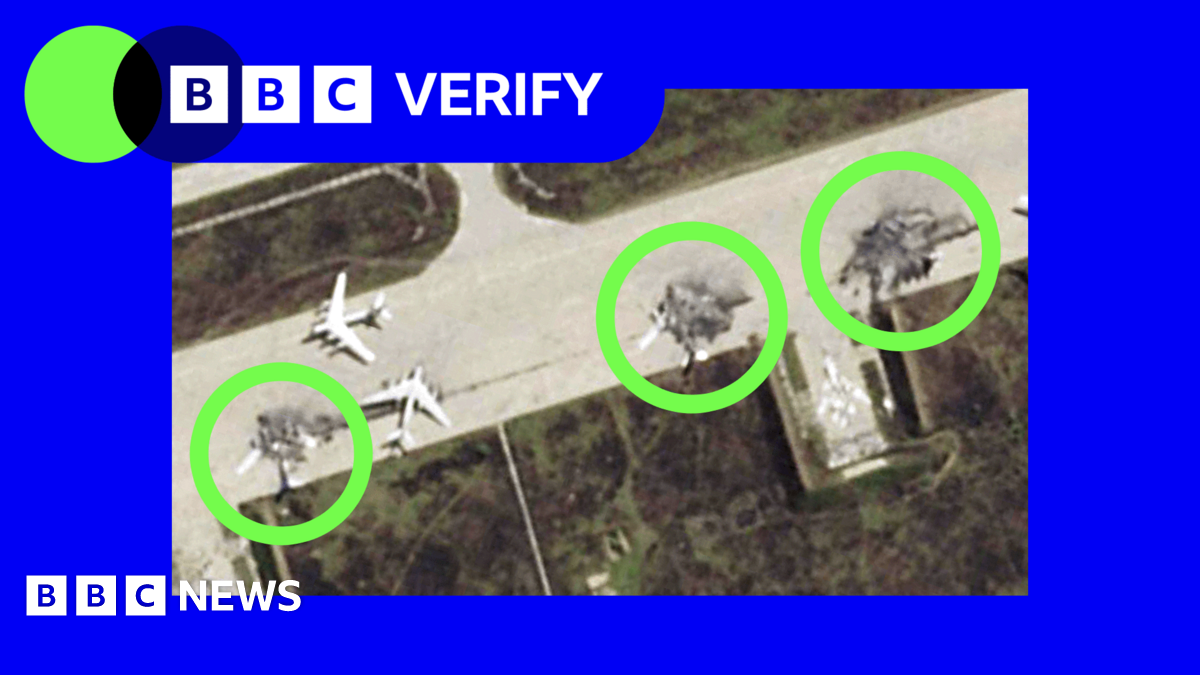
What Ukraine have done in Russia is very clever.

Ukraine must have a significant number of personnel working for them in Russia.

I’m not sure how these containers on lorries carrying the drones in their roofs got into Russia but it wasn’t through the Ukraine Russia border.
 
What Ukraine have done in Russia is very clever.

Ukraine must have a significant number of personnel working for them in Russia.

I’m not sure how these containers on lorries carrying the drones in their roofs got into Russia but it wasn’t through the Ukraine Russia border.
Russia uses the same sort of drones so they could even have acquired and assembled them locally.
 
How would you know?
its not like they posted an add on checker trade. Wanted chippie, to build secret compartment in freight containers, please send your availability to Mr Z. Shhh its a secret.
 
Back
Top