How common is it to bury push-fit tees in a solid floor?

Joined
23 Mar 2019
Messages
12
Reaction score
3
Country
United Kingdom
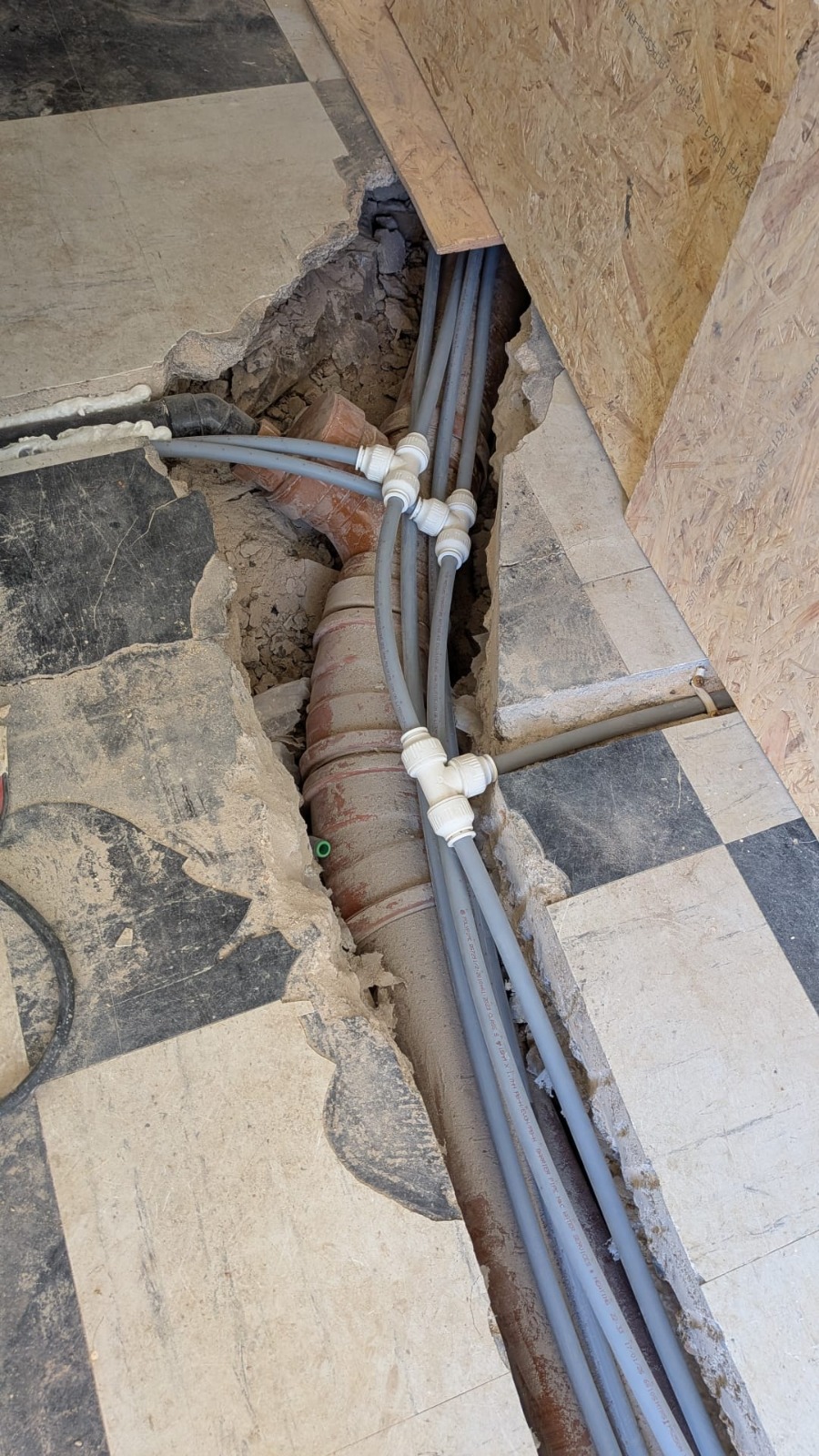
As part of our renovation, the builders ran new radiator pipes through a chase in the solid floor and then filled it with pea gravel and concrete. The photo was taken before it was covered. There are several push-fit tees in the run, and they’re now buried. The building work is almost complete (finished floor is down, painting is underway).

Pipe is Polypipe - it's a sealed system with a combi boiler. I'm told an air pressure test was carried out before covering.

I understand this isn't best practice, and I'm not looking to start a regs argument. I'd like to know:

* How common is this in real-world domestic work?
* In your experience, how likely are buried push-fit joints like these to leak over, say, 10 to 20 years?
* Short of digging it up, is there anything worth doing now to reduce the risk?
plumbing.jpg
 
Seen it plenty on renovations, more common than most plumbers will admit. If the tees were properly pushed home and the air test held, they usually sit there quietly for years. The risk is not the fitting so much as movement and grit against the pipe. Keep the inhibitor in the system and keep an eye on the pressure gauge. A slow steady drop is your early warning, and having to top the system up regularly would tell you something is not right.
 
As part of our renovation, the builders ran new radiator pipes through a chase in the solid floor and then filled it with pea gravel and concrete. The photo was taken before it was covered. There are several push-fit tees in the run, and they’re now buried.

Read the fitting manufacturer’s documentation:


Edit: were the pipes insulated before being buried?
 
If it is Polypipe, then I’d be looking at their guidance, not John Guest. Most manufacturers will state some sort of protection from direct contact with concrete/cement. Polypipe suggests pipe in pipe arrangement, but access to fittings, which yours do not have. Some look under stress, so pass the air test but that’s probably it. The concrete will prevent movement, so might be ok. Obviously a typical trade where they just do what they want.
 
Would the regulations allow the pipes to be set into acco drainage channels and covers set level with the finished floor level so you can retain access
 
If it is Polypipe, then I’d be looking at their guidance, not John Guest. Most manufacturers will state some sort of protection from direct contact with concrete/cement. Polypipe suggests pipe in pipe arrangement, but access to fittings, which yours do not have. Some look under stress, so pass the air test but that’s probably it. The concrete will prevent movement, so might be ok. Obviously a typical trade where they just do what they want.

It looks to me like it is polypipe with speedfit connections. I have no way of knowing which inserts they used.

It may be fine in the long run but the manufacturer warranties will be void because polypipe fittings were not used.
 
It looks to me like it is polypipe with speedfit connections. I have no way of knowing which inserts they used.

It may be fine in the long run but the manufacturer warranties will be void because polypipe fittings were not used.
Aye could be, but Polypipe are similar and they don’t look like speedfit to me.
 
Thanks for all the replies. I appreciate it.

@endecotp - Confirming insulation was fitted around the pipes before they were buried (see photo below).

@CountryFan, @opps - From zooming in on one of the photos I found they are Speedfit fittings.

I'm trying to work out what to do... These pipes were buried 4 weeks ago - at the time I had no idea this was against normal practices - I just took the photos for my records. Since then the walls have been plastered, bathroom has been tiled, painting has started and engineered wooden flooring has been laid. In theory we have 1 or 2 weeks to go on the build (an integral garage conversion). We're living in the property during the build and we want the project completed as soon as possible. But now I know about this problem I'm going to raise it with our builder. I don't know whether to push for them to dig it up and re-lay the pipes without any buried fittings or aim for something short of that. It sounds like because its a heating circuit the water regulations don't apply - so I don't know if there any regulations or laws I can point to if I need to force the issue? We have a private building control company involved in the build, but from reading up it doesn't look like this is covered by any building regs?
 

Attachments

  • plumbing2.jpg
    plumbing2.jpg
    322.8 KB · Views: 33
If they are already concreted in place and they were pressure tested I would leave well alone. You could perhaps ask for them to be pressure tested again now the concrete has gone off but don't really know if that would achieve anything
 
There's no way to join the plastic without using compression or push-fit fittings. So you're a bit stuck, unless they replace it all with soldered copper.

My kitchen was recently gutted and re-plumbed (new boiler, in new location). The kitchen was partly timber floor, partly concrete. The plumbing (from the last re-jig in 1990) was all copper buried directly in the concrete, no protection at all, and most of the fittings were compression. The plumber was pretty appalled, and was glad to rip it all out. Yes, it was bad-form to have, but it had been there since 1990 without leaking...
 
Several things
That's a god dam awful install, as a business we have done many hundreds of extention jobs. Not a single one involved buried push fit joints.
Air testing just don't hack it indeed polypipe's own instalation guide tell you not too in red letters.
Water test only first fix pipework tested at 18bar for 30 minutes.
Try looking up water regulations they cover buried pipework.
 
I'm trying to work out what to do...
I wouldn't be too concerned, perhaps highlight your concerns to the builder in writing and say that you will be looking for them to carry out any repairs necessary if there are any issues within the lifespan of the fittings. doesn't mean an awful lot in reality, but at least it puts it on record.

There's nothing really that covers it in the buildings regs. other than the use of proper materials and that they are appropriate for the circumstances in which they are used, Quite subjective though.
 
Thanks for the most recent replies.

So if I understand correctly, the consensus is: It was bad practice to fit the pipes like this and it does increase the risk of leaks in the future, but still we'd have to be unlucky for a leak to occur if the fittings we properly pushed home and pressure tested. Given the plastic pipes are already joined this way and its already concreted over, there's not much we can do? So really, we should leave them in place and either get a properly documented pressure test done and/or get the situation documented in writing with a clear responsibility for the builder to rectify if repairs are necessary (the builder has been around for 12 years - realistically this will be hard to enforce if it fails many years in the future and/or if the builder closes down - but it probably strengthens our hand if the pipework fails in the near future).

Do people agree with the above? Or any other constructive suggestions on options we have given where we are?
 

If you need to find a tradesperson to get your job done, please try our local search below, or if you are doing it yourself you can find suppliers local to you.

Select the supplier or trade you require, enter your location to begin your search.


Are you a trade or supplier? You can create your listing free at DIYnot Local

 
Back
Top