• Looking for a smarter way to manage your heating this winter? We’ve been testing the new Aqara Radiator Thermostat W600 to see how quiet, accurate and easy it is to use around the home. Click here read our review.

Prozor D.A.C Output

Joined
10 Jan 2016
Messages
69
Reaction score
4
Country
United Kingdom
Output from my D.A.C (Prozor 192kHz) to my HiFi (Technics SA-EX120 AV) is low, meaning I have to turn the volume on the HiFi up very high to get any decent sound from the HiFi.
This happens using Either optical or Bluetooth input to the D.A.C and the volume on the D.A.C at full volume.
Would it be safe to connect the D.A.C to my HiFi using the Phono input (ensuring the volume on the D.A.C is turned down very low) instead of the V.C.R input?
 
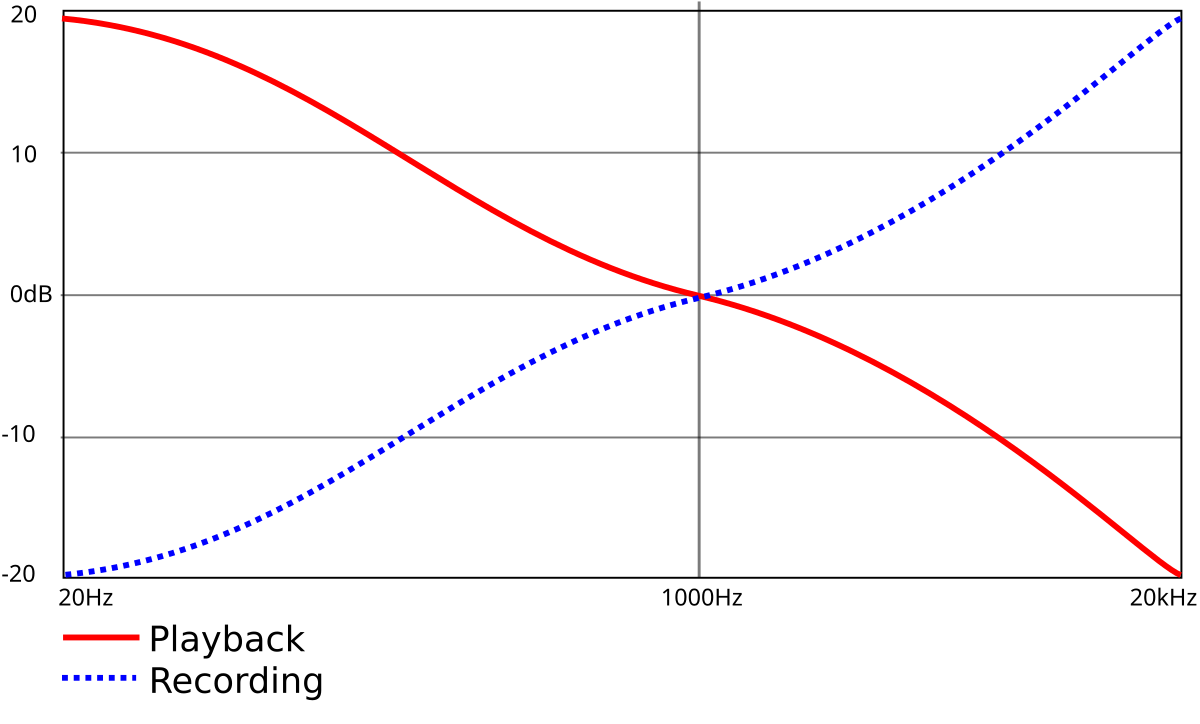
No, don't use the Phono input. Sure, it has a lot of gain compared to the other inputs, but it also has an EQ curve called RIAA which is designed to restore the huge bass cut required to get music on and off vinyl. There's 40dB of bass boost and 40dB of treble cut. Those are huge amounts.


Have you got an electrical multimeter so you can measure voltage?
 
Whilst there is absolutely nothing wrong with Lucid's reply, unless you are electronically aware then measuring volts etc might be a tad awkward especially in view of the cheap price, at least on Amazon. I would just order one from Amazon and try it. If it solves the issue all well and good if it doesn't then you have to look beyond the DAC. The price on Amazon is £23.74p for the newer version. Next day delivery if you have Prime and free returns up to 30 days..... https://www.amazon.co.uk/PROZOR-Con...l-Adjustable-dp-B09XMDHJ43/dp/B09XMDHJ43?th=1
 
Lucid
Yes I do have a multimeter, but I don't see how that will help me.
Fred Blogs
Your link to the Prozor DAC looks exactly like the one I have. The DAC that I am now using is a replacement for another one which had exactly the same problem.
I bought the DAC to bring my HiFi up to date but the sound/volume is rubbish, I don't understand why.
 
Info on your audio SOURCE would possibly help determine why the output level is so low. Make and model of the player(s) connected to the DAC and what material is being played.

{We were streaming from Spotify the other day and the sound levels were all over the place with Roger Daltrey / The Who material - with some tracks virtually inaudible}
 
Lucid
Yes I do have a multimeter, but I don't see how that will help me.
Fred Blogs
Your link to the Prozor DAC looks exactly like the one I have. The DAC that I am now using is a replacement for another one which had exactly the same problem.
I bought the DAC to bring my HiFi up to date but the sound/volume is rubbish, I don't understand why.
Some of the cheaper DACs have a DC voltage (an offset) on the ground shields from the RCA outs. This should be 0 Volts, but if they haven't used isolating capacitors in the circuit design then a voltage on here can cause problems for the amplifier or powered speakers the DAC is being used with. One symptom is a reduced dynamic range i.e. a quieter signal.

For the benefit of other readers, I see a similar same sort of issue when customers try to hook up a Class D stereo amp via the speaker outputs to a subwoofer high-level (speaker level) inputs. The +ve (red) should have the plus and minus voltage swing for the AC music signal. The -ve (black) should be 0 Volts. This is how it works with Class A/B stereo amps. Class D amps work differently.

They'll often use something called a Bridged Tied Load. That means both the red and the black outputs are live. When red is going positive voltage then black is going negative. The same is true when the voltage swing is reversed. The result is double the voltage compared to running in the same way as a Class A/B amp. This voltage isn't generally a problem for a conventional moving coil speaker. For active subs though it's different. If left unchecked, the voltage on the ground connection for the sub can burn out the input circuit.

When hooking up Class D amps to the speaker input of active subs, I'll take just the L&R +ve connections to the sub, then I'll use amp's chassis ground to provide the speaker ground connection at the sub.

Coming back to your DAC, with the meter in hand and the DAC disconnected from power and then allowed to discharge for 10 minutes (leave the RCAs connected until measuring), set your meter to continuity. Disconnect the RCAs, then measure between the DAC chassis and each of the two RCA shields. (You're doing this so we can work out if it's safe to use the DAC chassis for ground if there is a DC offset.)

Next, you'll need a bit of wire in order to pick up the 0V DC from the power plug in order to measure it. Carefully insert the wire along with the DC power plug so that it just connects to the shield of the power plug.

With the DAC powered and running with a music signal, set the meter to the DC voltage range, measure the voltage difference (if any) between the power plug ground and each of the two RCA rings. Next, set the meter to the AC range and repeat the measurements. This second measurement is to determine if there's a music signal on the ground lines. There shouldn't be.

Let us know the results.

 
Rodders53
The source is my Hisense 43E7KQTUK TV The material could be anything. I also Bluetooth Youtube Music from an Android tablet.
Lucid
I will get back to you with the results of your test at some point.
 
Rodders53
The source is my Hisense 43E7KQTUK TV The material could be anything. I also Bluetooth Youtube Music from an Android tablet.
That pretty much rules out my 'ropey / low level source files' thoughts.

Lucid is probably almost certainly on the right track and it's another day for learning something new for me!

Good luck with sorting a fix!
 
Lucid
DAC disconnected, Resistance from DAC chassis to both RCA shields gives good continuity.
Power on & music playing, Readings from power ground to both RCA shields, both DC & AC =0 volts.
 
Lucid
DAC disconnected, Resistance from DAC chassis to both RCA shields gives good continuity.
Power on & music playing, Readings from power ground to both RCA shields, both DC & AC =0 volts.
Okay, so there's no DC offset then, or at least it's lower than the resistance during measurement or tool low for the meter's measurement range. That's good news.

Where is the DAC getting its power from? It needs 5V which is standard for a USB connection, and it doesn't consume that much current - 100mA if the spec is accurate. Just ruling out possibilities here, but is there any chance that the USB socket it is connected to is a bit oxidised, so the resistance might be hampering current flow? Pulling the plug in and out a few times should be enough to rub away any surfaced oxidisation.

If all that is clear, then what's left is that the Prozor is just a poor product.

There are a couple of bits from the internet here >

Prozor DAC output 12dB lower than a similarly priced DAC. https://misterfpga.org/viewtopic.php?t=6705

To give you an idea, a difference of 12dBV would mean there's only 1/4 of the signal level coming from the Prozor compared to the better DAC. A difference of 6dBV is the same as halving the signal. Another 6dBV difference halves it again. Cut an apple into half, then half again, and you end up with a quarter.


Prozor - not a great DAC: https://goldensound.audio/2021/08/03/prozor-dac-measurements-worst-dac-in-the-world/
 
Last edited:
You're welcome. Feel free to hit the Thanks button on any of the posts that helped you from any of the forum members. It's a nice bit of kudos.

I can't say about the Bluetooth version of the DAC. The one that was tested from the earlier link is this https://www.amazon.co.uk/dp/B01MRII0D1 and it's £12. This was the model they found to be 12dB (4x) louder. That's probably a safer bet.
 
Do you have the amp manual or access to am online version? If so, what does it give as the input sensitivity?
 
Technics (SA-EX120)

Frequency response

PHONO RIAA standard curve (30 Hz-15 kHz) +-0.8 dB

CD, Tape Monitor, VCR10 Hz-40 kHz, +- 3 dB

Input sensitivity and impedance

PHONO3 mV/47 kohms

CD, Tape Monitor, VCR200 mV/22 kohms

Signal-to-Noise Ratio at rated power (8 ohms)

PHONO70 dB (IHF, A:80 dB)

CD, Tape Monitor, VCR75 dB (IHF, A:85 dB)
 

If you need to find a tradesperson to get your job done, please try our local search below, or if you are doing it yourself you can find suppliers local to you.

Select the supplier or trade you require, enter your location to begin your search.


Are you a trade or supplier? You can create your listing free at DIYnot Local

 
Back
Top