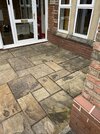
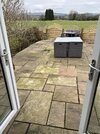
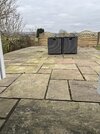
Hi - we moved house in October last year and the previous owners didn’t do much maintenance. The front and rear of the house has yard areas with Indian Sandstone paving. These have come up a treat with some cleaning, however the substrate is shot. The odd loose flags are easy enough to sort however there are drainage issues and very large area where the substrate appears to have failed completely (see photo with the table/chairs) - plus there are weeds growing in between the joints etc…
My question is - would it be a realistic ask to remove the paving, clean them up some more and then re-do the substrate before re-laying the flags? I’d also want some channel drains adding in to guide the surface water to a drain as opposed to it pooling in random areas as it does now.
Previous experience of getting new paving done is that a good portion of the work goes into the substrate so I’m not expecting this to be a “cheap” option - it just seems a shame to lose the current flags
My question is - would it be a realistic ask to remove the paving, clean them up some more and then re-do the substrate before re-laying the flags? I’d also want some channel drains adding in to guide the surface water to a drain as opposed to it pooling in random areas as it does now.
Previous experience of getting new paving done is that a good portion of the work goes into the substrate so I’m not expecting this to be a “cheap” option - it just seems a shame to lose the current flags