

Hi all,
I have a ground floor Tyneside flat (built, in my case around 1915, based on what records I can find and confirmed by a 1915 mid-WW1 newspaper under the suspended floor!). What's a bit unusual about it is that it was built with cavity walls front and rear, whereas earlier ones (including in the surrounding area) were solid walled.
However, like most Tyneside flats it had a rear extension built into the yard (usually apparently around the 1950s, but I don't know this bit for sure). The construction of the two storey kitchen/bathroom extension is solid walled and floored (and seemingly prone to damp) partly as a result. Both look like they're built of fairly similar brick etc, so maybe the time difference is not as much as I have implied though.
Bits of the property appear to have been repointed numerous times, in different materials based on varying colours and textures (and by people with poor eyesight based on the quality of some of the workmanship!
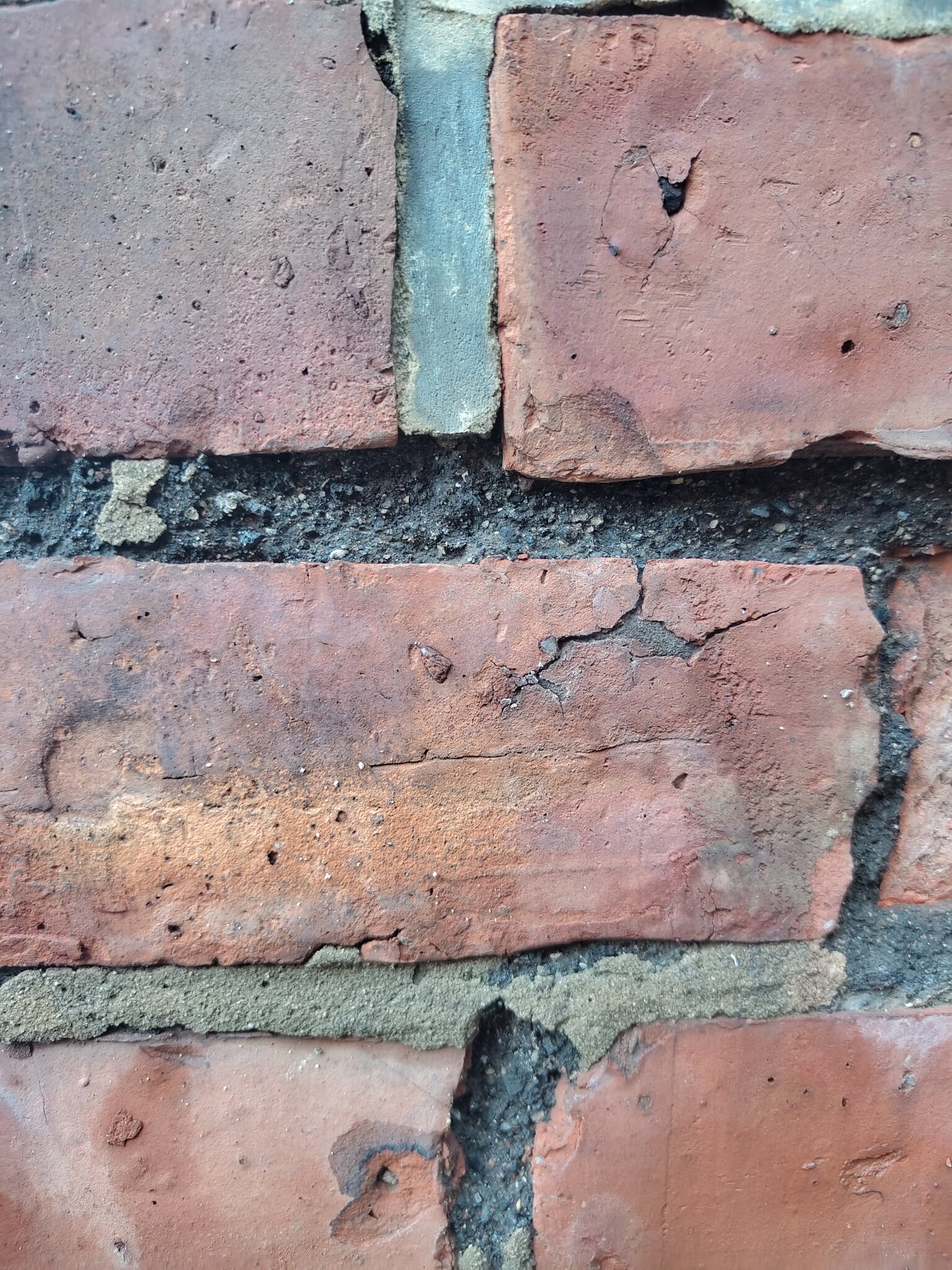
The deeper mortar (which I assume is more likely to be original than the various things on top) is fairly dark, and with largish chunks of material in. I suspect it may have included coal dust etc based on the area I am in.
I'd originally decided I'd repoint both the original rear building and the extension using lime mortar (1:2.5 NHL3.5/builders sand), with an aim of unifying the colour to a lightish yellow, and encouraging the permeability/breathability of the walls, especially given these properties are quite prone to damp.
However, I've come across a few posts saying that using pure lime based mortar is a problem if a period property uses ferrous wall ties, and that the lime can encourage their corrosion, and a 1:1:6 (portland cement/lime/sand) mix should be preferred if repointing a cavity wall that contains wall ties.
I'm now a bit less sure what the right course of action is - I'm not *that* worried about matching the original darkish mortar, especially as very little of it is on show.
My key priorities are:
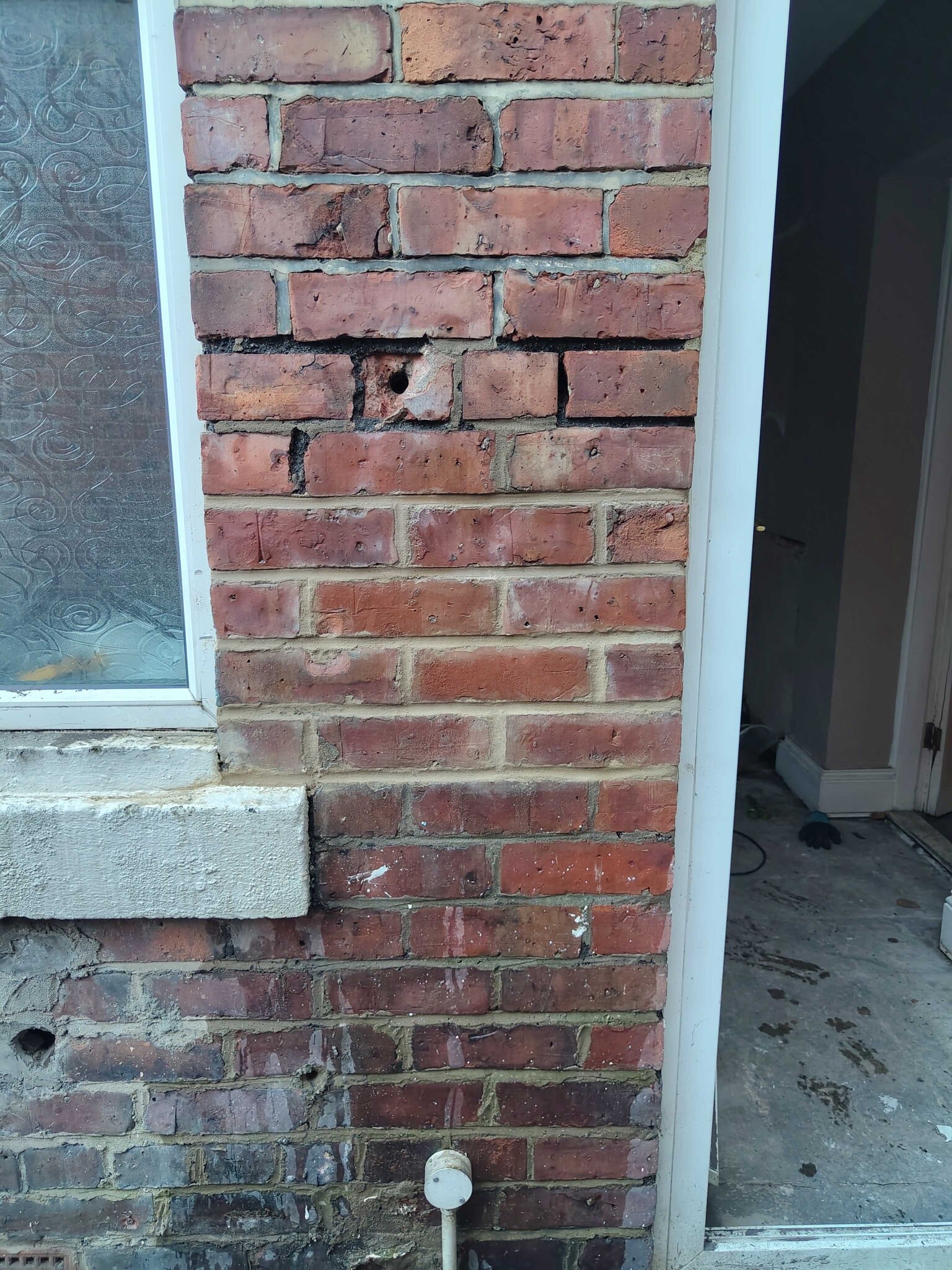
Here's a photo of the rear more modern extension, showing several different people's work - from top to bottom:
several people's different materials attempting to repoint
some of the deeper mortar (very dark and gritty)
a few trial courses I did in sand/lime
more people's historical repointing....
Another closeup of the black mortar, with (i assume) more modern repointing over the top:
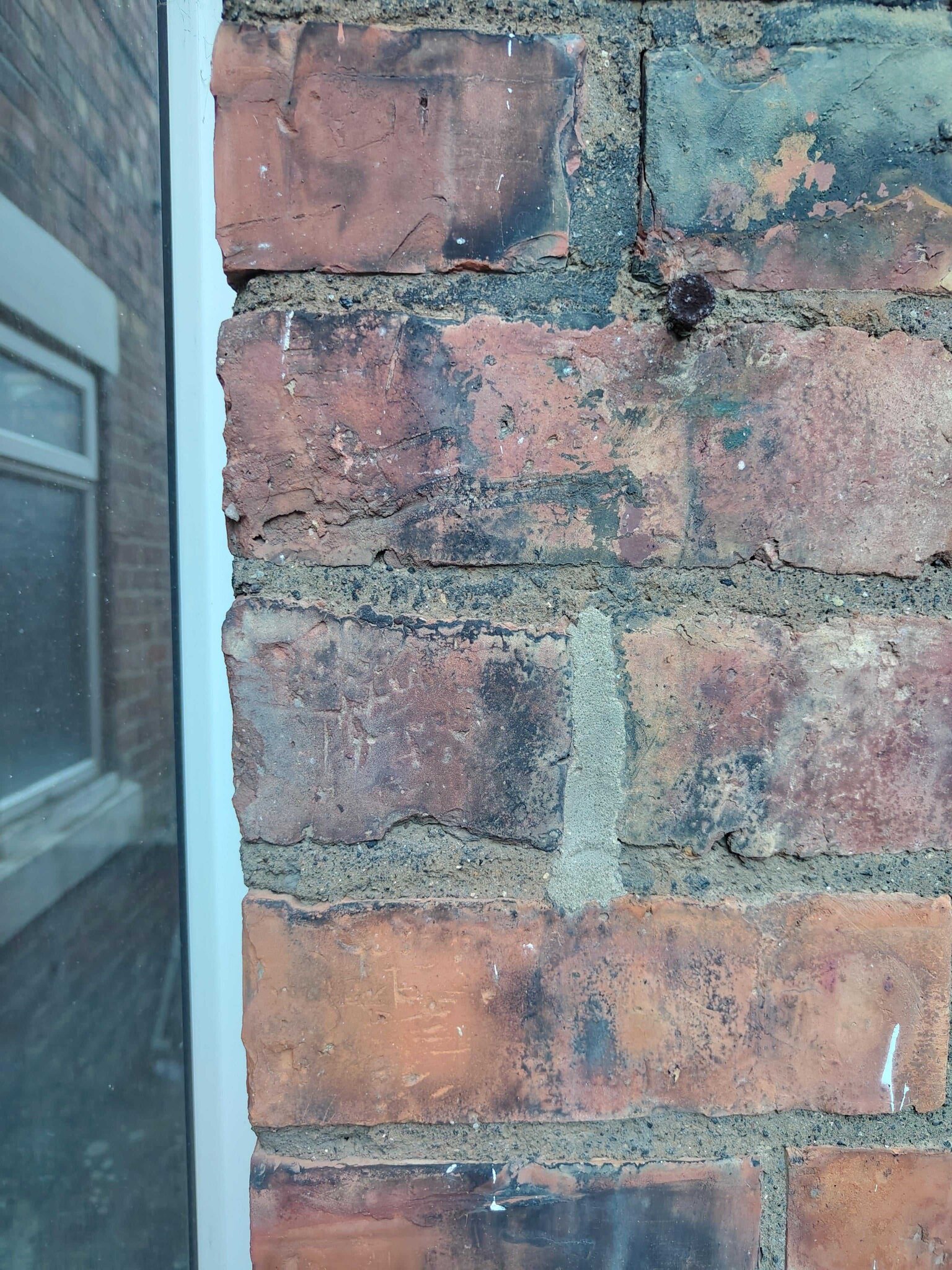
A photo of the rear of the building (ie the older, cavity wall bit) - might be original cement, might not
 ...:
...:
Thanks
David
I have a ground floor Tyneside flat (built, in my case around 1915, based on what records I can find and confirmed by a 1915 mid-WW1 newspaper under the suspended floor!). What's a bit unusual about it is that it was built with cavity walls front and rear, whereas earlier ones (including in the surrounding area) were solid walled.
However, like most Tyneside flats it had a rear extension built into the yard (usually apparently around the 1950s, but I don't know this bit for sure). The construction of the two storey kitchen/bathroom extension is solid walled and floored (and seemingly prone to damp) partly as a result. Both look like they're built of fairly similar brick etc, so maybe the time difference is not as much as I have implied though.
Bits of the property appear to have been repointed numerous times, in different materials based on varying colours and textures (and by people with poor eyesight based on the quality of some of the workmanship!
The deeper mortar (which I assume is more likely to be original than the various things on top) is fairly dark, and with largish chunks of material in. I suspect it may have included coal dust etc based on the area I am in.
I'd originally decided I'd repoint both the original rear building and the extension using lime mortar (1:2.5 NHL3.5/builders sand), with an aim of unifying the colour to a lightish yellow, and encouraging the permeability/breathability of the walls, especially given these properties are quite prone to damp.
However, I've come across a few posts saying that using pure lime based mortar is a problem if a period property uses ferrous wall ties, and that the lime can encourage their corrosion, and a 1:1:6 (portland cement/lime/sand) mix should be preferred if repointing a cavity wall that contains wall ties.
I'm now a bit less sure what the right course of action is - I'm not *that* worried about matching the original darkish mortar, especially as very little of it is on show.
My key priorities are:
- Make sure the solid wall is as breathable as possible to try to discourage damp.
- Don't do anything that causes wall ties to corrode in the cavity wall
- Don't use a mortar that's so hard that it causes the bricks to damage/spall
Here's a photo of the rear more modern extension, showing several different people's work - from top to bottom:
several people's different materials attempting to repoint
some of the deeper mortar (very dark and gritty)
a few trial courses I did in sand/lime
more people's historical repointing....
Another closeup of the black mortar, with (i assume) more modern repointing over the top:
A photo of the rear of the building (ie the older, cavity wall bit) - might be original cement, might not
Thanks
David
Last edited:


