Scale

Joined
30 Mar 2007
Messages
210
Reaction score
0
Location
Hertfordshire
Country
United Kingdom
Can scale, as opposed to sludge, in the system cause ticking in pipes and rads as well as kettling in the boiler? I don't think we can have sludge as the rads get hot all the way down and what is in the expansion tank is just a thin coating of rusty looking particles on the sides and bottom and rather murky water, acc. to our gardener who had a look. Nothing like that picture of sludge which someone posted on here recently. If so, will one of these restorer products get rid of it?

The combined feed and vent pipe which goes from the cellar to the expansion tank doesn't get hot as far as the airing cupboard on the first floor but I notice that there is a pipe in there which finishes with a vent that does get hot. It was never explained to us what this was for.

How much of one's life does one have to spend on trying to sort out heating problems? Everything in this house has been done by Corgi heating engineers, not diy amateurs, but we still seem to have insoluble problems.
 
What are the symptoms of the insoluble plumbing or central heating problems you wish help in solving?
 
ticking in pipes and rads
that's either expansion, usually copper moving against wood; or small air bubbles.

Scale precipitated onto boiler innards can cause kettling, yes. The same as it does in a kettle! Try Boiler Descaler??
 
Softus -

Apart from replacing a faulty motorised valve, which should bestraightforward after draining down presumably, the problems are: 1)
a kickspace heater which keeps going on and off and produces very little heat; 2) a boiler which kettles and also keeps having several attempts at reigniting after going off before succeeding in doing so; it does this whatever the pump setting; 3) a hissing noise in the rads closest to the boiler unless one has the pump on very low; 4) ticking in the upstairs rads and under the floors in some places, even before heat has reached them. Didn't happen before we had a new boiler (Kingfisher MF 100k btu) and variable speed Grundfos pump.

Chris R - I know scale can cause kettling in the boiler. What I wanted to know was whether scale could also form in rads and cause ticking there. Wd also like to know wh. thermostatic valves can tick (they are on the correct end of the rad, i.e. the flow) and if so under what conditions.

I had a heating firm's representative round y'day. He says we don't need a powerflush as the rads all get hot and suggests draining down, putting the machine on just the boiler without removing it (not sure how) using some chemical but not one which one leaves in for a time,and also on the kickspace, to get rid of scale, replacing the faulty zone valve and putting gate valves on either side of it and the other two to avoid draining down in the future if they went wrong (he hadn't heard of the valves which have been mentioned here which can be replaced without draining down and thought they might not be any good), installing a Magnaclean near the boiler, and replacing the existing pump with a Grundfos 25 x 80 with 28mm pump valves. I'm not sure about the bigger pump; he couldn't guarantee we wouldn't get even more whooshing noise in the first rads. He didn't know what might be causing the boiler to keep going on and off in rapid sequence and making a ticking noise and would have to discuss it with another engineer; the Siemens tech adviser said this cd be caused by the faulty valve.. Do you think his proposals wd solve our problems and what do you think the cost should be? The heating engineer who came before Christmas and left us in the lurch after breaking the valve head said power flushing would not cure the boiler kettling. What chemical would work in this context?

Comments and advice much appreciated.
 
I've just been reading the posts at the bottom of this page re water conditioners and someone mentioned nuisance pilot tripping due to overheating. I wonder if this is what's happening to our boiler and caused by the scale.
 
Incidentally, when we filled up our system after the new boiler 5 yrs ago, I asked Fernox whether it mattered wh. one filled it up on hard or soft water. They said it made no difference when using their inhibitor. Do inhibitors only prevent corrosion. Is there no way of preventing scale? FWIW we filled up with soft water but we still presumably have scale.
 
Sentinel also say their inhibitor works with water from a softener.

My kettle and dishwasher don't get any scale from softened water, so I don't see why the boiler should. It probably has some scale from before the softener was installed though.

(interestingly, after fitting the softener, it dissolved and washed away scale from the cisterns)

You can get anti-kettling additives; sometimes they work.
 
John, do you have a salt water softener or an electronic descaler? You appear to be using the 'softened' water in your kettle which is not usual practice. Not for salt softeners anyway.

Rgds.
 
As I said, the boiler was new and we (i.e. the heating engineer) filled the system with water from the (salt) water softener. He is also supposed to have added a double dose of inhibitor so why is our boiler now kettling?
 
has your system got an auto bypass fitted or at least one rad with no TMV if not this may be the cause of the wooshing in rad ralves as they start to close it will also prevent minium required flow rate through causing short cycling
 
you mention rusty mud in the Feed & Expansion tank

The boiler is newer than the radiators? In that case you can expect to have some iron oxides in the radiators, hopefully black. Some of this will have settled into hard deposits, and some of it will have circulated into the boiler (and then settled).

The Magnaclean is a terrific invention that traps any black sediment circulating in the water before it can settle. If you are having the system cleaned and flushed, and a Magnaclean fitted, you can expect it to be cleaner than it has ever been before. It would have been best to do this at the time your boiler was fitted, but the it might not have been around at the time - it is fairly new.

On old radiators, i reckon it is a good idea to use a sludge-cleaning chemical once you fit a Magnaclean, old rads usually have a load of black sludge in them and this will loosen it so that the Magnet can trap it.

I gather you are not in a position to climb into the loft yourself - IMO it is best to bale out the mud from the F&E and sponge it clean before starting flushing - this prevents the mud being washed down into the radiators (brown rust mud is not trapped by a Magnaclean). the F&E also needs a tight-fitting lid on it to keep dirt and birds from falling in.

I am just a householder.
 
We don't have an auto bypass but I understand this is not necessary when you have a towel rail which is on whenever the boiler is firing and we also have at least one rad on each floor which doesn't have a trv, though these zones shut off when up to temperature.

The plumber doesn't plan to put a cleanser in the whole system, just pressure flush the boiler and the kickspace. That is what is worrying me. How does the Magnaclean distinguish between black particles and rusty particles?
 
The Magnaclean has a powerful, stainless magnet inside it.

the water swirls through the device in a vortex round the magnet. Black sediment is attracted to the magnet and is trapped. Brown rust is so faintly attracted that it escapes. The magnet is removable so that you can from time to time clean off the sludge it has caught (this is an easy householder job - no plumbing skills)

You can ask the plumber to add a litre or two of X400 (at 1% of water content) or his preferred chemical to loosen sludge when refiling after fitting the Magnaclean. X400 is very mild, it carries on loosening sludge for about a month after which is is said to become ineffective, but it it does no harm if you leave it in the system indefinitely and is not acidic or aggressive. It is just a mild cleaner, not an inhibitor. The Magnaclean will trap the black sludge that it breaks up and will continue working indefinitely. So you need to fit the Magnaclean at about the same time that you add the X400.

To remove the brown particles you have to empty out the dirty water. Sludge inside radiators (where there is no air) is generally black. Sludge in the F&E (exposed to the air) is generally brown (that's why I suggest baling out the F&E and sponging it clean).

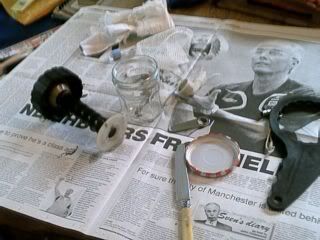
The magnet removed for emptying
POL_0166.jpg


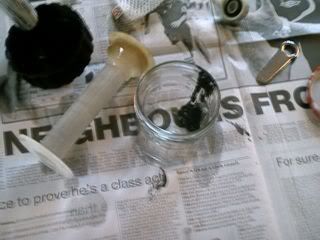
The magnet after taking sludge off it
POL_0168.jpg
 

If you need to find a tradesperson to get your job done, please try our local search below, or if you are doing it yourself you can find suppliers local to you.

Select the supplier or trade you require, enter your location to begin your search.


Are you a trade or supplier? You can create your listing free at DIYnot Local

 
Back
Top