Hi all
We recently had a screed pour in an area just under 100 m², with the screed thickness ranging from approximately 45–65 mm.
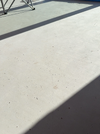
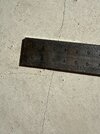
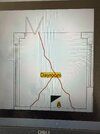
This morning, we noticed a crack in the screed which runs a substantial distance through one of the rooms. This particular room has more windows than the other areas and a biofold door, so I’m unsure whether this could be a contributing factor. I’ve attached a drawing showing the approximate direction and length of the crack, along with some photos.
The screed was poured on 28 August. We followed the guidance provided by Cemfloor, keeping the windows closed for the first 36 hours and ventilating the area thereafter. Cemfloor advises that underfloor heating can be used to assist with drying after 7 days, starting the flow temperature at 5°C above room temperature and increasing it by 5°C per day until reaching 40°C.
We switched the underfloor heating on on 9 September at a flow temperature of 25°C. This was maintained at approximately 25–26°C until 15 September, when the temperature was increased to 30°C. These temperatures are accurate, as the system is controlled by a heat pump with a temperature sensor fitted to the UFH manifold flow. The temperature is controlled using a 3-port mixing valve rather than a thermostatic valve, and I also have access to the sensor data, so I can confirm the actual flow temperatures over this period.
Would this type of cracking be considered normal shrinkage cracking for screed? What could have caused the crack to occur in this particular room? Could the additional windows/solar gain in this room be a contributing factor? Is there anything we should do to the crack before proceeding with the floor covering? why would it happen in just one room
Thank you in advance.
We recently had a screed pour in an area just under 100 m², with the screed thickness ranging from approximately 45–65 mm.
This morning, we noticed a crack in the screed which runs a substantial distance through one of the rooms. This particular room has more windows than the other areas and a biofold door, so I’m unsure whether this could be a contributing factor. I’ve attached a drawing showing the approximate direction and length of the crack, along with some photos.
The screed was poured on 28 August. We followed the guidance provided by Cemfloor, keeping the windows closed for the first 36 hours and ventilating the area thereafter. Cemfloor advises that underfloor heating can be used to assist with drying after 7 days, starting the flow temperature at 5°C above room temperature and increasing it by 5°C per day until reaching 40°C.
We switched the underfloor heating on on 9 September at a flow temperature of 25°C. This was maintained at approximately 25–26°C until 15 September, when the temperature was increased to 30°C. These temperatures are accurate, as the system is controlled by a heat pump with a temperature sensor fitted to the UFH manifold flow. The temperature is controlled using a 3-port mixing valve rather than a thermostatic valve, and I also have access to the sensor data, so I can confirm the actual flow temperatures over this period.
Would this type of cracking be considered normal shrinkage cracking for screed? What could have caused the crack to occur in this particular room? Could the additional windows/solar gain in this room be a contributing factor? Is there anything we should do to the crack before proceeding with the floor covering? why would it happen in just one room
Thank you in advance.