Not in the bathroomAnd you still have mould?

You are using an out of date browser. It may not display this or other websites correctly.
You should upgrade or use an alternative browser.
You should upgrade or use an alternative browser.
Unstoppable Mold
- Thread starter DIY67
- Start date

- Joined
- 17 Dec 2006
- Messages
- 729
- Reaction score
- 234
- Country

I have used storm dry on the outside bricks which let them breath for 25 years as well as stopping ingress.
I would still think carefully about the condition of your walls and roof in terms of water ingress possibility, as this has a high chance of being a causative factor.
If you can get hold of a thermal imaging camera to point at the wall, that may give you some clues.

Log burners give off a large amount of heat in a relatively short time. If you have doors open in unheated rooms with cold walls and the significant heat from a log burner suddenly comes into contact with those walls, you get condensation. In our previous bungalow we had a very efficient log burner that I'd had installed in order to heat the entire property. Trouble was that once the heat from the log burner had built up in the lounge and I opened the door into the unheated bedroom, the walls began streaming with condensation. I cured the problem by having a radiator installed in that bedroom so that the temperature was maintained at a level where condensation couldn't form when the door was opened to allow the heat from the log burner into the room. I had a simultaneous problem with condensation in the loft because of excessive heat from the log burner rising through the ceilings and loft hatch and coming into contact with the cold underside of the roof sarking, but I cured that by increasing ventilation with soffit vents as well as cutting down on the use of the log burner.
If you plan on continuing to use the log burner, then you really do need to find a way to heat the entire property to eliminate the conditions in unheated rooms that create mould, and that probably means using the CH.
If you plan on continuing to use the log burner, then you really do need to find a way to heat the entire property to eliminate the conditions in unheated rooms that create mould, and that probably means using the CH.

Since when did heat create condensation?Log burners give off a large amount of heat in a relatively short time. If you have doors open in unheated rooms with cold walls and the significant heat from a log burner suddenly comes into contact with those walls, you get condensation. In our previous bungalow we had a very efficient log burner that I'd had installed in order to heat the entire property. Trouble was that once the heat from the log burner had built up in the lounge and I opened the door into the unheated bedroom, the walls began streaming with condensation. I cured the problem by having a radiator installed in that bedroom so that the temperature was maintained at a level where condensation couldn't form when the door was opened to allow the heat from the log burner into the room. I had a simultaneous problem with condensation in the loft because of excessive heat from the log burner rising through the ceilings and loft hatch and coming into contact with the cold underside of the roof sarking, but I cured that by increasing ventilation with soffit vents as well as cutting down on the use of the log burner.
If you plan on continuing to use the log burner, then you really do need to find a way to heat the entire property to eliminate the conditions in unheated rooms that create mould, and that probably means using the CH.
I'm simply providing the benefit ( hopefully) of my own experience with log burners and cold, unheated rooms. Presumably yes, there was humidity with that hot air and that's where the condensation came from in the circumstances I describe. The walls would literally be streaming just minutes after the door to the unheated bedroom was opened and the hot air from the log burner entered the room.Since when did heat create condensation?
There was no heating in that room except an old gas wall heater that I refused to use because it was so expensive to run, so I had a radiator installed in there and the condensation problem went away.

- Joined
- 27 Jan 2008
- Messages
- 29,505
- Reaction score
- 3,632
- Location
- Llanfair Caereinion, Nr Welshpool
- Country
Best dehumidifier I have seen was my parents single glazed windows which had trays at the bottom of the steel window frames, and holes to take the water outside. However, they also resulted in a cold house.
Old homes had single glazed windows, and open fires, with vents all around the home to allow fresh air in, and I, for one, don't want to return to that.
So as soon as the single glazed windows are replaced with double glazing, we have to either find another way to remove moisture or reduce the moisture made. Both @flameport and I have talked about dew point. So need to know the temperature of the walls, I see will be on offer
 from 29th, my body temperture unit can also measure other things to an extent, but the walls need to be hotter than the dew point, so you need some heat in all rooms, or no moisture producing items, this includes people.
So a caravan in storage, and maybe a little damp, but not too bad, but go on holiday in the winter, and stopping the walls from streaming with moisture was a real problem, the gas fire, unless ballance flue type, made it worse. Only way before the ballanced flue gas fire was an electric hook up and an electric fire of some type.
So clearly no gas cooking, that produces loads of moisture, even with electric need a cooker hood with an extractor to the outside.
Solid fuel heating can be condansating,
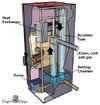
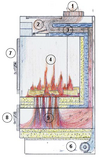 the main thing is flue is near horizantal slopping slightly down so condansate will run out. The first one, good luck getting insurance, as near always home made, second two both need electric for pumps or fans, and my questions on what happens with a power cut, were left unanswered.
In the main with solid fuel, looking for a flue temperture of at least 150°C and some form of after burner, as the fire needs to be around 900°C from memory to stop particular emissions, which means open fires are out, needs to have doors closed, and unless burning something like coke or charcol where nasties already removed it needs to burn as a set temperture, once you throtal back the fire you get particular emissions. So the only real way is to store the heat. This seems ideal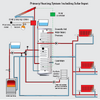 until you start to look at the installation cost, my brother-in-law had it with his last house, and when he looked at fitting it in the house he has now, I found looking at £24k installation cost, although it shows a single cylinder, in fact he had two, at 150 gallons each, that is both very heavy, and takes up a lot of room, and has to be upstairs for safety so not relying on pumps to move water from wood burner to storage tanks.
And you will note, radiator do heat other rooms.
If I look at my annual fuel bill for oil, at around £800, I could never get that £24k back in my lifetime, so it is really a non-starter. I do have enough trees in my garden to get a fair bit of free wood, but to get enough to run a wood burner, would be looking at 5 acres or more of woodland. So the only way to use solid fuel on the cheap is this or similar basic stealing wood from where ever you can get it. Where I work wood only used to light the fire, and it is getting harder and harder to get enough wood, and coal has to be imported from South America as Polish stuff is rubbish and sets the banks either side of the loco on fire. Welsh coal was OK but no longer mined.
We just have to accept things have moved on, and solid fuel heating tends to be fitted outside and expensive
 I simply can't afford to heat with solid fuel.
The fact of life is, you can't go half way, once you start fitting double glazing you also need central heating.
Old homes had single glazed windows, and open fires, with vents all around the home to allow fresh air in, and I, for one, don't want to return to that.
So as soon as the single glazed windows are replaced with double glazing, we have to either find another way to remove moisture or reduce the moisture made. Both @flameport and I have talked about dew point. So need to know the temperature of the walls, I see will be on offer
So a caravan in storage, and maybe a little damp, but not too bad, but go on holiday in the winter, and stopping the walls from streaming with moisture was a real problem, the gas fire, unless ballance flue type, made it worse. Only way before the ballanced flue gas fire was an electric hook up and an electric fire of some type.
So clearly no gas cooking, that produces loads of moisture, even with electric need a cooker hood with an extractor to the outside.
Solid fuel heating can be condansating,
the main thing is flue is near horizantal slopping slightly down so condansate will run out. The first one, good luck getting insurance, as near always home made, second two both need electric for pumps or fans, and my questions on what happens with a power cut, were left unanswered.In the main with solid fuel, looking for a flue temperture of at least 150°C and some form of after burner, as the fire needs to be around 900°C from memory to stop particular emissions, which means open fires are out, needs to have doors closed, and unless burning something like coke or charcol where nasties already removed it needs to burn as a set temperture, once you throtal back the fire you get particular emissions. So the only real way is to store the heat. This seems ideal
until you start to look at the installation cost, my brother-in-law had it with his last house, and when he looked at fitting it in the house he has now, I found looking at £24k installation cost, although it shows a single cylinder, in fact he had two, at 150 gallons each, that is both very heavy, and takes up a lot of room, and has to be upstairs for safety so not relying on pumps to move water from wood burner to storage tanks.And you will note, radiator do heat other rooms.
If I look at my annual fuel bill for oil, at around £800, I could never get that £24k back in my lifetime, so it is really a non-starter. I do have enough trees in my garden to get a fair bit of free wood, but to get enough to run a wood burner, would be looking at 5 acres or more of woodland. So the only way to use solid fuel on the cheap is this
or similar basic stealing wood from where ever you can get it. Where I work wood only used to light the fire, and it is getting harder and harder to get enough wood, and coal has to be imported from South America as Polish stuff is rubbish and sets the banks either side of the loco on fire. Welsh coal was OK but no longer mined.We just have to accept things have moved on, and solid fuel heating tends to be fitted outside and expensive
The fact of life is, you can't go half way, once you start fitting double glazing you also need central heating.

So a caravan in storage, and maybe a little damp, but not too bad, but go on holiday in the winter, and stopping the walls from streaming with moisture was a real problem, the gas fire, unless ballance flue type, made it worse. Only way before the ballanced flue gas fire was an electric hook up and an electric fire of some type.
Modern ones, use either blown air heating, or CH type radiator systems. For an heat source, they can use either gas, or mains electric. Mine, uses blown air. Directly over the cooker, is a powerful extract fan, and the wall/ceiling are well insulated.
- Joined
- 27 Jan 2008
- Messages
- 29,505
- Reaction score
- 3,632
- Location
- Llanfair Caereinion, Nr Welshpool
- Country
Which makes sense, but as @foxhole has said, heat does not cause condensation, any surface which is colder than the dew point, will get condensation forming on it.I cured the problem by having a radiator installed in that bedroom
Sorry, started caravaning in 1954, things have moved on. But it is simple, to stop condensation areas need to be above the dew point temperature, so:-Modern ones
heat the surface.
remove water from the air.
stop water getting into the air.
One or combination of all three. Father-in-law it was down to cooking with gas, with no cooker hood to remove combustion gases, which mainly consist of water vapour.
But not an extractor fan which eliminates the problem for a few £’s per year to run ?If money was no object I would have the dehumidifier running in the room all the time as well as central heating on a thermostat but I just can't afford it.
If money was no object I would have the dehumidifier running in the room all the time as well as central heating on a thermostat but I just can't afford it.
Which is why, we are all suggesting the cheaper, more effective options.
Keeping the bathroom door shut while in use and then opening the window contains it until evapouration is even cheaper which I now do. Fitting an extractor fan is expensive and an eyesore. We had an extractor hood on our old kitchen we inherited after moving in and it did zilch. Again, keep pan lids on and open the window. Sorted! WE also have a condenser tumble dryer.
The first year the insulation paper was up there was no issue with mould. Since then we had the bathroom and kitchen re-fitted and insulated plasterboard. Also a false ceiling over the original lime + horsehair which was sagging with new sealed loft hatch which has made the house far warmer than it was, but probably adding to the condensation issue. I also fitted lap vents in the loft. But again, if the outside moisture is high it is impossible to keep the house low enough to be acceptable despite double glazing etc.
The first year the insulation paper was up there was no issue with mould. Since then we had the bathroom and kitchen re-fitted and insulated plasterboard. Also a false ceiling over the original lime + horsehair which was sagging with new sealed loft hatch which has made the house far warmer than it was, but probably adding to the condensation issue. I also fitted lap vents in the loft. But again, if the outside moisture is high it is impossible to keep the house low enough to be acceptable despite double glazing etc.
Last edited:
Fitting an extractor fan is expensive and an eyesore.
£100 DIY? expensive, versus mould? A small grill on the wall an eyesore, I think not. The big difference is - your closed door and window, mean the moisture will be condensing out on your bathroom walls. A running fan will draw all of that air laden moisture straight out, as quickly as you create it. Opening a window later, means the moisture can be wafted in, or out, spreading around your home.
We had an extractor hood on our old kitchen we inherited after moving in and it did zilch.
Ours, is extremely effective. They do need to actually extract, rather than filter a recirc. In colder weather, it's very obvious when we forget to turn ours on - the kitchen windows mist up. Turn the hood on, and within minutes, the windows clear.
Our cooker backs onto an adjoining wall so a huge job to send a pipe through the other side. The last hood was just a filter, not an extractor as such.£100 DIY? expensive, versus mould? A small grill on the wall an eyesore, I think not. The big difference is - your closed door and window, mean the moisture will be condensing out on your bathroom walls. A running fan will draw all of that air laden moisture straight out, as quickly as you create it. Opening a window later, means the moisture can be wafted in, or out, spreading around your home.
Ours, is extremely effective. They do need to actually extract, rather than filter a recirc. In colder weather, it's very obvious when we forget to turn ours on - the kitchen windows mist up. Turn the hood on, and within minutes, the windows clear.
Our cooker backs onto an adjoining wall so a huge job to send a pipe through the other side.
If it's what needs to be done, then it has to be done.
The last hood was just a filter, not an extractor as such.
Filter hoods, are mostly useless, and not even permitted these days, because they serve little purpose.
A home these days, need proper, adequate ventilation, in the correct locations. That means as a minimum, a working extract cooker hood, and a bathroom extract. Deal with the cause, rather than the symptoms.

DIYnot Local
Staff member
If you need to find a tradesperson to get your job done, please try our local search below, or if you are doing it yourself you can find suppliers local to you.
Select the supplier or trade you require, enter your location to begin your search.
Please select a service and enter a location to continue...
Are you a trade or supplier? You can create your listing free at DIYnot Local
Similar threads


- Replies
- 3
- Views
- 524
