Could you perhaps help me to understand that, because none of it really makes any immediate sense to me. Thanks.
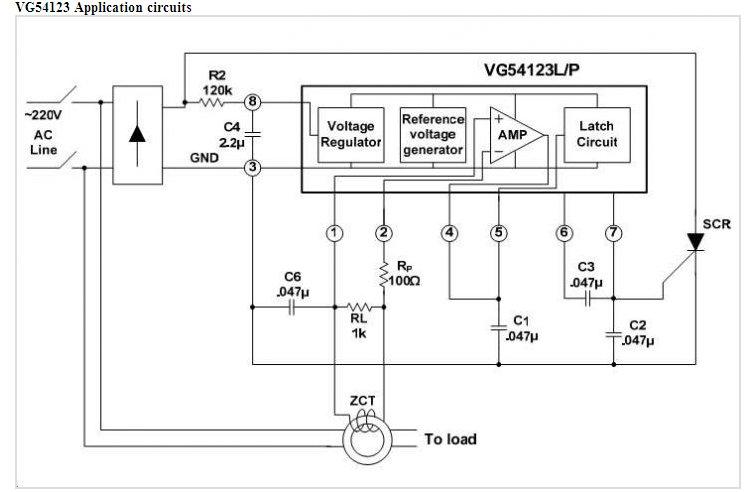
The RCD has electronic components within it which require voltage to operate. Where a fuse or MCB has been selected with regard to the earth loop impedance then with a massive overload the MCB or fuse will open before the voltage has dropped below the point where the RCD will fail to work. However most DIY people do not measure the loop impedance and under fault conditions the voltage may fall below the point where the device will work. ... With an active RCD there is no problem as once the voltage drops below the thresh hold level it will open anyway so it fails safe. However with a passive RCD this is not the case and they do not fail safe.
An interesting suggestion, but I see several problems with it (even if there are electronics in the RCD).
Firstly, the what you say here seems to be back-to-front in terms of the argument you were presenting. The potential difference between L & N of the RCD (which is the voltage that will drive any electronics in the RCD) will surely be at it's
lowest when a fault (L-E or L-N) is
closest to the RCD. If the component of the fault loop impedance due to the final circuit (i.e. {R1+R2} or {R1+Rn}) between RCD and fault is high, then that will result in the L-N pd at the RCD (which powers any electronics) being
higher, wouldn't it? This seems to be the opposite of what you were suggesting. Furthermore, even with an active RCD, I would have thought that the L-N voltage across it would be more likley to fall to the threshold for it disconnecting if the fault were very close to the RCD.
Secondly, if a very low impedance fault suddenly arises, the L-N pd at the RCD will
immediately fall to a very low level, so I don't see how a rapidly operating MCB or fuse (downstream of the MCB) could operate "...before the voltage has dropped below the point where the RCD will fail to work."
Thirdly, if what you say were correct, then would that not mean that passive RCDs would not offer satisfactory protection against low impedance L-E faults in a TT installation, even though one is then
reliant on an RCD to provide that protection (since there is almost no hope of an MCB/fuse operating)?
Kind Regards, John