• Looking for a smarter way to manage your heating this winter? We’ve been testing the new Aqara Radiator Thermostat W600 to see how quiet, accurate and easy it is to use around the home. Click here read our review.

Radiator Size and Valve Query

Joined
10 Dec 2023
Messages
80
Reaction score
7
Country
United Kingdom
Hi All

I'm looking to swap my two column vertical radiator for a 4 column one, as it's the only one to cover both the kitchen and living room area.

The one now has a width if around 550mm (including the valve areas) and new one is 560mm wide, so should swap over easily enough size wise, hopefully?

The only issue is the depth. The copper pipe comes out the wall to roughly the right amount for a 2 column radiator, not a 4.

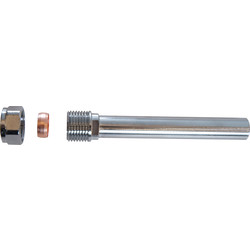
If I needed to add another 20mm or so to the length of the pipe coming out the wall, is there any sort of extension I could add to the TRV to do this?

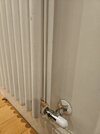
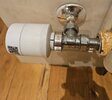
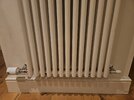
I have added some pictures of the current TRV's and the new radiator I am looking to purchase.

Also, in terms of whether the boiler can handle it, is there a simple enough way to work this out? I use TRV's and never have all the radiators on the house on at once. So if it could handle them all at once technically, I'm hoping it shouldn't be an issue if I had this one and one other upstairs, for example.

Thanks for any advice!
 

Attachments

  • Screenshot_20241021_182644_Chrome.jpg
    Screenshot_20241021_182644_Chrome.jpg
    46.3 KB · Views: 66
  • Screenshot_20241021_182558_Chrome.jpg
    Screenshot_20241021_182558_Chrome.jpg
    148.4 KB · Views: 58
  • 20241021_181336.jpg
    20241021_181336.jpg
    386.3 KB · Views: 64
  • 20241021_181356.jpg
    20241021_181356.jpg
    248.7 KB · Views: 82
  • 20241021_181340.jpg
    20241021_181340.jpg
    378.2 KB · Views: 67
Size of boiler and how many rads of what type.

The only other I'd add is, please keep in mind column radiators will not heat the room as effectively as convecting radiators will. Using heat loss calcs to install a column rad with a relative output is not a suitable mechanism to ensure there is enough heat output, they simply take a lot longer to heat a given space and that's simply down to the way they work.
 
Size of boiler and how many rads of what type.

The only other I'd add is, please keep in mind column radiators will not heat the room as effectively as convecting radiators will. Using heat loss calcs to install a column rad with a relative output is not a suitable mechanism to ensure there is enough heat output, they simply take a lot longer to heat a given space and that's simply down to the way they work.

Ah, I was planning on simply replacing the 2 column for a 4 column one. I would only replace this one radiator.

It's the only radiator in the room, so I was thinking the best thing to do was do a like for like replacement (reducing cost of not needing pipes moving), but doubling the amount of columns.I don't know if I could get a convector radiator anywhere near as big as the 4 column vertical one!

Though, I have seen large vertical convector type radiators, perhaps these would be a better choice then?

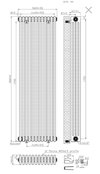
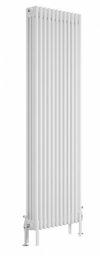
This is the one I was looking at:


There is this one for convector:


The heat loss calculator said I need somewhere between 11000-13000 BTU. The column one is showing at 11330, whilst the convector is showing at 8107. But are you saying this is not quite true in reality in terms of how it'll heat the room?
 
Last edited:
Personally I think the Stelrad convector radiator looks a lot better, but that's personal taste of course.
It's not clear from the picture whether the Stelrad is a single convector (one set of convector elements attach to one of the panels), or a double convector (2 sets of convector elements attached respectively to both panels).
A double convector should easily exceed the BTU output of a 4 column radiator of the same overall size, a single convector may not do.
 
The BTU Delta T50 appears to be higher on the column, but are you saying this is not quite true in reality?
Unfortunately the way they sell these columns is a little underhand. While their output is normally correct - unfortunately it's not comparing apples with apples.

long story short a convecting rad heats the space using 80% convection an 20% radiation. Column rad like the one you have are around 40%/60% convection/radiation and the designer tube like vertical columns are 20%/80% convection/radiation.

Radiated heat is good at heat surfaces within it's sphere of influence and they then warm things around them and so it goes on but that take time. Unless the space is small and everything is reasonably close

Convection channels air up through the radiator, heats it, it rises pushing the cooler air down and into the rad and that circulates around the whole space, heating the air in the space much more effectively. Therefore convection in much more efficient and faster at heating a room up a than radiation is (unless it's specific 100% IR heaters, that are specifically designed that way)

So these columns may have the same output but will take longer to heat everything up, some don't even manage it unless there are several that are much larger than they need to be.

The VITA K2's (type22) are excellent rads and will do the job at heating a given space far better than any column of the same size will. Fitted many of them after stripping out silly vertical designer rads that just didn't do the job.
 
Unfortunately the way they sell these columns is a little underhand. While their output is normally correct - unfortunately it's not comparing apples with apples.

long story short a convecting rad heats the space using 80% convection an 20% radiation. Column rad like the one you have are around 40%/60% convection/radiation and the designer tube like vertical columns are 20%/80% convection/radiation.

Radiated heat is good at heat surfaces within it's sphere of influence and they then warm things around them and so it goes on but that take time. Unless the space is small and everything is reasonably close

Convection channels air up through the radiator, heats it, it rises pushing the cooler air down and into the rad and that circulates around the whole space, heating the air in the space much more effectively. Therefore convection in much more efficient and faster at heating a room up a than radiation is (unless it's specific 100% IR heaters, that are specifically designed that way)

So these columns may have the same output but will take longer to heat everything up, some don't even manage it unless there are several that are much larger than they need to be.

The VITA K2's (type22) are excellent rads and will do the job at heating a given space far better than any column of the same size will. Fitted many of them after stripping out silly vertical designer rads that just didn't do the job.

Ahhh thank you for the detailed explanation, it's appreciated.

So in essence, despite the column one having around 3000-4000 more BTU output (according to the website), these numbers don't actually translate to real life heating, so to speak? And despite the lower BTU output of the K2, it would actually do a far better job of heating the room?

In terms of the heat loss calculator, how much worth should I give this? I only have space for one large radiator to cover the area. It's suggested I need 11000-13000 BTU, hence why I was initially drawn to the column (11000 BTU). However, would the K2 at 8107 be suitable? Or at least the better option then for this size space?

Going to the pipes... mine are 620mm apart, but with angled TRV. The K2 whole unit is 600mm and the pipes enter the bottom, rather than sides like mine currently. They are set in a little, by 28mm either side. Given the difference, how would I go about getting my TRV to fit this? I've attached some pictures.
 

Attachments

  • 20241021_221650.jpg
    20241021_221650.jpg
    252.9 KB · Views: 58
  • Screenshot_20241021_221216_Chrome.jpg
    Screenshot_20241021_221216_Chrome.jpg
    167.9 KB · Views: 47
  • Screenshot_20241021_221246_Chrome.jpg
    Screenshot_20241021_221246_Chrome.jpg
    102.3 KB · Views: 47
Last edited:
Personally I think the Stelrad convector radiator looks a lot better, but that's personal taste of course.
It's not clear from the picture whether the Stelrad is a single convector (one set of convector elements attach to one of the panels), or a double convector (2 sets of convector elements attached respectively to both panels).
A double convector should easily exceed the BTU output of a 4 column radiator of the same overall size, a single convector may not do.
The heat loss calculator said I need somewhere between 11000-13000 BTU. The column one is showing at 11330, whilst the convector (double) is showing at 8107.
 
As far as the heat loss calculation is concerned then I wouldn't have any issues with using it to give a guide as to how much heat the larger room now requires. Using a column to satisfy that heat requirement though is another story. The room, especially now it's larger, I presume it's now open plan, needs what it needs. To ensure there is enough heat from the emitters, then that is how large they need to be.

How a specific emitter heats the space and how quickly, is where the difference lies. The column may output 11330BTU (3.3kw - we work in Kw/watts nowadays BTW) but how well and quickly will it heat the space. Without seeing the space it's hard to say but it will take a lot longer than a similar sized convecting rad would, without a doubt.

The trouble is that it seems that the rad can only be placed in only one position. If moving to a vertical convecting rad then the pipework would need to move. If there isn't a large enough vertical convecting rad to satisfy the heat loss of the room then that's another challenge. Just because that is the case though doesn't say - 'well just go with the column'.

I take it the current column doesn't do the job? Hate to say it but there may be a need to re-think the approach, if an effective and efficient solution is to be the outcome.
 
As far as the heat loss calculation is concerned then I wouldn't have any issues with using it to give a guide as to how much heat the larger room now requires. Using a column to satisfy that heat requirement though is another story. The room, especially now it's larger, I presume it's now open plan, needs what it needs. To ensure there is enough heat from the emitters, then that is how large they need to be.

How a specific emitter heats the space and how quickly, is where the difference lies. The column may output 11330BTU (3.3kw - we work in Kw/watts nowadays BTW) but how well and quickly will it heat the space. Without seeing the space it's hard to say but it will take a lot longer than a similar sized convecting rad would, without a doubt.

The trouble is that it seems that the rad can only be placed in only one position. If moving to a vertical convecting rad then the pipework would need to move. If there isn't a large enough vertical convecting rad to satisfy the heat loss of the room then that's another challenge. Just because that is the case though doesn't say - 'well just go with the column'.

I take it the current column doesn't do the job? Hate to say it but there may be a need to re-think the approach, if an effective and efficient solution is to be the outcome.
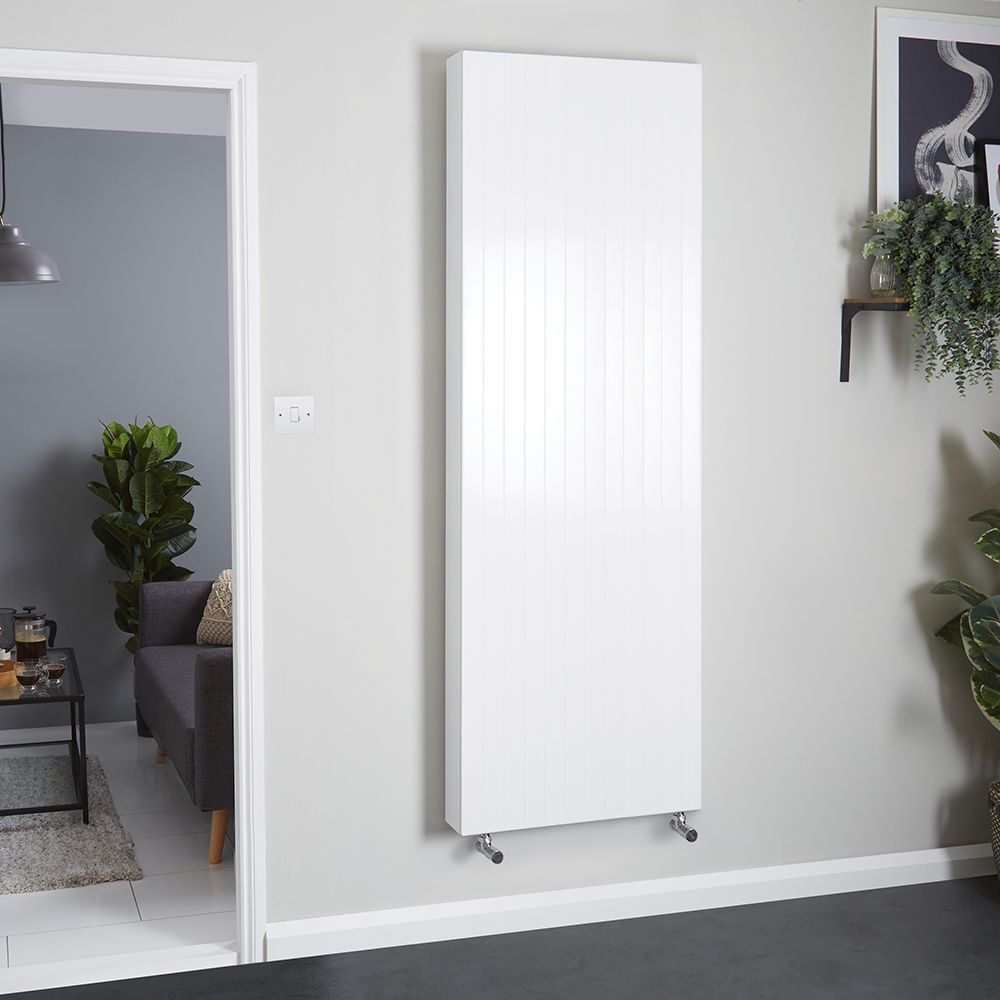
So I think double checking, the 600mm convector vertical radiator should absolutely do the job heat wise (3113W). This is pretty much spot on where it needs to be.

However, the tricky bit now is the pipes... as mentioned, the pipes themselves are 620mm apart. The K2 unit is 600mm wide and the valves a bit closer in (28mm from each side). I'm wondering if there's any sort of extender or angled piece I could use, or something similar, to make up that difference and to get it to fit? I'm literally guessing, but maybe something like the picture I've shown, alongside an angled TRV?
 

Attachments

  • Screenshot_20241022_001119_Amazon Shopping.jpg
    Screenshot_20241022_001119_Amazon Shopping.jpg
    245.6 KB · Views: 46
Last edited:
This on to the copper pipe out the wall.


Screenshot_20241022_074843.jpg


Then the threaded end of this into the female socket of the above, then cut the length so it meets up with the socket on the TRV and lockshield. Same both sides. TRV and lockshield will point at each other, underneath the rad which will need to be hung higher up.


Don't know if this will give you the projection needed from the wall though? Diagram says 77mm!
 
This on to the copper pipe out the wall.


View attachment 360091

Then the threaded end of this into the female socket of the above, then cut the length so it meets up with the socket on the TRV and lockshield. Same both sides. TRV and lockshield will point at each other, underneath the rad which will need to be hung higher up.


Don't know if this will give you the projection needed from the wall though? Diagram says 77mm!
Ah perfect, thanks for this. Yeah, 77mm projection from the wall. So in terms of this, the female elbow on the copper pipe, inserted into the valve extension and then into the angled TRV / lockshield?

So that should give me the ability to get the correct angle. However, is there anything I could do to bring it further out, to ensure it reaches the 77mm requirement?
 
Last edited:
Which one is that? I think that one is the column you were linking to that I mention was ? The Stelrad 600mm K2 convecting rad is ~ 2.4Kw?
This is the one I was talking about - 1800 X 600 double. As above, the valves are on the bottom and don't line up with the current copper pipes, so I'm looking for a solution to get some angles to make it fit!


If you need to find a tradesperson to get your job done, please try our local search below, or if you are doing it yourself you can find suppliers local to you.

Select the supplier or trade you require, enter your location to begin your search.


Are you a trade or supplier? You can create your listing free at DIYnot Local

 
Back
Top