Not to scared to ask...

Joined
13 Nov 2006
Messages
1,271
Reaction score
249
Location
Kent
Country
United Kingdom
Renewable Energy.

I understand the concept of it but that's about it. Does all the energy produced go directly to the grid?

I can only presume that the UK doesn't have the facilities to store electricity generated from renewable energy given during the last storm it was exported to France?

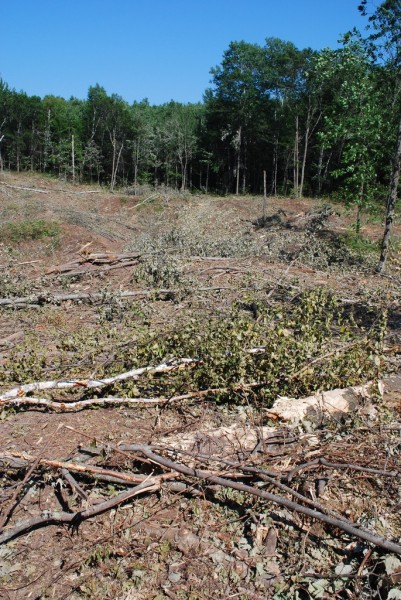
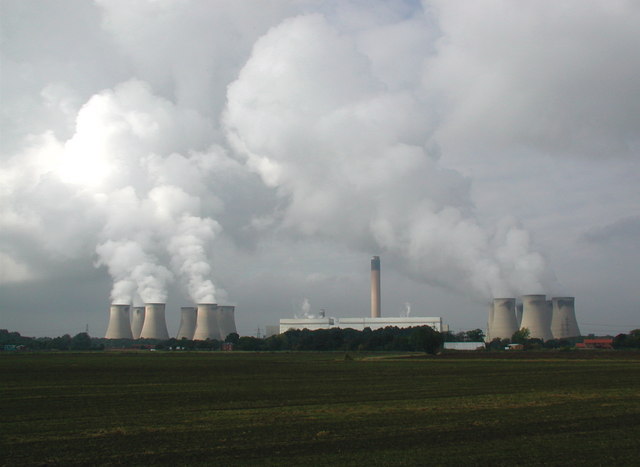
Biomass and Drax, I have read how this power plant produces energy by importing thousands of trees and turning them into pellets to burn to produce renewable energy, which on the surface seems like a backwards solution?

Cheers.
 
I understand the concept of it but that's about it. Does all the energy produced go directly to the grid
Yes it does go directly to the grid, although there is battery storage, the amount is tiny but growing

Biomass and Drax, I have read how this power plant produces energy by importing thousands of trees and turning them into pellets to burn to produce renewable energy,
Seems like a massive scam to me, but I have no knowledge at all so that’s a guess.
 
Biomass and Drax, I have read how this power plant produces energy by importing thousands of trees and turning them into pellets to burn to produce renewable energy, which on the surface seems like a backwards solution?

I believe it is a massive con to help countries meet CO2 reduction targets. In fact, if done wrong it might greatly increase CO2 emissions. But it does seem a complex issue. I have just found this article which gives a good summary of both sides. The quote covers the basics:


Biomass is considered a renewable energy source because its inherent energy comes from the sun and because it can regrow in a relatively short time. Trees take in carbon dioxide from the atmosphere and convert it into biomass and when they die, it is released back into the atmosphere. Whether trees are burned or whether they decompose naturally, they release the same amount of carbon dioxide into the atmosphere. The idea is that if trees harvested as biomass are replanted as fast as the wood is burned, new trees take up the carbon produced by the combustion, the carbon cycle theoretically remains in balance, and no extra carbon is added to the atmospheric balance sheet—so biomass is arguably considered “carbon neutral.” Since nothing offsets the CO2 that fossil fuel burning produces, replacing fossil fuels with biomass theoretically results in reduced carbon emissions.

In fact, the reality is a lot more complicated. In 2014, the U.S. Environmental Protection Agency (EPA) found that “carbon neutrality cannot be assumed for all biomass energy a priori.” Whether or not biomass is truly carbon neutral depends on the time frame being studied, what type of biomass is used, the combustion technology, which fossil fuel is being replaced (since the combustion of both fossil fuels and biomass produces carbon dioxide), and what forest management techniques are employed in the areas where the biomass is harvested.

In 2010, a group of prominent scientists wrote to Congress explaining that the notion that all biomass results in a 100 percent reduction of carbon emissions is wrong. Biomass can reduce carbon dioxide if fast growing crops are grown on otherwise unproductive land; in this case, the regrowth of the plants offsets the carbon produced by the combustion of the crops. But cutting or clearing forests for energy, either to burn trees or to plant energy crops, releases carbon into the atmosphere that would have been sequestered had the trees remained untouched, and the regrowing and thus recapture of carbon can take decades or even a century. Moreover, carbon is emitted in the combustion process, resulting in a net increase of CO2.

 
I can only presume that the UK doesn't have the facilities to store electricity generated from renewable energy given during the last storm it was exported to France?

At times when there is a surplus of energy, and the price falls, the pumped water storage hydroelectric schemes refill their reservoirs.

They help to even out peaks and troughs, and make their profit by buying when prices are low and selling when prices are high. Prices vary throughout the day.

The bio furnaces also mostly run during high demand.

Transmission cables enable electricity to move from wherever it is abundant to wherever it is needed.
 
chrome_screenshot_27 Jan 2025 11_07_39 GMT.png
 
Renewable Energy.

I understand the concept of it but that's about it. Does all the energy produced go directly to the grid?

I can only presume that the UK doesn't have the facilities to store electricity generated from renewable energy given during the last storm it was exported to France?

Biomass and Drax, I have read how this power plant produces energy by importing thousands of trees and turning them into pellets to burn to produce renewable energy, which on the surface seems like a backwards solution?

Cheers.
The "business case" for having battery storage in your home even without Photovoltaic generation is still pretty good.
 
The "business case" for having battery storage in your home even without Photovoltaic generation is still pretty good.
Opinions differ.

I looked at the cost running into thousands, and my annual electricity usage, and calculated the RoI to be poor.
 
The "business case" for having battery storage in your home even without Photovoltaic generation is still pretty good.

Is that in case of a power cut or to take advantage of differences in tariffs (or both)?
 
Tariffs mainly, but with the push to switch to heat pumps, you have a single point of failure in the home.
 
They help to even out peaks and troughs, and make their profit by buying when prices are low and selling when prices are high. Prices vary throughout the day.
I think this is the part I was trying to understand.

Renewal energy is supposed to be cheaper yet our energy bills "as a consumer" remain high. I understand more now especially in relation to gas prices, but the cynical side of me assumes any profit between supplier and provider is not passed on to the consumer.

I find whole subject rather baffling.
 
importing thousands of trees and turning them into pellets to burn to produce renewable energy, which on the surface seems like a backwards solution?
Trees are renewable. If they want us to use renewable energy, perhaps we should all get log burners.
Just need to ask millipede - I'm sure he can explain why energy prices are going up. (Or is so that they can come down in 4&1/2 years time?)
Need to ask why the electricity we send to France costs them half of what we pay for it.
 
I think this is the part I was trying to understand.

Renewal energy is supposed to be cheaper yet our energy bills "as a consumer" remain high. I understand more now especially in relation to gas prices, but the cynical side of me assumes any profit between supplier and provider is not passed on to the consumer.

I find whole subject rather baffling.

People building windfarms quote for a target price in their government contract. If they get paid more than that (because market prices are high) they pay the extra to the government. If they get paid less (because market prices are low) the government tops them up so they don't lose money. The idea is to give developers a fairly reliable income stream.

So the benefit does not accrue to the customer, but, indirectly, to the taxpayer.

The windfarm guaranteed prices are much, much, much lower than the prices the government guaranteed to nukes.
 
Trees are renewable. If they want us to use renewable energy, perhaps we should all get log burners.
Trees are renewable but not at the rate they are being felled.

Is it not true that a tree holds on to carbon for longer whilst it is still rooted in the ground or through natural decomposition, whereas burning trees accelerates carbon release, not to mention the Co2 released through transportation.
 
Trees are renewable but not at the rate they are being felled.

Is it not true that a tree holds on to carbon for longer whilst it is still rooted in the ground or through natural decomposition, whereas burning trees accelerates carbon release, not to mention the Co2 released through transportation.
exactly my thoughts


comes from canada and north america
transportation and millions off subsidy to make it work
the glossy green credentials "waste from the sawmills burnt as energy" so very green where in fact by far the greatest amount my estimate perhaps 85% from fresh Forrest direct
my estimate is based on the tonnage as waste from logging at worst would be perhaps 15-25% off the amount and the daily tonnage needed to burn quite massive

"By 2010, the station was co-firing biomass. In 2012, the company announced plans to convert three generating units to solely biomass, burning 7.5 million tonnes imported from the United States and Canada.[5] This work was completed in 2016[6] and a fourth unit was converted in 2018."

 
Last edited:
Back
Top