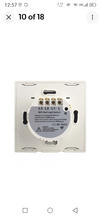
Each smart switch has its own wiring diagram, often sold in pairs
in this case the one with LED's is master, the single switch is the slave. Again for one shown this
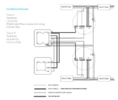
is the wiring diagram. However, with a smart switch, there is no need for two-way switching, by using a remote, the button shown here
comes with a backplate so it looks like the hard-wired two-way switch, but in fact is a self-contained remote control with a magnetic back, it can even be programmed so it can change colour of bulb, or how bright, depending on also if linked to a bulb, or a switch
. Seems only done as single or two gang, but the switch shown uses a battery to power it, so no minium load, or problems with lights staying on dim when there is no neutral, all shown don't need a neutral.
These really cheap smart switches do need a neutral
also they use only one feed, which is the same with the TP-Link (Tapo) switch, one needs to be careful with landing lights, as often a two gang switch has two feeds from two independent circuits, which must be kept independent, or it will trip any RCBO's fitted.
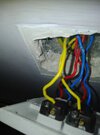
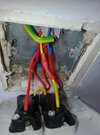
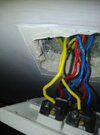
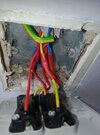
Picture ending 221 of yours shows two slave switches, picture ending 611 shows a master two-way, and an on/off switch. So likely the
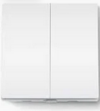
smart switch would replace the switch shown in picture 611, I have a mixture, smart switches both Energenie and Tapo the latter replacing failed Energenie which to be fair are around 8 years old. But I also have a smart relay in my landing lamp

it allows me to have 1, 4, or 5 lights on, the centre one is a smart colour changing one. And also a load of smart bulbs, with a smart bulb, turning the light switch off/on will turn it on, but clearly if switch left off, smart commands don't work, but hey google turn on outside lights will turn on all 6 outside lamps, very handy, as not even connected to the same abode, some supplied from flat, and some main house.
You don't show the switch you want to use, so can't say how it would be wired, I like the Tapo as since using batteries it will even work with a PIR outside light, those switches that pass a small current through the bulb, will not work with a PIR.