Sure, the UK has advanced radar and drone surveillance monitoring the channel. All the normal shipping, fishing and leisure craft are easy to filter, because they (mostly) have something called AIS. This is basically your number plate and your radio broadcasts this constantly with your Lat/long. So you are only looking for small craft heading from France at lowish speeds that do not transmit an AIS. Almost no uncontrolled landings occur, because most of the small boats are tracked and intercepted. So finding them and tracking them is not the problem. It will take them at least 2 hours from departure to reach the limit. It will take an intercept less than 30 minutes to meet them.
Not so. On some days there are more than 10 small boats crossing the channel.
But border force only have tone to five boats available.
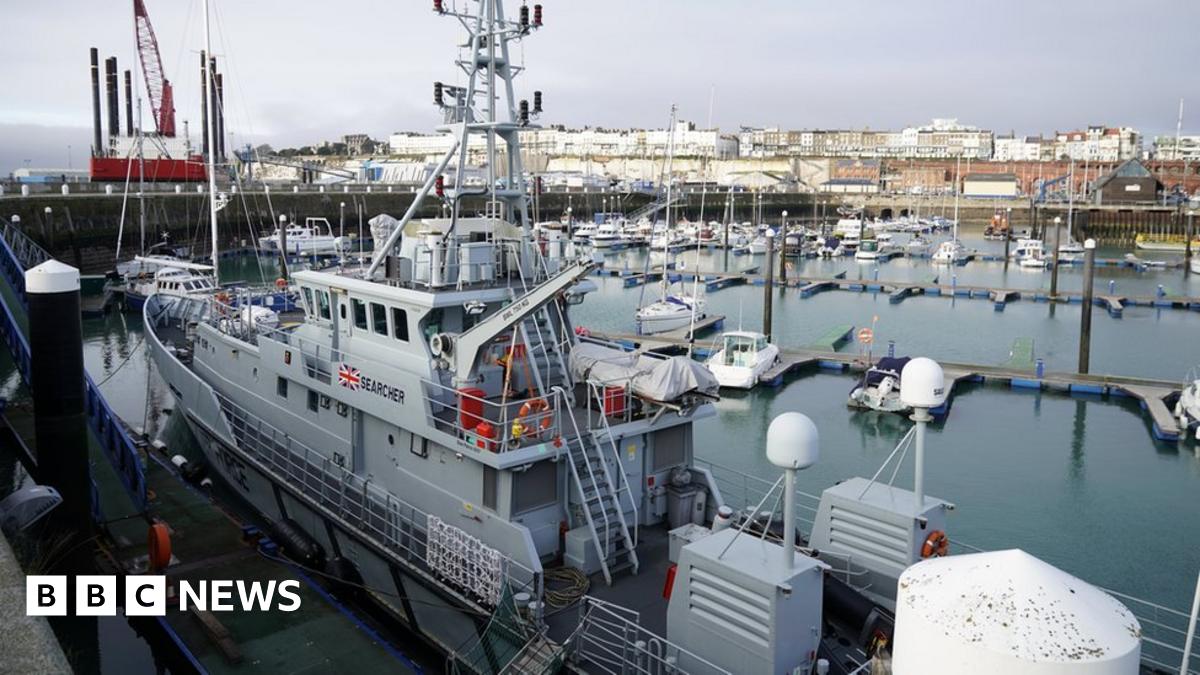
At any one time, the Border Force has a mix of cutters and Coastal Patrol Vessels (CPVs) deployed in the Channel, typically with two CPVs and three cutters actively patrolling.
Newly obtained coastguard logs from the incident in the early hours of 20 November 2021 show the boat – carrying 25 people – remained at sea for about three hours after the RNLI rejected two requests to go to the rescue in place of Border Force, whose only on-duty vessel was apparently busy going to the aid of other boats. ... Unlike the RNLI’s vessels, Border Force boats were not designed for search and rescue activity, the report noted, although they were the UK’s “principal assets” for responding to vulnerable migrant boats.
Those border force boats cannot interfere with the passage of boats in French waters. They cannot endanger life when they reach the border between France and England. The focus has always been on saving lives.
Sajid Javid said the operation would protect human life, as well as borders.
The home secretary says two vessels will be redeployed from overseas in response to migrant crossings.

www.bbc.co.uk
As soon as the focus switches to attempted pushbacks and one single life is lost, the government will fall.
Before they get to UK territorial waters, that are intercepted and asked if they are in distress and require assistance.
Only the French can legally intercept them.
Sure any passing craft can ask, but the small boats are not obligated to answer.
They have no authority and no jurisdiction.
A yes, results in a mayday relay call to French coastguard, who will task the nearest vessel to assist, unless they have SARs vessels in the vicinity.
If any of the migrants threaten to repel boarders, or threaten any violent action against any attempt to stop them, then the "rescuing craft" must stand off. If they try to forcibly "rescue" a boat that is not in distress, they are pirates. Only the French can take another boat in tow, and against their will. But if violence is threatened, then the "rescuers" would be considered to be acting illegally.
Any vessel tasked to assist a vessel in distress has the right to take them to a French port, which will be the nearest, given they are not yet in UK waters.
"A vessel in distress" is the essential issue. If the boat claims to not be in distress, there is little that anyone can do. Any craft has the right to decide if and when they are in distress, which is why the RNLI can only advise and persuade. You cannot insist another boat is in distress and they must be allowed to be rescued.
Once the boat accepts that they are in distress, then a rescuing craft can take them to the nearest port, but they are not obligated to do so.
They do not require the permission of French authorities and cannot themselves be prosecuted for trafficking. SOLAS rules protect them.
The French would not refuse permission in genuine rescues. But the rescuing craft are not obligated to take those rescued to the nearest port.
Assuming the illegals are wise to this, and say they Do not require assistance (which is usual when in French waters), they are refused entry to UK waters and instructed to turn around.
And if they refuse?
All the time they are not in distress they can be forcibly pushed back at the UK limit
You cannot violently endanger another craft and their passengers.
To do so is to risk prosecution.
Border Force officers in the Channel face risks related to both their own potential prosecution and the enforcement of laws against migrants and those facilitating their crossings. The risk of prosecution for Border Force officers themselves arises from potential international law violations or actions that could be considered illegal pushbacks.
What can't happen is for the UK to just pop them on a boat when picked up in UK waters and take them back to France, without permission. So the way Reform describe it, is a little off,
As do wannbe right -wing maritme lawyers on a DIY site.



 put a rollin eyes there to help you out.


