• Looking for a smarter way to manage your heating this winter? We’ve been testing the new Aqara Radiator Thermostat W600 to see how quiet, accurate and easy it is to use around the home. Click here read our review.

Standby Inverter supply cable through a solid wall - how best to do this safely? (Ed,)

Joined
17 Oct 2019
Messages
21
Reaction score
0
Country
United Kingdom
This is the situation. We live in an area where due to our rural overhead power supply, power 'outages' are not uncommon (15 days during Storm Arwen a few years ago). My partner has some expensive medications for her rheumatoid arthritis that need to be stored at fridge temperature or they are spoiled.

Until recently, when we were aware of a power cut, we ran the fridge off a Champion 3600w dual fuel inverter generator, located in an outbuilding (well ventilated). We've had to use this three times so far over the past 18 months, fortunately for only between 12 hours and 21 hours.

The fridge's energy consumption is 58 KwH per annum, so it's quite efficient. However, because of the nature of the generator's power supply, it has to be run constantly to power the fridge with the usual noise and costs (propane and engine oil).

A few weeks ago, I purchased an Ecoflow Delta 2 Max 'power station' rated at output 2400W and battery capacity 2048 Wh.

This seems to work a treat. It's quiet and when just powering the fridge the estimated run time on the read out is something like 66 hours (even taking into consideration the 'idle consumption' of the AC inverter).

Given that spare capacity, it would be useful to also run the freezer at the same time. But (and thanks for bearing with me), while the fridge is in the kitchen, the freezer is in the adjoining internal garage, the other side of a fire door. I could run an extension cable from the Delta 2 max through the door to the garage by leaving the door ajar. Ok in the summer, but less so in the winter.

What would be the best way to run an extension from the Delta 2 max, through the wall, to the garage?

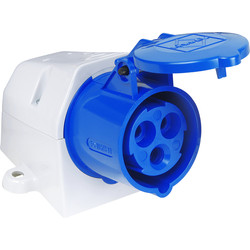
I could use a system like we have at present with the genny, through the wall between the house and adjoining outbuilding, but that has a 16A commando connection, and I'd want to avoid something so bulky in the kitchen. Any ideas?

The mains AC power input to the battery ('power station') for charging it, has a 240, 3 pin standard ac wall plug which attaches to the battery with a kettle-like connector (an IEC cable?). Is there something like this on the market that I could use from the output from the Ecoflow battery, to a flush socket in the wall on the kitchen side, and then through to a socket on the garage side, from which I could then run power to the freezer?

I can't see anything online like this.

Or maybe there's a better method?

Thanks in advance.
 
Can't you just take the plug off your extension lead, drill a hole throught the wall to the side of the door you mention leaving open, push the cable through then refit a plug
 
Thanks. Yes, that's one straightforward possibility, although I was looking for something a bit neater, with a socket on one side of the wall through to one on the other side of the wall, but which avoided the 'suicide/widow maker' cable option.
 
You can get male commando sockets. No widow making required.
That's right. I've currently got one that runs from the genny in the outbuilding, to the wall between the out building and the house. However, for the kitchen to the garage feed, the only sockets that I can find aren't flush/recessed and stand proud from the wall. That's like what we have in the outbuilding now, which is then wired into a
13A DP wall socket 2 gang on the inside house side. But I can't find anything smaller or more recessed than this https://www.tlc-direct.co.uk/Products/MKK9401BLU.html which I'd want to use indoors as it protrudes too much to be used for the kitchen wall.

As a last resort, if I can't find a neat method before the winter, I could probably pick up a small, cheap 'power station' to run the freezer alone. The prices seem to be discounted a lot recently. That'll mean having two power stations. Still, as they say in the military "two is one, and one is none'!"
 
Yeap. See above post. That set up works well at the moment from the outbuilding with the genny to the inner hall space currently for the genny feed. A bit too industrial for the kitchen though, and likely to get knocked/hit. But thanks for looking.
 
To my knowledge, there are no such things as neat flush commando type sockets. They are all classed as industrial and therefore look industrial.
If that were my situation, I'd hard wire from close to the genny and pop said cable through kitchen wall terminated in a domestic socked flushed in and labeled Generator Supply.
 
A bit too industrial for the kitchen though,
Perhaps I've misunderstood something here, but I am assuming that the kitchen is where the freezer + fridge are, and that the fridge and freezer each have a BS 13A plug. So why not just use a standard double socket in the kitchen? Just because it's commando at one end doesn't mean it needs to be commando all the way through.
 
I could run an extension cable from the Delta 2 max through the door to the garage by leaving the door ajar. Ok in the summer, but less so in the winter.Thanks. Yes, that's one straightforward possibility, although I was looking for something a bit neater, but which avoided the 'suicide/widow maker' cable option.
How would doing what I suggested turn an extension lead into a widow maker
 
Last edited:
Yes I have 5 units, a small fridge or freezer I can select which it works as, that is not important keeps drinks cool only, a fridge/freezer in what was the garage, intended for use only in the BBQ season so normally very little in it, and in the kitchen a fridge/freezer, and both chest and upright freezer is battery backed, together with the central heating.

I had to decide how much I wanted to be battery backed, as more that is battery backed the less time it will last. This also includes lights etc. Which I don't have battery backed.

But automatic back-up is far more complex to manual. Unplugging a commando plug from one socket and plugging it into another is easy, and the generator can easy have it's own dedicated earth rod. But with automatic also looking at the neutral bonding to earth, and a load of regulations. Much depends on the inverter, mine has a load of dip switched which need setting and how set depends on if a G99 or G98 agreement.

One item on an UPS, no real problem, add two, and then we open a whole can of worms. And also looking at bi-directional RCD's and MCB's, what needs registering and what does not. So I have 6.4 kWh of battery power, a 5 kW inverter, and 6 kW of solar panels. With 10% being reserved for the UPS. I have no option to use a generator.

I wanted an automated system, so no real option but to employ some one able to register the work, and issue certificates, DIY is simply not an option. 58 kWh/annum is very low, most fridge/freezers are around the 200 kWh/annum, a 23 litre fridge, is around 130 KWh/a, may seem odd, but one large using uses a lot less power to two smaller ones. And the upright if often inverter drive, so hardly any inrush, but the chest freezer is most economical to run, and can remain without power for a lot longer than upright versions, the auto defrost is a real problem with upright versions, as how long they can go without power, is dependent on when it last ran a defrost cycle. It can be less than ½ hour for items in top of freezer.

And to allow access during the power cut, no real option but use a chest freezer.

I seen nothing wrong with 13 amp plugs and sockets, a fridge/freezer with inverter drive maximum draw is around 160 watts when running defrost cycle. A non inverter drive can have an inrush of 1000 watts, so it does depend on the type, but seem to be looking at new circuits, and can't really see how you can DIY for a reasonable price.
 
Yes I have 5 units, a small fridge or freezer I can select which it works as, that is not important keeps drinks cool only, a fridge/freezer in what was the garage, intended for use only in the BBQ season so normally very little in it, and in the kitchen a fridge/freezer, and both chest and upright freezer is battery backed, together with the central heating.

I had to decide how much I wanted to be battery backed, as more that is battery backed the less time it will last. This also includes lights etc. Which I don't have battery backed.

But automatic back-up is far more complex to manual. Unplugging a commando plug from one socket and plugging it into another is easy, and the generator can easy have it's own dedicated earth rod. But with automatic also looking at the neutral bonding to earth, and a load of regulations. Much depends on the inverter, mine has a load of dip switched which need setting and how set depends on if a G99 or G98 agreement.

One item on an UPS, no real problem, add two, and then we open a whole can of worms. And also looking at bi-directional RCD's and MCB's, what needs registering and what does not. So I have 6.4 kWh of battery power, a 5 kW inverter, and 6 kW of solar panels. With 10% being reserved for the UPS. I have no option to use a generator.

I wanted an automated system, so no real option but to employ some one able to register the work, and issue certificates, DIY is simply not an option. 58 kWh/annum is very low, most fridge/freezers are around the 200 kWh/annum, a 23 litre fridge, is around 130 KWh/a, may seem odd, but one large using uses a lot less power to two smaller ones. And the upright if often inverter drive, so hardly any inrush, but the chest freezer is most economical to run, and can remain without power for a lot longer than upright versions, the auto defrost is a real problem with upright versions, as how long they can go without power, is dependent on when it last ran a defrost cycle. It can be less than ½ hour for items in top of freezer.

And to allow access during the power cut, no real option but use a chest freezer.

I seen nothing wrong with 13 amp plugs and sockets, a fridge/freezer with inverter drive maximum draw is around 160 watts when running defrost cycle. A non inverter drive can have an inrush of 1000 watts, so it does depend on the type, but seem to be looking at new circuits, and can't really see how you can DIY for a reasonable price.
Yes, we have quite a low electricity demand, and so decided against a change-over switch and all the complications. Instead, with the genny, we stuck with the floating neutral earthing system and ensure that when powered directly from the genny we only ever have one class-1 item plugged in, although with class-2 , we feel it's safe to have as many as needed. Now, we're using the new Delta 2 max with the fridge in the kitchen, it's also not an issue with the earthing. I'd like to keep everything as simple as possible (e.g using rechargeable lanterns, torches, etc. rather than the mains light) and we don't need, or use, the oil central heating system (the Aga works with or without electric and we can plug this into the Delta2M in the kitchen too to regulate the thermostat), so it's a series of good quality extension cables. Seems to work fine for us, it's just that damn freezer :) in the garage...urgh. Still, a 'First-World' problem and folks have much more to content with.

Thank you also for your comment.
 
If you want something a bit neater than just a "hole in the wall", how about a "flex outlet plate".
 

If you need to find a tradesperson to get your job done, please try our local search below, or if you are doing it yourself you can find suppliers local to you.

Select the supplier or trade you require, enter your location to begin your search.


Are you a trade or supplier? You can create your listing free at DIYnot Local

 
Back
Top