• Looking for a smarter way to manage your heating this winter? We’ve been testing the new Aqara Radiator Thermostat W600 to see how quiet, accurate and easy it is to use around the home. Click here read our review.

Would you like to fit a radiator without using PTFE tape

Joined
15 Jul 2025
Messages
14
Reaction score
2
Country
United Kingdom
Why in the 21st century are we still using an unknown number of turns of PTFE tape to seal the male threads on a radiator tail in the hope it won't leak. It's because radiator manufacturers haven't come up with anything new design wise in the past 50-60 years. Do plumbers on here think it would be a good idea if you could lift a rad straight out of the box and mount it on the wall and connect it up without using threaded tails and PTFE tape. The solution is simple when in the general domestic situation where a rad is plumbed bottom/bottom is to have the tails fixed and integrated in the radiator at time of manufacture so no PTFE and no chance of this joint ever leaking , no embarrassing call backs to rectify a leak, no draining down of rads or systems to rectify a leaking tail, simpler and quicker to fit a rad , should be popular with the DIYer and would have ''green credentials''.
I have this innovation covered by a UK patent but companies like Stelrad are not interested in changing and won't unless their customers, i.e you lot, want something better.
I'm just trying to gauge if plumbers would embrace a new and simpler way of installing a radiator.

Thank you for reading my post

Mo McKeown
 
First ptfe isn't the only method to seal rad tails.
I'm a ex new build contractor regularly used to install several hundred rads a month
Yes odd tail leak ever with 22 winds of tape but switched to loctite 55 years ago never seen a rad tail leak since.
Plus even when we used ptfe zero need to drain system just turn of rad valves.
So you buy a rad with tails installed then buy rad valves and throw supplied tails away? hardly green.
Not surprised stelrad weren't interested as you probably know the production process of rads is very automated, adding something else probably isn't possible until next rad design.
Last time I was round the stelrad Mexborough factory we were told production run of rad design is 10 to 11 years.
 
Right angle or straight?

It gives the installer more choice if they fit their own.
 
Why in the 21st century are we still using an unknown number of turns of PTFE tape to seal the male threads on a radiator tail in the hope it won't leak. It's because radiator manufacturers haven't come up with anything new design wise in the past 50-60 years. Do plumbers on here think it would be a good idea if you could lift a rad straight out of the box and mount it on the wall and connect it up without using threaded tails and PTFE tape. The solution is simple when in the general domestic situation where a rad is plumbed bottom/bottom is to have the tails fixed and integrated in the radiator at time of manufacture so no PTFE and no chance of this joint ever leaking , no embarrassing call backs to rectify a leak, no draining down of rads or systems to rectify a leaking tail, simpler and quicker to fit a rad , should be popular with the DIYer and would have ''green credentials''.
I have this innovation covered by a UK patent but companies like Stelrad are not interested in changing and won't unless their customers, i.e you lot, want something better.
I'm just trying to gauge if plumbers would embrace a new and simpler way of installing a radiator.

Thank you for reading my post

Mo McKeown

I'm all for new ideas.
Better by design and all that.
But... Unless you can convince a manufacturer (or go into production yourself) it will go the way of most good ideas... Nowhere I'm afraid!

I've spent enough hours winding ptfe - 40 tails on one job last week! So would have loved to have not had to do that!

20 wraps of normal ptfe for me... To guarantee no leak and to still look good!
I've tried gas ptfe and 55 but not honed that skill yet to do it without thinking... See how hard it is for a plumber to learn new habits! Lol.

I'd be interested to see your design drawings and understand if the tail is the same material as the rad so is it in the casting or a different metal?

Good luck :)
 
It's one more thing to go wrong, if it leaks then they've got a warranty claim on their hands. If the installer has to fit it then it stops with them.

It's also a protrusion that would be prone to damage, either in the warehouse or in transit. This could only be offset by increasing packaging costs.
 
I certainly agree there could be better ways of doing things in the plumbing/heating world - rad tails being one, any progression towards a more efficient and logical way of doing things can always be a good thing
Why in the 21st century are we still using an unknown number of turns of PTFE tape to seal the male threads on a radiator tail in the hope it won't leak.
Not sure it is an unknown - Gas PTFE tape and 6/7 turns every time for me with 0 call backs- though tape/thread could be considered a bit of a clunky solution IMO

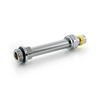
There are tails now that come with an O ring, exactly like the bleed valves and blanks but they are the exception rather than the norm at the moment which seems strange, this would be the solution I would prefer and all it needs is a shoulder on the tail, though that would be down to the valve manufacturers
1752654237550.png
At the moment though, I wouldn't say fitting rads are an exact science, especially when changing old for new, flexibility with the tails can be important if not essential. Not sure it would be easy to create a one size fits all approach.

Best of luck with your innovation though, and insight into what that approach may be?
 
In my experience, what would be useful would be radiator tail extensions that can be fitted without leaking.
 
There are tails now that come with an O ring, exactly like the bleed valves and blanks but they are the exception rather than the norm at the moment which seems strange, this would be the solution I would prefer and all it needs is a shoulder on the tail, though that would be down to the valve manufacturers
View attachment 387201
My stelrad bleed valves and blanks are all leaking as the rubber has degenerated. 12 -15 years old.
 
Surely as Rob says it's the rad valve companies you need to address, not radiator companies? Unless I've misunderstood your post?
 
I have not made a water/gas tight joint for many years now, but when I did, I used Chesterton Gold End paste without any tape in sight. Never a leak and an easy strip down if needed. No plastic washers either as I made my own hemp gromets (y)
 
First ptfe isn't the only method to seal rad tails.
I'm a ex new build contractor regularly used to install several hundred rads a month
Yes odd tail leak ever with 22 winds of tape but switched to loctite 55 years ago never seen a rad tail leak since.
Plus even when we used ptfe zero need to drain system just turn of rad valves.
So you buy a rad with tails installed then buy rad valves and throw supplied tails away? hardly green.
Not surprised stelrad weren't interested as you probably know the production process of rads is very automated, adding something else probably isn't possible until next rad design.
Last time I was round the stelrad Mexborough factory we were told production run of rad design is 10 to 11 years.
Having fixed tails does away with the need to have screw in tails so they won't be in the box when you buy valves so nothing is thrown away. If you need to replace existing threaded tails you buy them separately.
Nothing has really changed in radiator design in decades time it was shaken up and simplified. There appears to be no need to persevere with threaded tails , why do it if you didn't have to . Removing non-biodegradable products made from PTFE has green credentials ( research teflon and it's effects on health) .
If you used 22 turns of PTFe tape on 1 tail you would use approx. 3 metres of tape per rad. Say if you get 4 rads fitted using a 10 metre roll of PTFE and Stelrad alone make 2 million rads per year then to fit them you would use 500,000 rolls of PTFE tape which have to be made and transported. No PTFE greatly reduces your carbon footprint and makes a rad more attractive to those who care about the environment.
 
Why in the 21st century are we still using an unknown number of turns of PTFE tape to seal the male threads on a radiator tail in the hope it won't leak. It's because radiator manufacturers haven't come up with anything new design wise in the past 50-60 years. Do plumbers on here think it would be a good idea if you could lift a rad straight out of the box and mount it on the wall and connect it up without using threaded tails and PTFE tape. The solution is simple when in the general domestic situation where a rad is plumbed bottom/bottom is to have the tails fixed and integrated in the radiator at time of manufacture so no PTFE and no chance of this joint ever leaking , no embarrassing call backs to rectify a leak, no draining down of rads or systems to rectify a leaking tail, simpler and quicker to fit a rad , should be popular with the DIYer and would have ''green credentials''.
I have this innovation covered by a UK patent but companies like Stelrad are not interested in changing and won't unless their customers, i.e you lot, want something better.
I'm just trying to gauge if plumbers would embrace a new and simpler way of installing a radiator.

Thank you for reading my post

Mo McKeown
As you say, only for rads connected at the bottom. Manufacturers would then need to make a supply of both available.

What about different coloured valves, the tails wouldn't match?
 

If you need to find a tradesperson to get your job done, please try our local search below, or if you are doing it yourself you can find suppliers local to you.

Select the supplier or trade you require, enter your location to begin your search.


Are you a trade or supplier? You can create your listing free at DIYnot Local

 
Back
Top