• Looking for a smarter way to manage your heating this winter? We’ve been testing the new Aqara Radiator Thermostat W600 to see how quiet, accurate and easy it is to use around the home. Click here read our review.

Plastic packers or timber 'biscuits'?

Joined
9 Jan 2011
Messages
247
Reaction score
6
Location
London
Country
United Kingdom
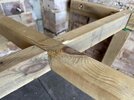
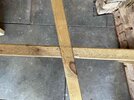
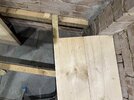
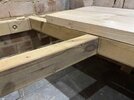
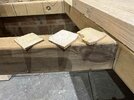
I'm continuing work on my floating garden bench. I have two questions. I've attempted these notched 'half lap' intersecting beams to form the frame. Along with the scaffold boards and steel wall brackets these will all form the load-bearing structural elements. Basically, every peice of timber will perform a structural role, nothing is just cosmetic. As such, is notching 3x2 C16 battens like this really compromising their strength? I tried to cut them as tight as possible so they clamp together, but will use 3mm steel flat plate brackets screwed across the span to stop them from spreading.

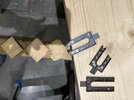
My second question is, ss a complete rookie, I've inevitably miscalculated some cuts and want to pack some joints tighter. I have lots of 3x2 slivers from cutting out the notches. Are these good to use to wedge into a larger joint with a bit of glue? Or are the fibres likely to compress and break apart under stress and expansion. They are cross-grain cuttings, so weaker, not actual biscuits. Plastic I'm guess would not deform and remain exactly in the state it is forever. But it would be much more satisfying to use the original wood offcuts. What's common practice? This bench is fully under shelter, so none of this ought to be getting wet. Thanks
 

Attachments

  • IMG_1043.jpeg
    IMG_1043.jpeg
    560.6 KB · Views: 40
  • IMG_1045.jpeg
    IMG_1045.jpeg
    329.3 KB · Views: 40
  • IMG_1046.jpeg
    IMG_1046.jpeg
    377.7 KB · Views: 39
  • IMG_1062.jpeg
    IMG_1062.jpeg
    449.1 KB · Views: 42
  • IMG_1063.jpeg
    IMG_1063.jpeg
    261 KB · Views: 40
  • IMG_1066.jpeg
    IMG_1066.jpeg
    377.7 KB · Views: 41
  • IMG_1067.jpeg
    IMG_1067.jpeg
    305.8 KB · Views: 38
Last edited:
If it was me, I would pack out the gaps with slivers, cut down the length of your 3x2. Easy to cut down, say a few mm thick, with a circular saw.
You can cut longer tapered pieces too. I wouldn't use end grain, it falls apart, when tapping in.

I'd then use PU glue (slightly expanding, like gorilla glue), damp the wood, as you insert your packers... it will look a mess when oozing out, but you can cut/shape it back once dry.

May have been better if the bit attached to the wall (ledger board) was one piece connected to wall, then you could sit your frame work on top of ledger board, (no need to cut) use struts to floor as and where required.

Keep going, show us the final photos. (y)
 
Wood packers will be fine but I would use a vertical support at the intersection of the two seats
 
If it was me, I would pack out the gaps with slivers, cut down the length of your 3x2. Easy to cut down, say a few mm thick, with a circular saw.
You can cut longer tapered pieces too. I wouldn't use end grain, it falls apart, when tapping in.

I'd then use PU glue (slightly expanding, like gorilla glue), damp the wood, as you insert your packers... it will look a mess when oozing out, but you can cut/shape it back once dry.

May have been better if the bit attached to the wall (ledger board) was one piece connected to wall, then you could sit your frame work on top of ledger board, (no need to cut) use struts to floor as and where required.

Keep going, show us the final photos. (y)
Exactly this!
 
If it was me, I would pack out the gaps with slivers, cut down the length of your 3x2. Easy to cut down, say a few mm thick, with a circular saw.
You can cut longer tapered pieces too. I wouldn't use end grain, it falls apart, when tapping in.

I'd then use PU glue (slightly expanding, like gorilla glue), damp the wood, as you insert your packers... it will look a mess when oozing out, but you can cut/shape it back once dry.

May have been better if the bit attached to the wall (ledger board) was one piece connected to wall, then you could sit your frame work on top of ledger board, (no need to cut) use struts to floor as and where required.

Keep going, show us the final photos. (y)

Thanks for the advice. Wafers of wood cut along the grain would be much better, I agree. I'll try that. Although seems a bit tricky cutting down a 3x2 that way. I'll figure it out.

Regarding the ledger board - I had to look that up, I'd not heard that term, but now I'm better informed! The rear span is 2m and the side span is 1.5m. They are actually mounted as continuous battens, but each will be incised in 3:

img_0900-jpeg.388431


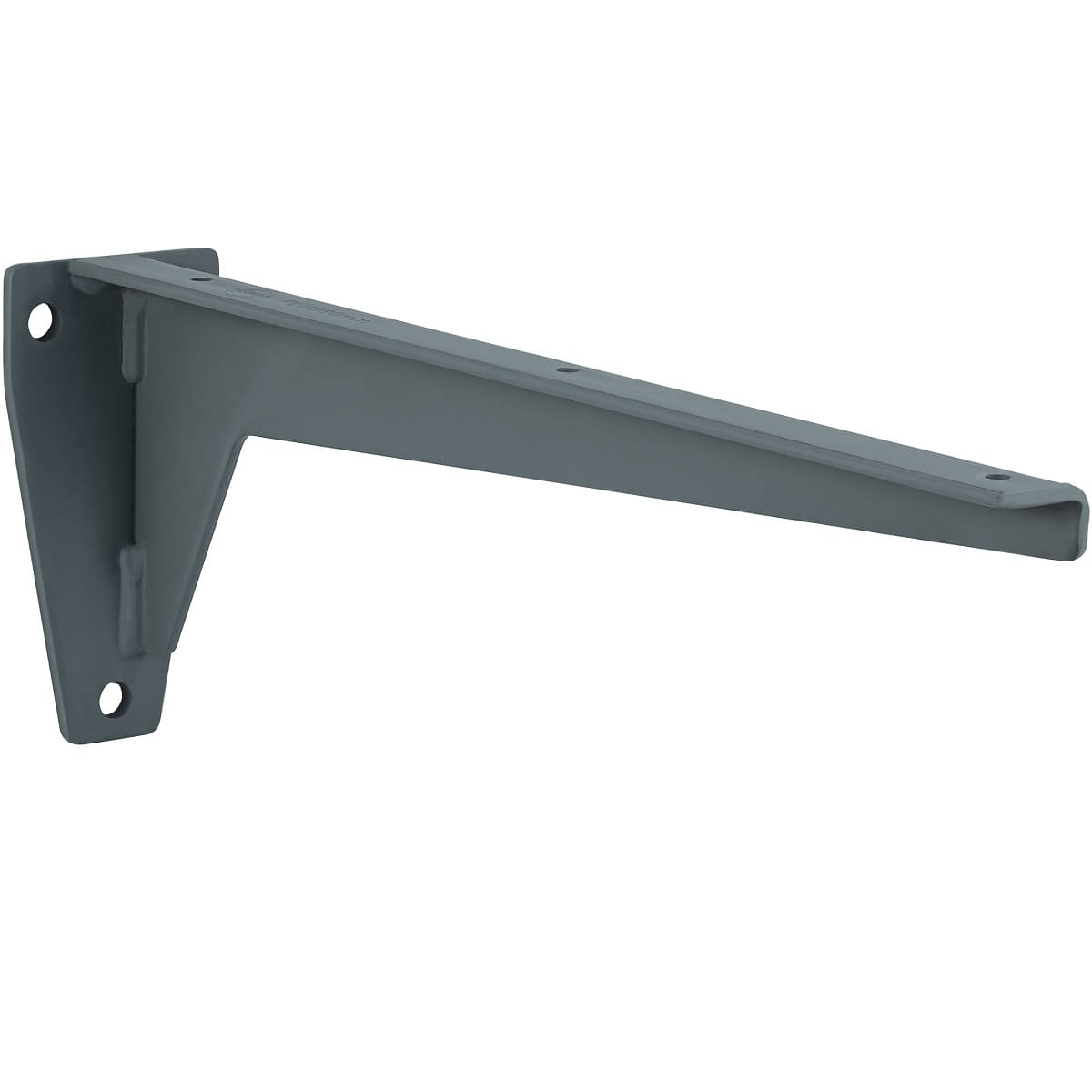
The reason I've done this is that these two will directly support the scaffold boards. However I'll also be supplimenting with 4 380mm heavy duty steel wall brackets, two on each wall:
mira-150kg-2_1920x1920.jpg

These will be mounted to the wall 45cm apart and in line with the 3x2s to dirrectly support the scaffold boards. Hence needing to split them into 3 peices. I could have more sensibly mounted them under the ledger board to support 3x2 cross battens, which in turn would support the scaffold boards. That would be a better design. However I wanted to ensure these steel brackets would not be visible so wanted them more concealed within the framework.

The final bench, once secured and braced, will not have any struts to the floor or any legs! (but I have another plan for that too..)
 
Last edited:
I wouldn't mess about with timber packers, plastic is so easy, unless they'll be seen but then if they'll be seen it'll look pants whatever you use.
 
Wood packers will be fine but I would use a vertical support at the intersection of the two seats
Good call, I've had concerns about this point, and also the very end of the bench ( the front corner of the 'L') which is not secured to a wall. I think the wall brackets will hopefully support both these points adequately.

However, as a fallback plan, I'm going to hide 3 legs under the bench that can be folded out if/when needed. ie each bracket can support 150kg, and I have enough to accommodate 600kg, plus all the timber framework and chemical anchors which ought to double that figure. I would be happy with 2 people on the bench. But say 5 people were to ever want to squeeze on? Cue: the fold out legs, for a bit more confidence.
I wouldn't mess about with timber packers, plastic is so easy, unless they'll be seen but then if they'll be seen it'll look pants whatever you use.
No, none of this will be visible. I could use plastic, but it's quite satisfying using wood! so that it all sort of behaves the same with the humidity, elements and unifies over time. But that's probably a bit of a fantasy! I was mainly concerned that they're cross-grained wafers, so have little real strength. Once they've sucked up glue and wedged into gaps they'd probably do fine. But long grain wafers would do better, or I'll just use plastic!
 
What’s the point of folding legs if the bench doesn’t ? Or did I miss something .
 
What’s the point of folding legs if the bench doesn’t ? Or did I miss something .
Because all my load bearing calculations are theoretical. I know the wall-side of the bench will handle anything. I have around 28 chemical anchors mounted to a depth of 85mm into masonry to support a combined 3m long bench. That's probably overkill. The front should also have adequate strength with the ends of the boards fully supported and the steel wall brackets doing their job too. As far as I'm concerned it should hold anything, but I'll only really be able to test that once it's finished.

But there's a difference between one or two medium build adults sat on it and, say, 5 large people. So for scenarios where I have a concern about potential load capacity 2 or 3 carefully positioned fold away legs may provide additional support at certain weak points, like the intersection of the 'L'. But I'm yet to get that far, and I might not bother if it all turns out well. I'll have to see if I detect any flex when fully loaded I suppose. Like I say, first project like this so don't know what to expect. In retrospect I might have chosen 2x4 C24 beams instead of 2x3 C16 ones, for example.
 
Because all my load bearing calculations are theoretical. I know the wall-side of the bench will handle anything. I have around 28 chemical anchors mounted to a depth of 85mm into masonry to support a combined 3m long bench. That's probably overkill. The front should also have adequate strength with the ends of the boards fully supported and the steel wall brackets doing their job too. As far as I'm concerned it should hold anything, but I'll only really be able to test that once it's finished.

But there's a difference between one or two medium build adults sat on it and, say, 5 large people. So for scenarios where I have a concern about potential load capacity 2 or 3 carefully positioned fold away legs may provide additional support at certain weak points, like the intersection of the 'L'. But I'm yet to get that far, and I might not bother if it all turns out well. I'll have to see if I detect any flex when fully loaded I suppose. Like I say, first project like this so don't know what to expect. In retrospect I might have chosen 2x4 C24 beams instead of 2x3 C16 ones, for example.
If it needs legs why folding? Which you still haven’t answered.
 
Because all my load bearing calculations are theoretical. I know the wall-side of the bench will handle anything. I have around 28 chemical anchors mounted to a depth of 85mm into masonry to support a combined 3m long bench. That's probably overkill. The front should also have adequate strength with the ends of the boards fully supported and the steel wall brackets doing their job too. As far as I'm concerned it should hold anything, but I'll only really be able to test that once it's finished.

But there's a difference between one or two medium build adults sat on it and, say, 5 large people. So for scenarios where I have a concern about potential load capacity 2 or 3 carefully positioned fold away legs may provide additional support at certain weak points, like the intersection of the 'L'. But I'm yet to get that far, and I might not bother if it all turns out well. I'll have to see if I detect any flex when fully loaded I suppose. Like I say, first project like this so don't know what to expect. In retrospect I might have chosen 2x4 C24 beams instead of 2x3 C16 ones, for example.
hows that going to work/ you would have to monitor and asses anyone who is going to sit down, and if one of them has been over-indulging in the puddings - are you really going to say - "I better put some extra supports in you"

due to the knots around the main lap joint, I would beef that up with a bit of steel where it can't be seen. It doesn't need a support leg - unless 5 big'ns start bouncing up and down what you have is fine

I would not have a vertical leg at the end - make a 45 degree strut, if that wall anchor and the angled steel bracket are good - it would work fine

you're massively over-engineering this.
1755472234962.png
 
If it needs legs why folding? Which you still haven’t answered.
I don't think it does, or rather, if I construct it correctly it shouldn't. However my girlfriend has told me that she won't sit on it if there are no legs because she wouldn't trust it! These hidden legs might be a handy way of keeping her happy without ruining my overall design. She can pull them down if she wants to, but I hopefully won't need to. I'll assess when I've finished because the legs were just an afterthought and can easily be added on at the end.
 
due to the knots around the main lap joint, I would beef that up with a bit of steel where it can't be seen. It doesn't need a support leg - unless 5 big'ns start bouncing up and down what you have is fine

I would not have a vertical leg at the end - make a 45 degree strut, if that wall anchor and the angled steel bracket are good - it would work fine

you're massively over-engineering this.

All good points. But I've made the mistake of uploading work-in-progress pictures. None of the wall brackets are installed yet, and there will be one at that end, and also the angle bracket shown here is just temporary to help me set correct dimensions etc. The leg is just there to prop up the end of the beam whilst I get my levels right.

But I also agree, that corner is the weakest point in the design. I originally did plan a 45 degree support there too, but I don't want to have anything visible anymore and want it to be entirely wall mounted. I'll throw up some proper pics when complete.

And you're right, I always over-engineer everything. You should see the construction of that garden room.....! (But I'm not gonna go there)
 
Last edited:
Hi all,

I'm returning to this because I took a break but have now completed most of the structural elements for my floating bench. What remains is added a few cross beams for bracing, installing the lighting and then cutting and fitting the scaffold boards

IMG_1506.jpg


IMG_1508.jpg


IMG_1509.jpg


IMG_1510.jpg


IMG_1511.jpg


IMG_1512.jpg


IMG_1513.jpg


IMG_1514.jpg


So, I'm realising now that wood that lives outdoors is going to swell and shrink across the grain through the seasons. So given that, when I installing the boards on my frame should I be leaving a gap of a couple of mm between them rather than lay them flush alonside eachother? I'm still keen to try a mitered half lap joint where the boards meet at the corner. Agin, should there be a gap of 2-3mm where they meet?

Thanks
 

If you need to find a tradesperson to get your job done, please try our local search below, or if you are doing it yourself you can find suppliers local to you.

Select the supplier or trade you require, enter your location to begin your search.


Are you a trade or supplier? You can create your listing free at DIYnot Local

 
Back
Top