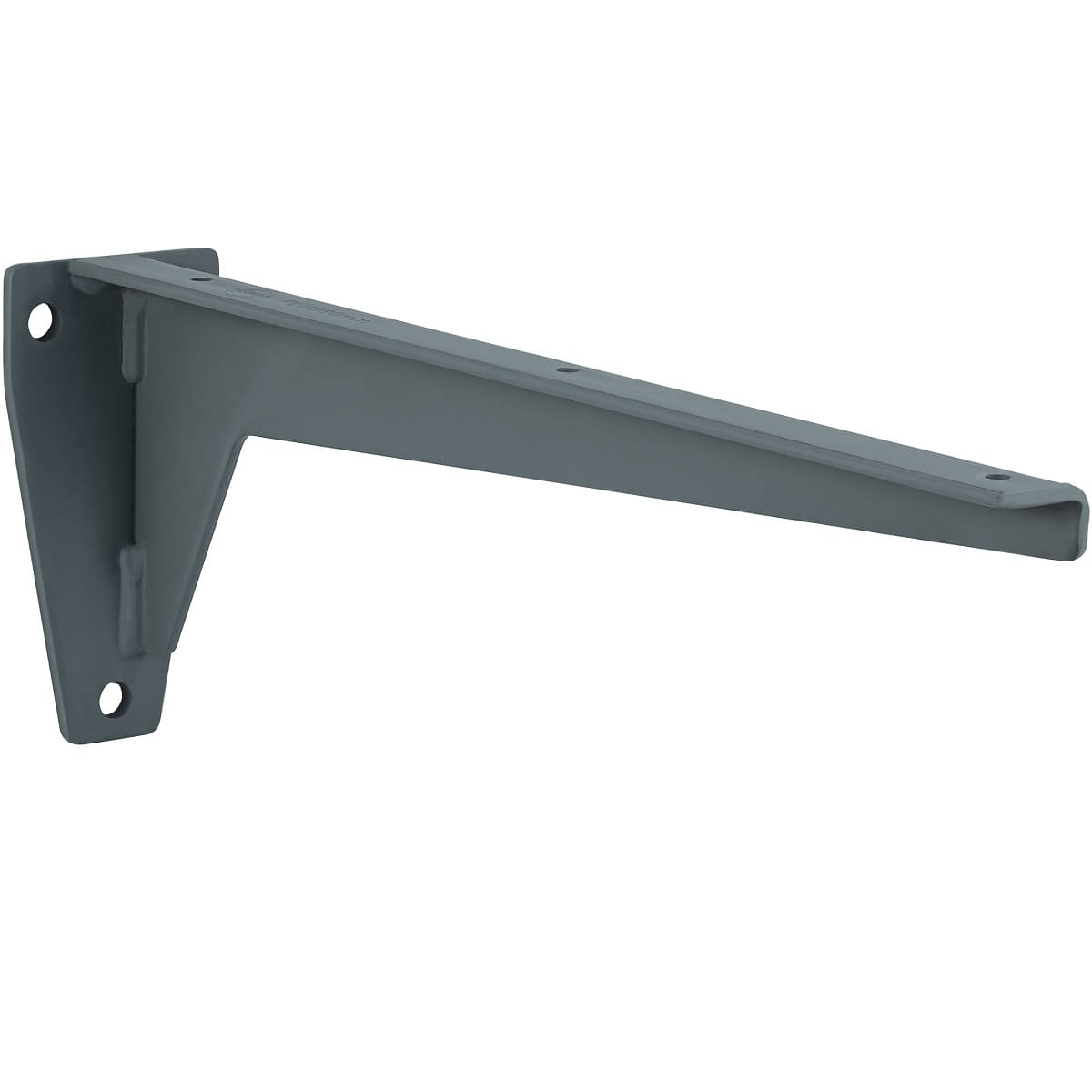
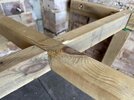
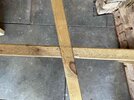
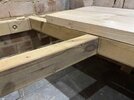
I'm continuing work on my floating garden bench. I have two questions. I've attempted these notched 'half lap' intersecting beams to form the frame. Along with the scaffold boards and steel wall brackets these will all form the load-bearing structural elements. Basically, every peice of timber will perform a structural role, nothing is just cosmetic. As such, is notching 3x2 C16 battens like this really compromising their strength? I tried to cut them as tight as possible so they clamp together, but will use 3mm steel flat plate brackets screwed across the span to stop them from spreading.
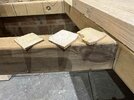
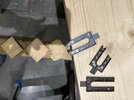
My second question is, ss a complete rookie, I've inevitably miscalculated some cuts and want to pack some joints tighter. I have lots of 3x2 slivers from cutting out the notches. Are these good to use to wedge into a larger joint with a bit of glue? Or are the fibres likely to compress and break apart under stress and expansion. They are cross-grain cuttings, so weaker, not actual biscuits. Plastic I'm guess would not deform and remain exactly in the state it is forever. But it would be much more satisfying to use the original wood offcuts. What's common practice? This bench is fully under shelter, so none of this ought to be getting wet. Thanks
My second question is, ss a complete rookie, I've inevitably miscalculated some cuts and want to pack some joints tighter. I have lots of 3x2 slivers from cutting out the notches. Are these good to use to wedge into a larger joint with a bit of glue? Or are the fibres likely to compress and break apart under stress and expansion. They are cross-grain cuttings, so weaker, not actual biscuits. Plastic I'm guess would not deform and remain exactly in the state it is forever. But it would be much more satisfying to use the original wood offcuts. What's common practice? This bench is fully under shelter, so none of this ought to be getting wet. Thanks
Attachments

Last edited: