

Hi,
Early Victorian mid terrace with a cellar under the front room & hallway which have an original lath & plaster stud wall between. Floor joists run from back - sat in a fairly thick stone wall - to front.
Here is the front view and rear view:
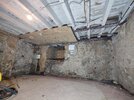
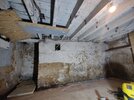
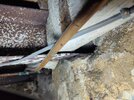
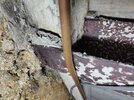
In the front 1/3rd of the cellar the floor joists are notched either side into a large corroded piece of steel approx 6" x 5" visible width 14ft. The right hand side is heavily delaminated on the underside where it enters the stone wall.
Here is the front and back of the right hand side:
There's also piece of steel approx 4" x 3" width 14ft - it's intention seems to be for resting the opposite side of the joists on - some are sat in the front cellar wall, and all the visible ones I can see appear to be suspended above it by a few mm. This one has a big hole in the middle on the right hand side where it enters the same stone wall as the big one.
Here is the hole and also how the joists are currently looking:
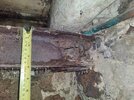
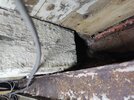
Finally there's the smallest steel approx 4" x 2" width 4ft which spans the bay - it has a big hole either side and smaller holes throughout.
Here is an overview:
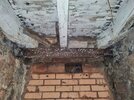
It looks like the steels could be around 60-70 years old and probably put in place due to the joist ends having rotted back then. There doesn't seem to be much evident of the issue from in the front room or hallway.
- Builder 1 has quoted to build 2 concrete block pillars with padstones (my suggestion) to support the big and smaller 14ft steels either end and replace the bay steel with a concrete lintel - £1,750.
- Builder 2 wants a structural engineer to visit, write a report and specify 3 new beams - circa £3,480 which is £480 for the structural engineer and circa £3,000 for the work.
- Builder 3 wants to put another large beam underneath the large beam and replace the 2 smaller beams - no price given.
The cellar steps are accessed through a door in the back room and run directly underneath the staircase that leads upstairs with a very sharp 90 degree turn at the bottom - any replacement steels would involve lifting part of the hallway floor or unbricking a bit of the old window well at the front.
I spoke to a couple of structural engineers - one says we don't need them to look and should have a builder replace all 3 beams like for like - says the quotes so far are very expensive - they charge £200-odd for a site visit. The second one wants £660 to measure and specify replacement beams.
We don't want to go cheap and pay for something that won't last, but we're unsure exactly what should be done and the costs.
In terms of damp:
- The relative humidity in the cellar the past days has been between 95-99% but it's done nothing but rain. If I leave the cellar door wide open it'll drop over 2-3 hours to say 80% but then raise again, the back room is a solid floor so I can't see how you could through ventilate?
- The only ventilation is a pipe coming out of the window well - it was blocked and I unblocked it which has helped but only a little. Other houses have multiple vents here.
- The walls were lined in lots of thick ply - it looks like a past resident used it for rock climbing practice! I've now stripped most of this off.
- The bay window downpipe terminates to a shoe above ground directly next to the house so looking to take it further away.
- There is sitting water in a muddy rubble filled hole at the bottom of the cellar steps and towards the front of the cellar floor is a drain that runs through the cellars of the adjacent houses and also from the back of the cellar - it's got sitting water in it and when it rains has some small flow. I think some neighbour probably has a washing machine connected to it as well.
- In the area where the steels are most corroded, there's a downpipe taking water off the roof, I want to get it surveyed but next door is rented and I don't know the landlord, I'm waiting for the tenant to speak to them to get permission to put a camera down. Their bay window also terminates in a shoe above ground.
- I can also see a hole in the wall here where next door had an identical small steel. It looks like we can see a new floor joist with DPM wrapped around the end.
Many thanks,
chaoticj
Early Victorian mid terrace with a cellar under the front room & hallway which have an original lath & plaster stud wall between. Floor joists run from back - sat in a fairly thick stone wall - to front.
Here is the front view and rear view:
In the front 1/3rd of the cellar the floor joists are notched either side into a large corroded piece of steel approx 6" x 5" visible width 14ft. The right hand side is heavily delaminated on the underside where it enters the stone wall.
Here is the front and back of the right hand side:
There's also piece of steel approx 4" x 3" width 14ft - it's intention seems to be for resting the opposite side of the joists on - some are sat in the front cellar wall, and all the visible ones I can see appear to be suspended above it by a few mm. This one has a big hole in the middle on the right hand side where it enters the same stone wall as the big one.
Here is the hole and also how the joists are currently looking:
Finally there's the smallest steel approx 4" x 2" width 4ft which spans the bay - it has a big hole either side and smaller holes throughout.
Here is an overview:
It looks like the steels could be around 60-70 years old and probably put in place due to the joist ends having rotted back then. There doesn't seem to be much evident of the issue from in the front room or hallway.
- Builder 1 has quoted to build 2 concrete block pillars with padstones (my suggestion) to support the big and smaller 14ft steels either end and replace the bay steel with a concrete lintel - £1,750.
- Builder 2 wants a structural engineer to visit, write a report and specify 3 new beams - circa £3,480 which is £480 for the structural engineer and circa £3,000 for the work.
- Builder 3 wants to put another large beam underneath the large beam and replace the 2 smaller beams - no price given.
The cellar steps are accessed through a door in the back room and run directly underneath the staircase that leads upstairs with a very sharp 90 degree turn at the bottom - any replacement steels would involve lifting part of the hallway floor or unbricking a bit of the old window well at the front.
I spoke to a couple of structural engineers - one says we don't need them to look and should have a builder replace all 3 beams like for like - says the quotes so far are very expensive - they charge £200-odd for a site visit. The second one wants £660 to measure and specify replacement beams.
We don't want to go cheap and pay for something that won't last, but we're unsure exactly what should be done and the costs.
In terms of damp:
- The relative humidity in the cellar the past days has been between 95-99% but it's done nothing but rain. If I leave the cellar door wide open it'll drop over 2-3 hours to say 80% but then raise again, the back room is a solid floor so I can't see how you could through ventilate?
- The only ventilation is a pipe coming out of the window well - it was blocked and I unblocked it which has helped but only a little. Other houses have multiple vents here.
- The walls were lined in lots of thick ply - it looks like a past resident used it for rock climbing practice! I've now stripped most of this off.
- The bay window downpipe terminates to a shoe above ground directly next to the house so looking to take it further away.
- There is sitting water in a muddy rubble filled hole at the bottom of the cellar steps and towards the front of the cellar floor is a drain that runs through the cellars of the adjacent houses and also from the back of the cellar - it's got sitting water in it and when it rains has some small flow. I think some neighbour probably has a washing machine connected to it as well.
- In the area where the steels are most corroded, there's a downpipe taking water off the roof, I want to get it surveyed but next door is rented and I don't know the landlord, I'm waiting for the tenant to speak to them to get permission to put a camera down. Their bay window also terminates in a shoe above ground.
- I can also see a hole in the wall here where next door had an identical small steel. It looks like we can see a new floor joist with DPM wrapped around the end.
Many thanks,
chaoticj


